East African Community (EAC) Ministers have called for the urgent need to protect Africa’s largest freshwater Lake Victoria.
They cited rising pollution, unregulated human activities, and the worsening effects of climate change.
To address these situations, EAC Ministers have committed to mobilising additional resources and enhancing collaboration in the region to preserve the ecological and economic value of Lake Victoria.
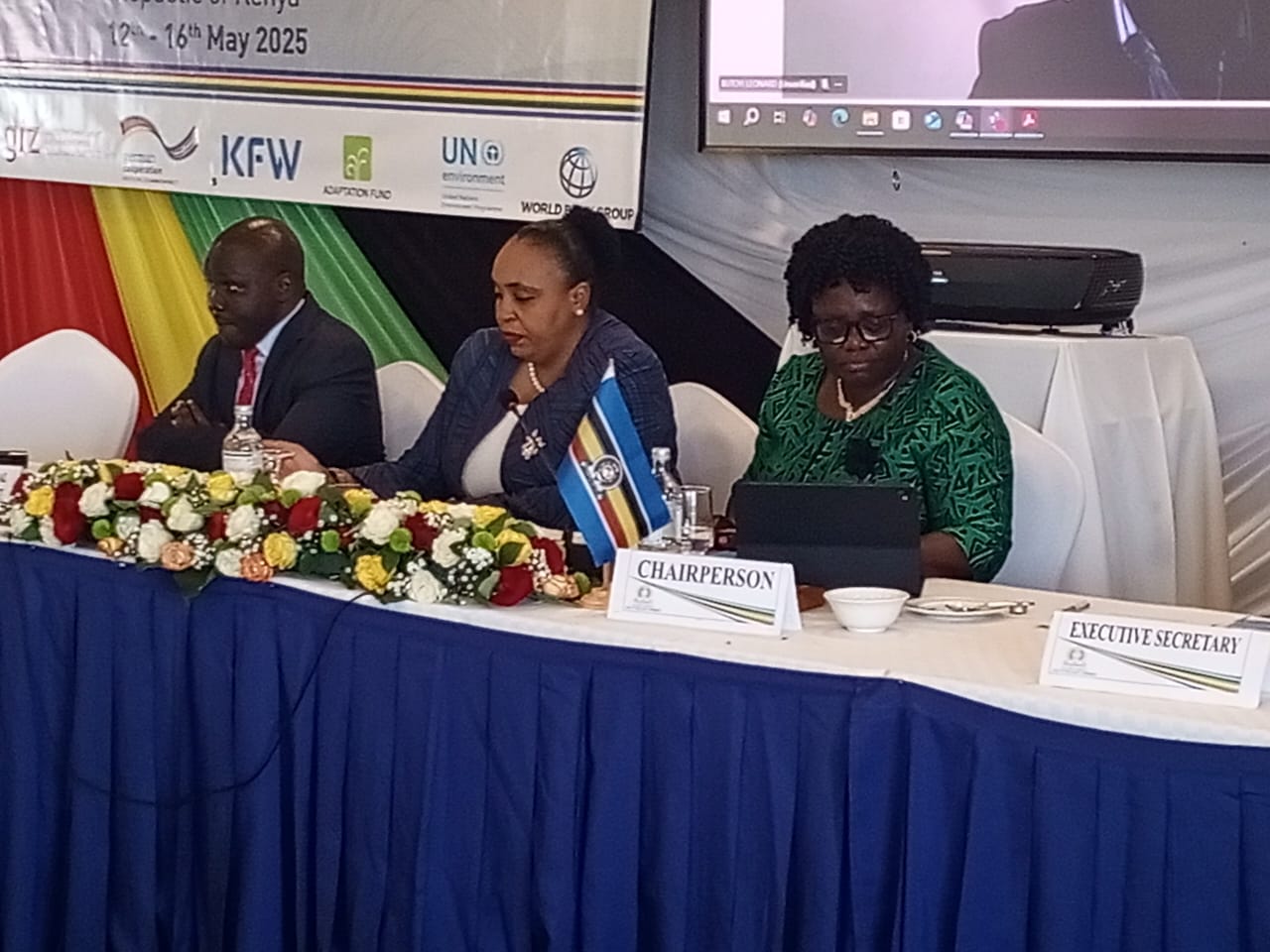
They were speaking during the closing ceremony of the five-day-long high-level meeting of the 23rd Ordinary meeting of the Sectoral Council of Ministers for the Lake Victoria Basin (SECOM-LVB), in Kisumu.
It officially came to an end on Friday, May 16th, bringing together Cabinet Secretaries in charge of EAC Affairs, Water, Environment, and Maritime Transport.
They were drawn from Kenya, Uganda, Tanzania, Rwanda, Burundi, South Sudan, Somalia, and the Democratic Republic of Congo.
Kenya’s EAC Cabinet Secretary (CS) Beatrice Askul, who currently chairs the Council of Ministers, stressed the need for timely financial contributions from all member states.
She noted that inadequate funding has significantly hampered the implementation of key conservation projects by the Lake Victoria Basin Commission (LVBC), the EAC’s agency tasked with promoting sustainable development in the lake basin.
“Our goal is to reduce pollution, which continues to degrade water quality and threaten both human and aquatic life. Each member state must ensure that waste is not deposited into the lake. All refuse must be disposed of far from the lake and its tributary water bodies,” she said.
She added that while some progress had been made, continued commitment and active participation by all member states were essential to avoid stagnation of ongoing initiatives.
To reinforce conservation efforts, the Council of Ministers approved the development of regional policies and strategies to govern the protection of Lake Victoria and its surrounding ecosystems.
“These policies and regulations will provide clear guidance on conservation activities within the basin,” said Askul.
“They are crucial in sustaining aquatic ecosystems and securing the livelihoods of millions who depend on the lake.”
Kenya’s Cabinet Secretary (CS) for Water, Eric Muuga, echoed the call for united action, noting that conservation was key to revitalising the region’s blue economy.
“Lake Victoria supports diverse economic activities such as fishing, maritime transport, and cross-border trade. This meeting is a testament to our commitment as a region to safeguard this critical resource,” he said.
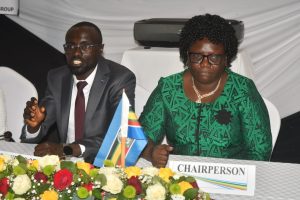
Kenya’s Cabinet Secretary (CS) for Water, Eric Muuga, echoed the call for united action, noting that conservation was key to revitalising the region’s blue. Photo: Geoffrey Kasera
On his part, Tanzania’s Minister for EAC Affairs, Denis Lazaro Londo, described Lake Victoria as a symbol of regional unity, praising the growing partnerships around its conservation.
“This is a transboundary resource that serves as a lifeline to millions across our nations. Every effort must be made to protect it,” he said.
Uganda’s Minister for Environment, Beatrice Anywar Atim, stressed the importance of developing strong climate change mitigation strategies, warning that the lake was increasingly vulnerable to environmental pressures.
She said Uganda is committed to allocating more resources to fund lake protection projects and urged other partner states to do the same.
The ministers concluded by calling for accelerated implementation of agreed recommendations, underscoring that only through joint action can Lake Victoria be preserved for future generations.
LVBC Executive Secretary (ES) Dr. Masinde Bwire lauded development partners working with the agency to conserve the lake.
He added that LVBC was on course in implementing several projects, with several others lined up to give impetus to the conservation drive