
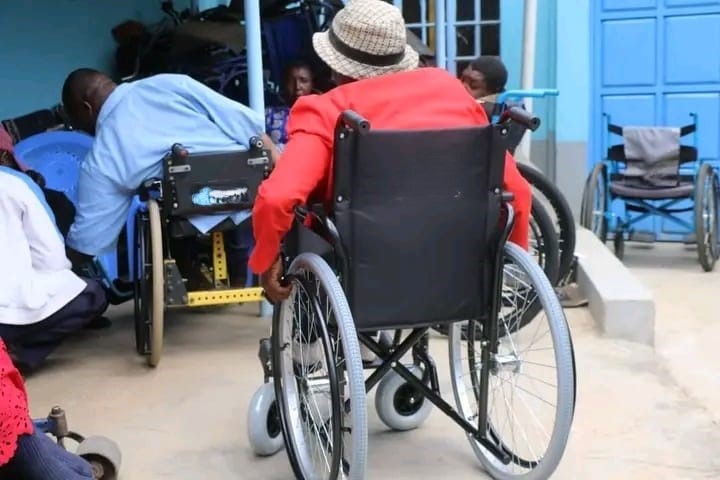
In Kenya, people living with both a disability and HIV face a crisis that remains dangerously overlooked.
Despite our constitutional commitment to uphold the rights of all Kenyans and years of progress in the fight against HIV and stigma, this group remains twice invisible.
First in disability discourse, and again in HIV programming.
Our national frameworks, such as the Kenya AIDS Strategic Framework and the Persons with Disabilities Act, signal our intent to be inclusive.
But on the ground, the lived reality for people at the intersection of HIV and disability tells a very different story.
It is a reality of compounded neglect, exclusion, and silence.
HIV and Mental Health
“My name is Faith Achieng (not her real name). I am a young woman living with HIV and a mental disability in one of the counties in Kenya,” her voice trembles with courage as she shares her story.
Her daily struggle begins long before she gets to the clinic. Sometimes the financial strain becomes too much.
Managing two conditions, HIV and mental health, means she has to visit different facilities. The transport costs alone are overwhelming.
She pauses and her voice grows quieter. And the stigma makes it even harder.
“People do not want to hire me once they know I have a mental disability. So poverty becomes part of my reality.”
The burden Faith carries is emblematic of the intersecting challenges many people like her face.
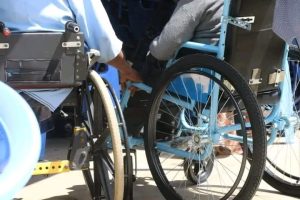
A picture showing a partly hidden Person with Disabilities in a wheelchair. HIV and disability are a reality of compounded neglect, exclusion, and silence. Photo Courtesy
In Kenya, being HIV positive still carries immense stigma. Having a disability is often socially misunderstood and associated with pity, stereotypes, and invisibility.
For someone living with both HIV and a disability, these stigmas do not just double. They collide, creating a heavier, more complex burden.
Even the very spaces designed to promote inclusion often reinforce exclusion.
Faith recounts painful experiences of being shut out of opportunities meant to uplift people like her.
Even when there are forums meant to include people like me, those of us who need caregivers often get excluded.
If I need someone to accompany me for support, we are counted as two participants and that is used as an excuse not to invite us at all. It is like we are too costly to include.
That kind of discrimination just reinforces our isolation and blocks our participation in important conversations that affect our lives.
Faith’s words echo the silent institutional neglect woven into our health and social systems.
Health service delivery points, which should offer care and dignity, too often become places of judgment and rejection.
Deaf individuals are denied interpreters or forced to disclose private information through strangers. Wheelchair users confront inaccessible clinics.
And many simply avoid treatment altogether, fearing humiliation or misunderstanding.
This silence is not accidental. It reflects the fault lines in our public health system and our collective failure to imagine truly inclusive responses.
What are the statistics?
According to UNAIDS, nearly seven percent of deaf individuals in Kenya are living with HIV.
Yet national HIV programs rarely include deaf or disabled populations in their outreach strategies.
Regional data from Be in the KNOW show that women with disabilities are more than twice as likely to acquire HIV than women without disabilities.
For men, the figure is one and a half times higher. These are not just statistics. They reveal a quiet emergency.
Despite these numbers, there is a glaring absence of disaggregated data on HIV and disability in Kenya.
What remains uncounted stays unsupported. Without data, these lives remain politically and programmatically invisible.
Faith opens up about moments when the struggle becomes overwhelming.
“There was a period when I stopped taking my HIV meds,” she admits.
“The anxiety and depression were too much. I had just been started on strong antiepileptic medication and the pill burden was too heavy. I also feared disclosing my HIV status to the specialists in the neurology department. I did not want to face more stigma.”
Yet through persistence and support, Faith found a way forward.
She says that this really helps when she have the same healthcare provider.
“We build trust, and that lifts my self-esteem. It feels safe,” she adds thoughtfully, “For those of us living with disabilities, we really benefit from reminders. A simple phone call or text helps us stick to our clinic routine.”
When asked what makes her feel understood, her face lights up.
“Yes, my healthcare providers have really supported me. I eventually opened up to them about my HIV status. They explained how my medications might interact and adjusted the dosages. Now, my treatment is safer, and I feel seen.”
Faith’s experiences remind us that real inclusion is not just about building ramps at clinics.
It is about building systems that see, hear, and respond to the unique needs of everyone, especially those pushed furthest to the margins.
Investing in Inclusive Data Collection
We must start by investing in inclusive data collection. HIV surveillance systems must disaggregate data by disability status.
We must train healthcare workers, caregivers, and community health volunteers on disability rights and inclusive communication.
This training should be standard, not optional.
We must design HIV programs that accommodate diverse abilities, from testing and counselling to outreach and support.
Support groups should be truly inclusive, with materials in accessible formats, sign language interpretation, mobility support, and safe transportation.
And we must ensure that people living with both HIV and disability are included in leadership and decision-making spaces.
Faith’s vision for change is clear: “I would integrate HIV services so that people living with disabilities can get everything in one place.”
That way, we would face less stigma, spend less on transport, and feel more dignified.
It would also mean we would not be treated like a burden when we need a caregiver to attend a forum with us.
Our voices matter and we deserve a seat at every table where decisions are being made.
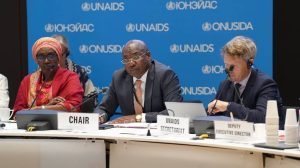
The former Principal Secretary for the State Department of Medical Services, Mr Harry Kimtai, chaired the 54th UNAIDS Programme Coordinating Board Meeting at WHO Headquarters in Geneva, Switzerland, on Tuesday, 25th June 2024. Photo: UNAIDS
Kenya has committed to global frameworks that promise health and dignity for all.
But we will not meet the goal of ending AIDS as a public health threat by 2030 if we continue to leave people like Faith behind.
Their Voices and Lives Matter
If we are serious about equity in our HIV response, we must break the silence surrounding those who are doubly invisible.
Not through pity or tokenism, but through deliberate action rooted in justice, inclusion, and dignity.
Let us create spaces where people with disabilities living with HIV can speak for themselves without fear, without shame, and without being silenced.
Their voices matter. Their lives matter. And until they are fully seen, heard, and included, Kenya’s HIV response will remain incomplete.
The writer serves as the Vice Chairman of the Board at the Network of TB Champions in Kenya.
Sadly Faith’s story resonates with similar incidences all over.
Services for people with disabilities are simply minimal or outright ignored.
May I ask where and where else can one find counseling services for the Deaf living with HIV?
Your guess is as good as mine.
That is very true in fact many people used to ignore us