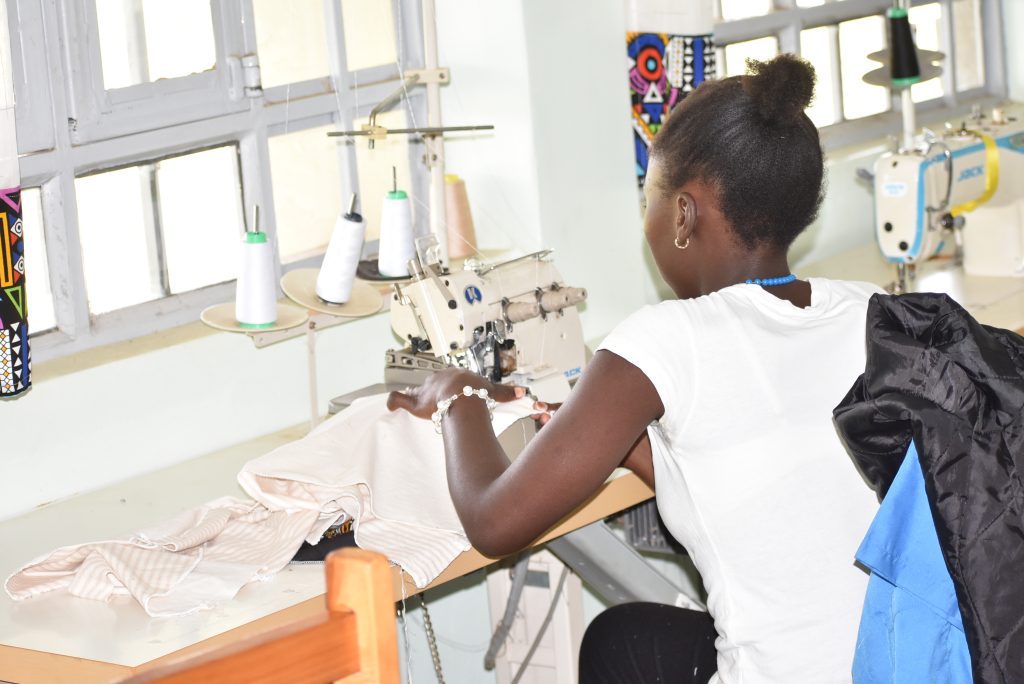
KISUMU, Kenya, August 12th – The electric tailoring machines hummed with precision, their rhythmic whir punctuated by the occasional whizz of the needle.
The workspace is a hive of activity, filled with creativity and the pleasant scent of fabric and thread. Skilled tailors breathe life into their unique patterns and designs, crafting garments that are both functional and aesthetically beautiful.
Welcome to the Smiles Hub, the social enterprise under Make Me Smile Kenya, offering sustainable economic solutions to Adolescent Young Girls and Women (AYGW)in Kisumu.
Its main production unit is located in Angola-Mayenya Village, East Kolwa Ward, Kisumu East Constituency, making it one of the epicentres for implementing the Recognition of Prior Learning (RPL) initiative, which supports the government’s agenda to upskill and certify Kenyans in various skills qualifications.
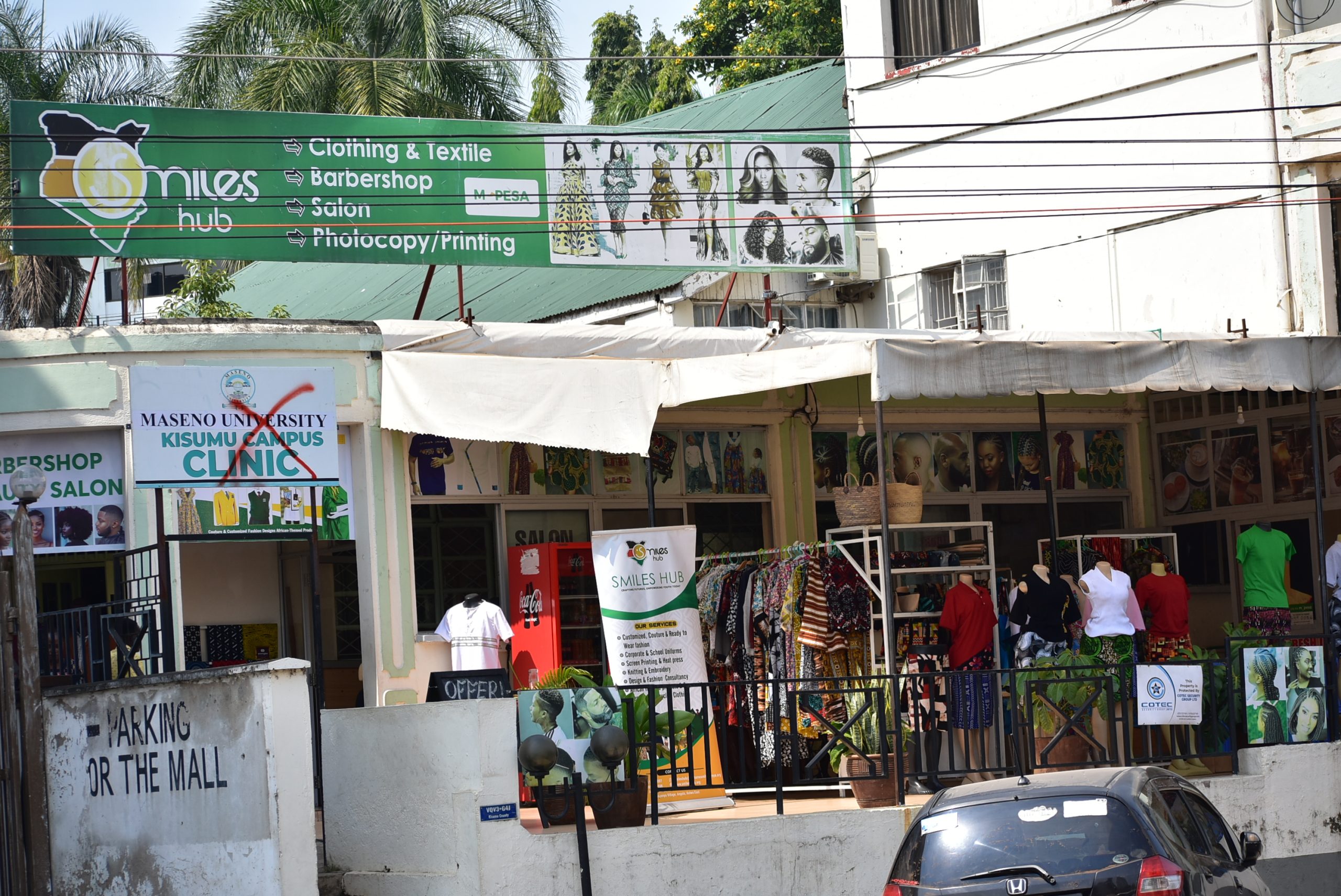
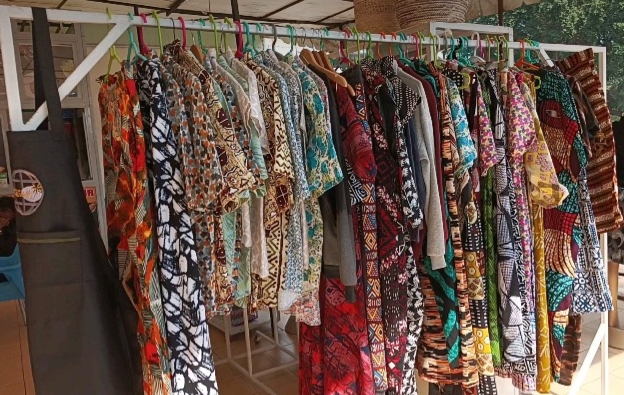
During a recent visit by The Eyes Watch to its outlet shop in the Central Business District (CBD), situated opposite the iconic Maseno University City Campus, and adjacent to the bustling Kisumu Hotel, we found that they showcase and sell finished clothes, tailoring, and textile products.
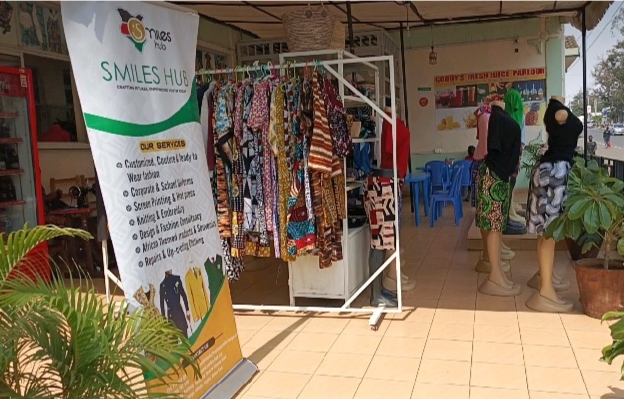
The utility shop, which opened in February 2024, offers each tailored piece as a testament to craftsmanship, with every stitch, fold, and seam meticulously considered. Customers are spoiled for choice, with options ranging from flowing gowns to tailored suits, all exuding elegance and sophistication.
Sustainable Fashion
According to the facility’s Business Manager, Winfrida Achola Otieno, every garment tells a story of craftsmanship, dedication, and passion, making each piece unique and special.
“It’s a social enterprise that supports young, vulnerable girls and women from the Greater Western Region. They receive training in tailoring, along with substantial support from the organisation to help pay their school fees,” Winfrida explained during the exclusive interview.
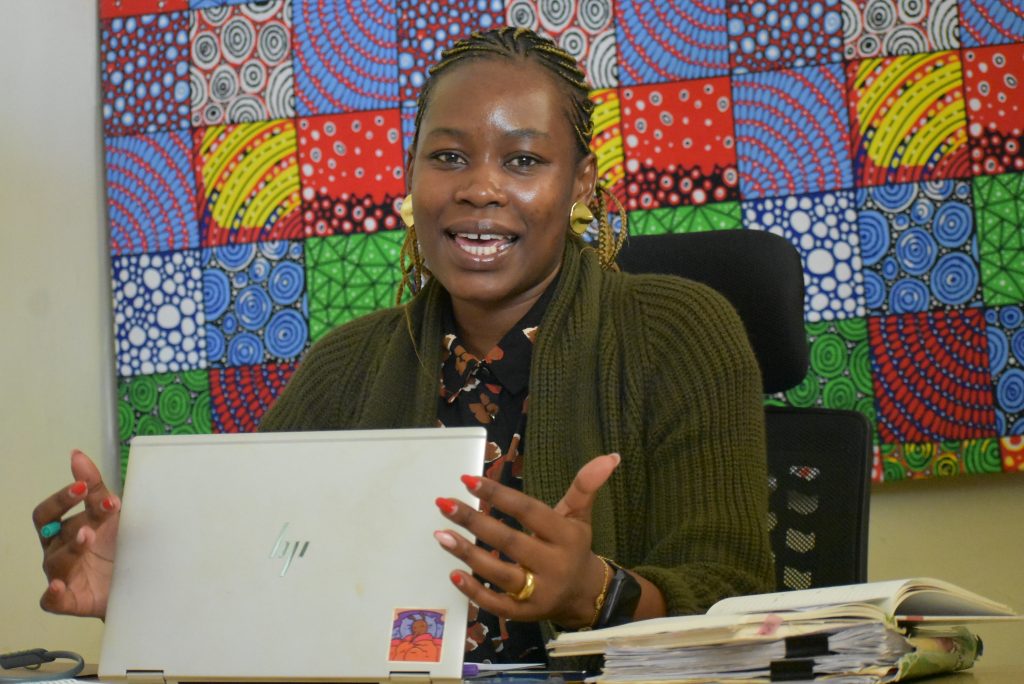
With her extensive entrepreneurial experience before joining the organisation, Wilfrida highlighted the organisation’s focus on bespoke African-themed products made from upcycled materials, such as old jeans and vitenge (African cloth prints).
As part of their transition into the Sustainable Fashion Industry, Winfrida stated, “We don’t just throw away old pieces; we repurpose them to make small souvenirs like hair bands, bags, and purses that are easily marketable.”
Expressing her commitment to empowering the less fortunate, she advocates for donating old clothes to create useful products.
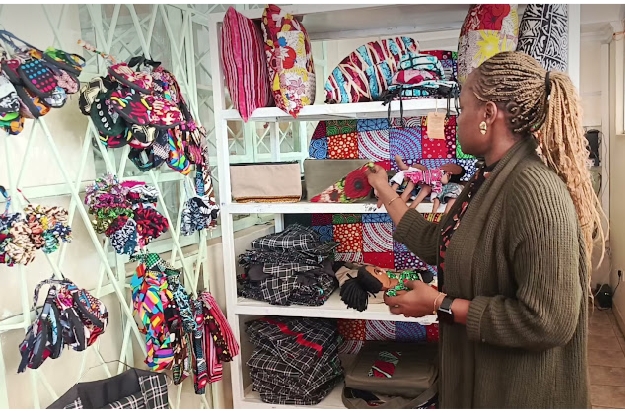
In addition to showcasing products at their gazebo shop, Winfrida noted that they also market their items through online social media platforms.
“We rely on word-of-mouth influencers and ambassadors in the Greater Western Region,” she chuckled.
At the CBD outlet, four women and men work as Sales and Production Assistants, where they learn to interact with clients and procure textiles from suppliers.
Along with essential skills in stock-taking and bookkeeping, this training empowers them economically.
The organisation encourages and accepts applicants, including persons with disabilities (PWDs), youth, women, and men, who wish to learn clothing, tailoring, and textiles alongside them.
“We work closely with Community Health Promoters (CHPs) who identify the most vulnerable individuals needing this support,” Winfrida explained.
Lydia Achieng, one of the program’s beneficiaries, shared her transformative experience since joining Smiles Hub.
“I came here with basic stitching skills, but now I have gained extensive experience in making official shirts, palazzo skirts, kimonos, pouches, and high table mats,” Lydia expressed, satisfaction evident on her face.
She added that her continued involvement has allowed her to learn about entrepreneurship, client service management, and mental health, which has helped her navigate daily life’s challenges.
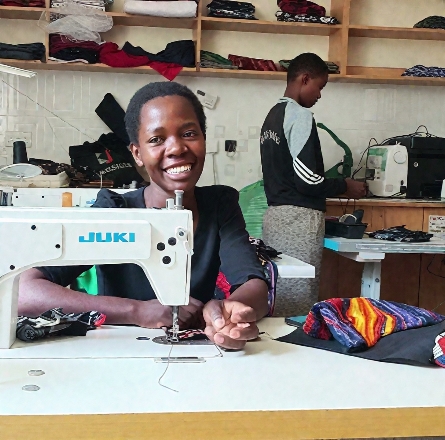
Other skills she has acquired include self-business ownership, business acceleration, and growth.
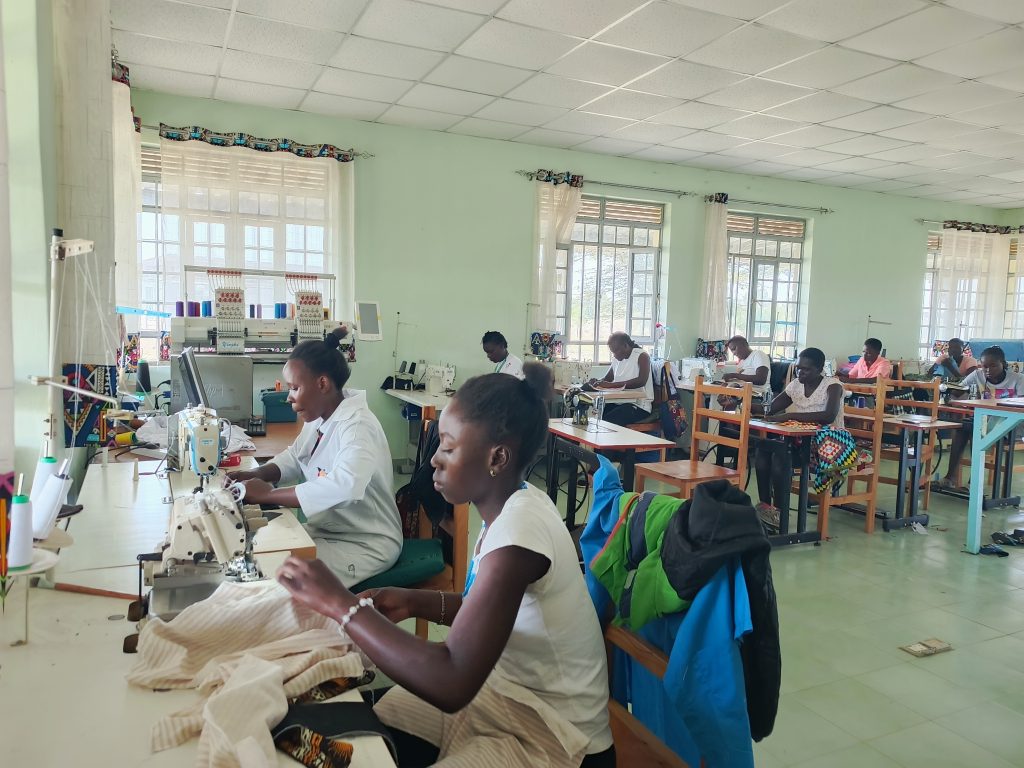
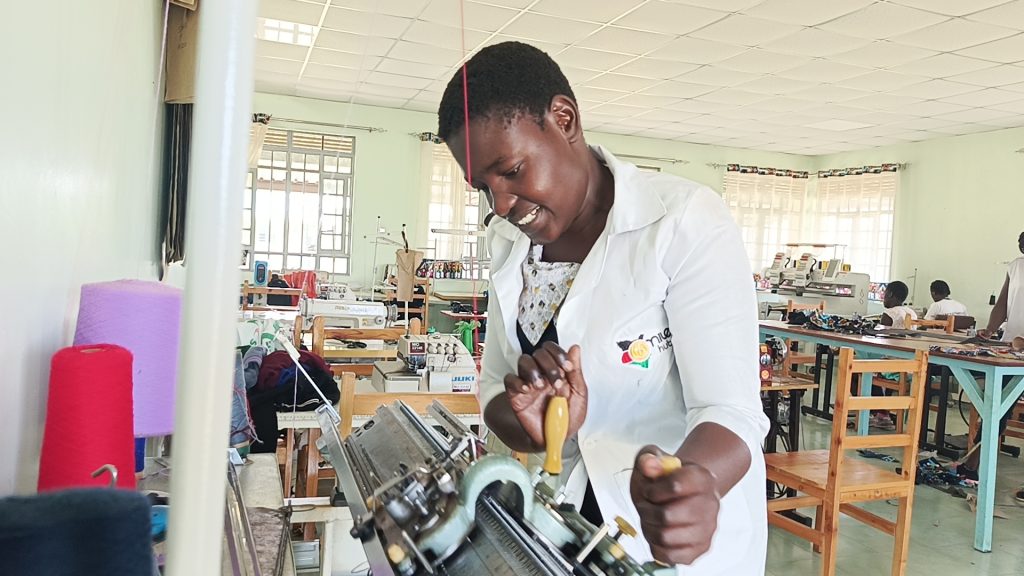
A tour of the Angola-Mayenya headquarters, a TVET-certified centre, revealed an expansive production unit that currently employs 14 young women and men aged 18 to 32 years.
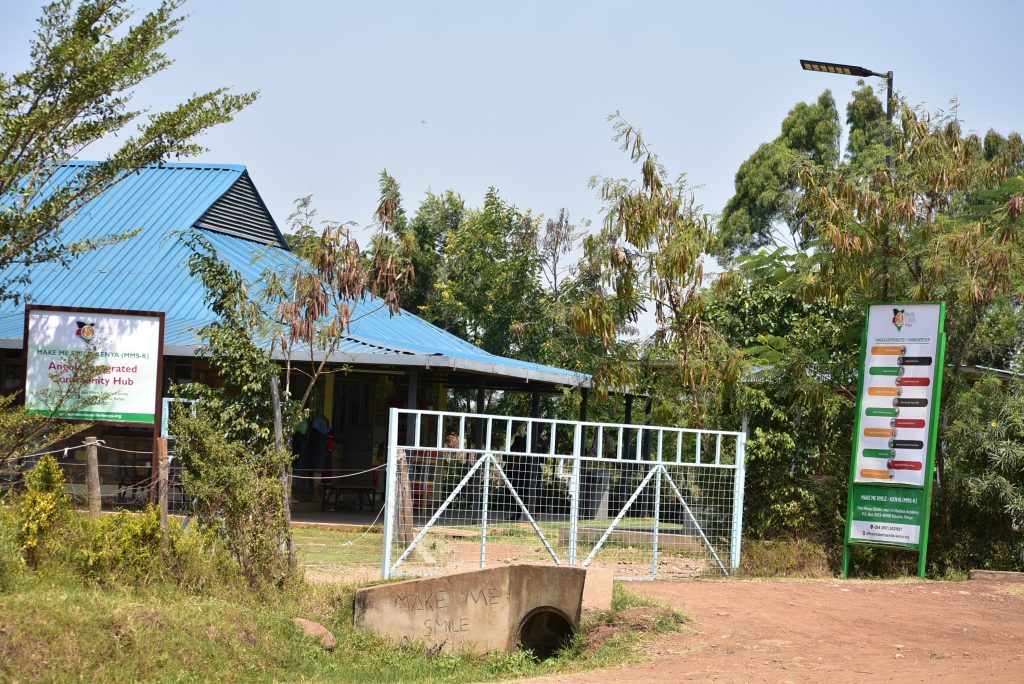
This inclusive centre, operational since 2022, also offers courses in ICT, Fashion, Hair and Beauty, Solar Power Energy installation, and features a permaculture farm.
Judith Anyango Ochola, the Smiles Hub Production Manager, stated that they consistently produce over 150 pairs of quality uniforms, such as skirts, shorts, and shirts per month, which also includes corporate uniforms and branding services.
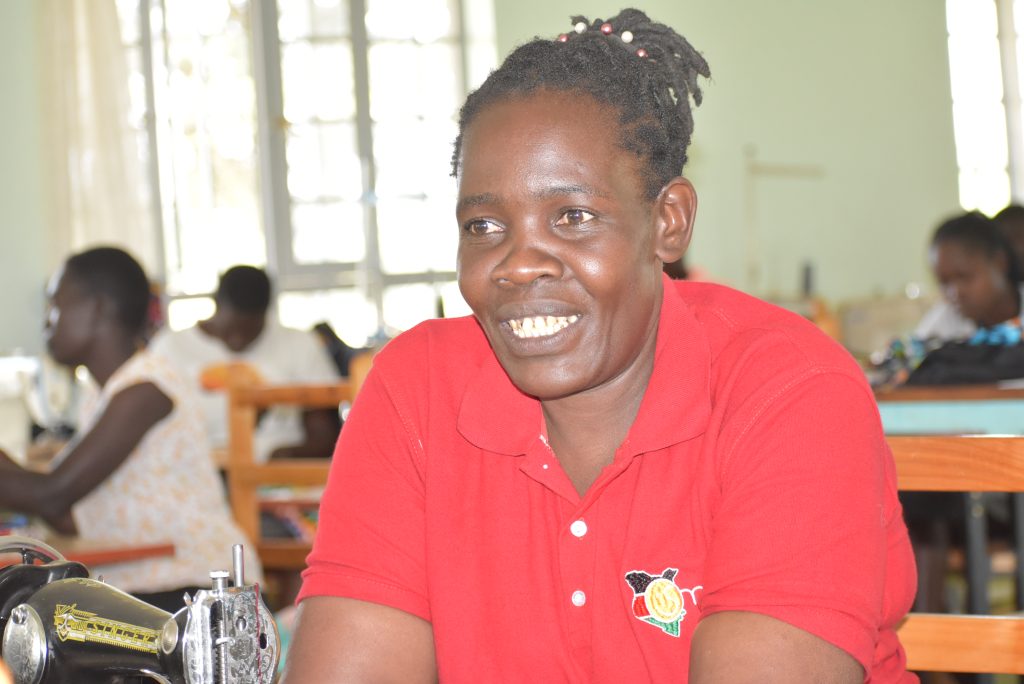
“Most of our trainee girls are enrolled from our training class upon graduation with a National Institute Training Authority (NITA) certificate. Since 2021, over 400 learners and counting have graduated from our institution with clothing and textile skills,” Judith said.
The production unit, she says, is the girls and women’s source of inspiration: this is where they can produce various products, sell, and get their earnings to sustain their families.
Affirming this position, Jane Achieng Oluoch, 25 years old, who has specialised in knitting, is proud to have acquired a skill that enables her to earn a monthly income.
“Now, I can do something tangible with my life without idling at home.”
Kenya is one of the largest exporters of garments and apparel under The African Growth and Opportunity Act (AGOA), with about Sh54.12 billion worth of exports in 2022, and a capital investment of Sh24.88 billion.
The Textile and Apparel (T&A) Industry in Kenya is the second-largest source of employment after agriculture, highlighting its crucial role in the country’s economic and social advancement. This sector holds the potential for significant growth, primarily attributed to preferential market access provided under the AGOA and third-country fabric provision clauses.
These provisions allow Kenya to utilize fabric imported from Asia in apparel production, positioning it for expansion. The industry’s trajectory aligns with Vision 2030 and the government’s Bottom Up Economic Transformation Agenda (BETA) 2022-2027.
Additionally, the execution of the Fourth Medium Term Plan (MTP) under Kenya Vision 2030 prioritizes economic recovery strategies, aiming for a 6.1 percent growth rate in 2023, up from an estimated 5.5 percent in 2022.
The T&A Industry is characterized by its labour-intensive nature, offering rapid mass employment opportunities, especially to women, who make up over 60 percent of its workforce.
It’s structured across three tiers, encompassing large enterprises located within Export Processing Zones (EPZ) and a multitude of medium-sized, large, micro, and small companies.
Textile training is also offered in six universities, along with 201 training and vocational institutions (155 public, and 46 private).
Lending Support
According to Winfrida, Smiles Hub has received tremendous support from partners like Comundo, Make Me Smile International, and Make Me Smile Kenya. This has helped in setting up the business and keeping it running, which leads to a sustainable path.
She encourages both local and national governments to continue supporting such initiatives through offering a conducive environment that supports growth and giving grants.
“They can also give platforms through grants, workshops, and other networking opportunities. Ujima Foundation is one of our local partners who have bought and stocked our products,” she said as she welcomes more partners to come on board and provide support through placing Bulk Purchase Orders for growth and sustainability.
In the next five years, Winfrida is determined to make the facility a Self-Sustainable Business that is non-dependent on grants and donations, as it is a social enterprise.
“I foresee a business that will employ a larger number of girls who have passed through our production. We aim to empower them to step and move forward with their lives.”
She reiterates that, “That’s why we normally give those who have graduated a Start Up Kit like sewing machines, clothes, and needles. Some who have expressed interest in working with us have remained in the production.”
Her message to the youth and women is to go for skills that are sustainable in their lives, like tailoring, plumbing, and ICT, which are lifetime.
Winfrida emphasizes that one needs to show maximum commitment and dedication to enhance their network and place themselves in higher pedestals of resourcefulness.
To address critical skill gaps and other industry challenges hindering the sector’s competitiveness regionally and globally, the 2024 survey report, through key stakeholders-national government, training institutions, associations, sector, and training regulators, recommended quality Top of Form Improvement of the products to meet global standards.
“This is majorly focused on incorporating courses that facilitate AI integration, highlighting the importance of workers adapting to technological advancements to enhance performance management.”

This is augmented with Technical Competency, which includes proficient machine operators, pattern makers, quality assurance personnel, supervisors, and operators handling specialised machinery.
Furthermore, proficiency in patternmaking and design, as well as soft skills like communication, teamwork, and problem-solving, were pointed out as pivotal.
Like their peers, Lydia and Jane concluded that: “We are glad that Smiles Hub has made us who we are today. Our fervent prayers and supplications are that we own a knitting machine, clothing, and textile shop. We are keen on creating jobs for the youth and women.”