It calls on governments to implement Just Transition Mechanisms.
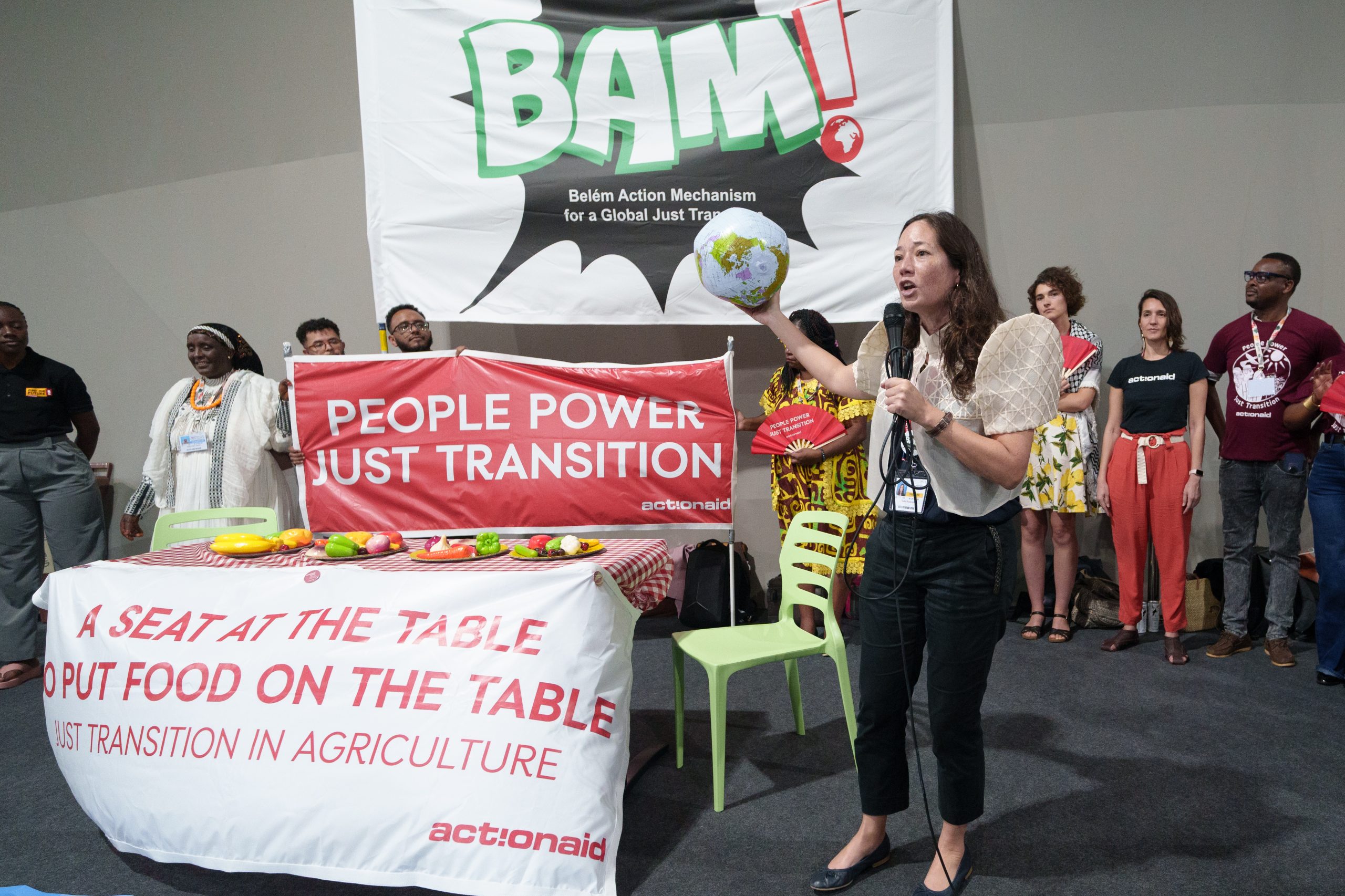
BELEM, Brazil, November 11th –ActionAid, which supports communities on the frontlines of the climate crisis, is joining with other climate organisations at COP30 negotiations in Belém, Brazil, to demand that governments agree to climate action that prioritises people and takes a well-coordinated global just transition approach.
A ‘Belém Action Mechanism’ would ensure a global approach to coordination, shared learning and support for implementation of a just transition.
This mechanism, the organisation says, is essential so that local people can shape plans that might affect them, and get the support, new job opportunities or training they need to ensure climate action benefits them and doesn’t accidentally push them into poverty.
The current approach, ActionAid observes, is systematically ignoring the Global South communities, with new research by the charity revealing that less than 3 percent of climate finance supports just transition approaches that prioritise the needs of workers, women and communities when tackling the climate crisis.
According to Teresa Anderson, Global Lead for Climate Justice at ActionAid International, climate action might be taking place, but the needs of people at the heart of these transitions are being ignored, and communities are being left out of decisions that acutely impact them.
“None of us can hide from the fact that the climate crisis is escalating year on year. What we need from governments is a commitment to move away from fossil fuels and industrial agriculture towards renewables and agroecology, without sacrificing people’s lives and livelihoods. Cutting emissions shouldn’t mean cutting corners,” Anderson says.

She further added that: “Without a just transition plan, we don’t have a robust, global approach to the problem, and the situation is haphazard and disorganised.”
Alongside this demand, ActionAid is urging wealthy polluting countries to do their fair share and provide trillions of dollars in grant-based climate finance each year to Global South countries.
On a disappointing note, Anderson notes that last year’s COP29 in Baku, Azerbaijan didn’t deliver the climate finance that the world needs to properly tackle the global crisis.
“We are in another year and the situation is desperate. Why can’t governments see that the more finance is pushed in the form of loans, the further vulnerable countries are being pushed into debt?” she poses.