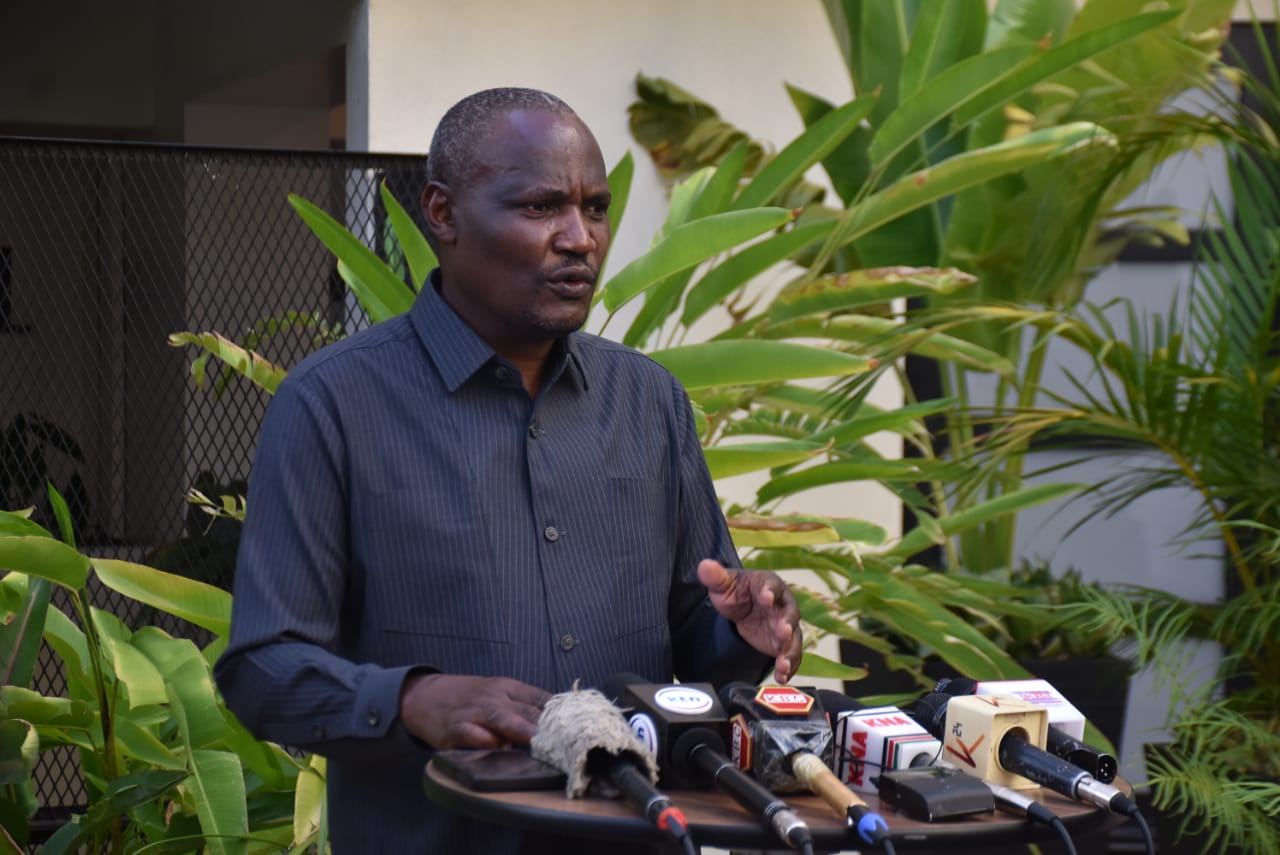
GIZ advisor Marie-Anne Serve outlines the awareness gap, financing innovations, and policy hurdles in the push for greener buildings across Africa.
ADDIS ABABA, Ethiopia -In a compelling call to action at a major continental conference, Mary-Anne Serve, an advisor for the Programme for Energy Efficiency in Buildings (PEEB), has stressed that bridging a critical awareness gap is fundamental to Africa’s sustainable building future.
She argues that the message that “Energy Efficiency is the cleanest and cheapest fuel,” must be spread from the grassroots to the national level.
“It’s a big challenge. Now we talk about Renewable Energy, so people say we have to put solar panels on the buildings and it’s fine. Solar PV panels produce electricity, but we first need to reduce energy consumption before producing energy. Energy saving today is money that you don’t need to invest in the future,” Ms Serve explained during the ongoing African Energy Efficiency Conference (AFEEC) on Tuesday December 9th.
She identified a widespread lack of understanding about what energy efficiency entails and its long-term benefits, which undermines broader implementation efforts.
Her comments came alongside intensive pre-conference trainings in Bioclimatic Design and Green Building Finance, which revealed both deep engagement and significant concerns from regional energy stakeholders.
“We are thrilled with the participants who exceeded expected attendance as they highlighted a persistent challenges between policy and practice. A key concern raised by the participants was the slow enforcement of existing frameworks.”
Stakeholders noted that while many countries have developed building codes, regulations, and Energy Performance Certificates “in theory,” the real challenge lies in getting practitioners to apply them.
An even stickier issue brought to the fore was corruption. Participants pointed out that even with strong standards, the pressure to win contracts with lower bids can lead companies and governments to de-emphasize efficiency requirements thus undermining progress.
Financing Energy
Ms Serve acknowledged that financing remains a primary hurdle. In response, she detailed the innovative blended finance mechanism at the heart of the PEEB Cool initiative, a key sub-program of PEEB targeting hot-climate countries.
The Partnership for Energy Efficiency in Buildings (PEEB) is currently active in more than 20 countries over 4 continents, including 6 African countries. The overall initiative benefits from a budget of 275,9 million EUR from the French and German Governments, the European Union and the Green Climate Fund. It is supporting a pipeline of projects worth 2,2 billion euros. PEEB Cool is a sub-program of PEEB, jointly implemented by AFD and GIZ in 11 countries.
The solution, Ms Serve said, lies in a strategic partnership. GIZ focuses on the “enabling facility,” providing technical assistance for capacity building, policy development, and investment framework design.
Once projects are prioritized, the AFD provides financing.The GCF grant serves a dual purpose: it funds extensive technical assistance to prepare projects and allows AFD to offer credits at very low concessional interest rates.
“So it’s a blended finance mechanism as the countries have access to very low concessional funding for implementation of large-scale infrastructure projects,” Ms. Serve assured.
PEEB Solutions
The overarching objective of PEEB Cool is to support countries in implementing large-scale projects that enhance the sustainability, resilience, and thermal comfort of buildings, a sector critical to global climate goals.
It aims to use this unique combination of policy support and blended finance to catalyze sector-wide transformation.
To address the challenges, the initiative is fostering peer exchange, as she noted discussions on organizing more sessions for African countries to share good practices.
The recent trainings on 8-9th December, covered fundamentals of energy efficiency, financial viability, investment frameworks, and bioclimatic architecture, a design approach that reduces reliance on air conditioning.
It was organised in partnership with the African Energy Commission (AFREC), PEEB, International Energy Agency (IEA), the Global Alliance for Buildings and Construction.
While acknowledging steady progress in policy development, Serve conceded that enforcement and financing remain key battles. With its model of grants for technical assistance and concessional loans for implementation, PEEB is crafting a practical pathway forward.
The programme is open to both public and private sector projects that commit to significant energy savings, greenhouse gas reductions, and improved comfort.
“It aims to prove that efficiency is indeed the foundational fuel for a sustainable built environment,” reads in part a statement on their website.
Artistic photographic impression courtesy of PEEB