

KISUMU, March 2026 -According to the latest International Labour Organisation (ILO) and UNICEF statistics, 135 million children aged 5 to 7 are still in child labour worldwide, with over 50 million engaged in hazardous work.
Out of this figure, 71 percent of them are in agriculture which remains the single largest sector for child labour globally. Coffee and tea are among the top five agricultural products where child labour is prevalent, with the African region posting an involvement of one in five children.
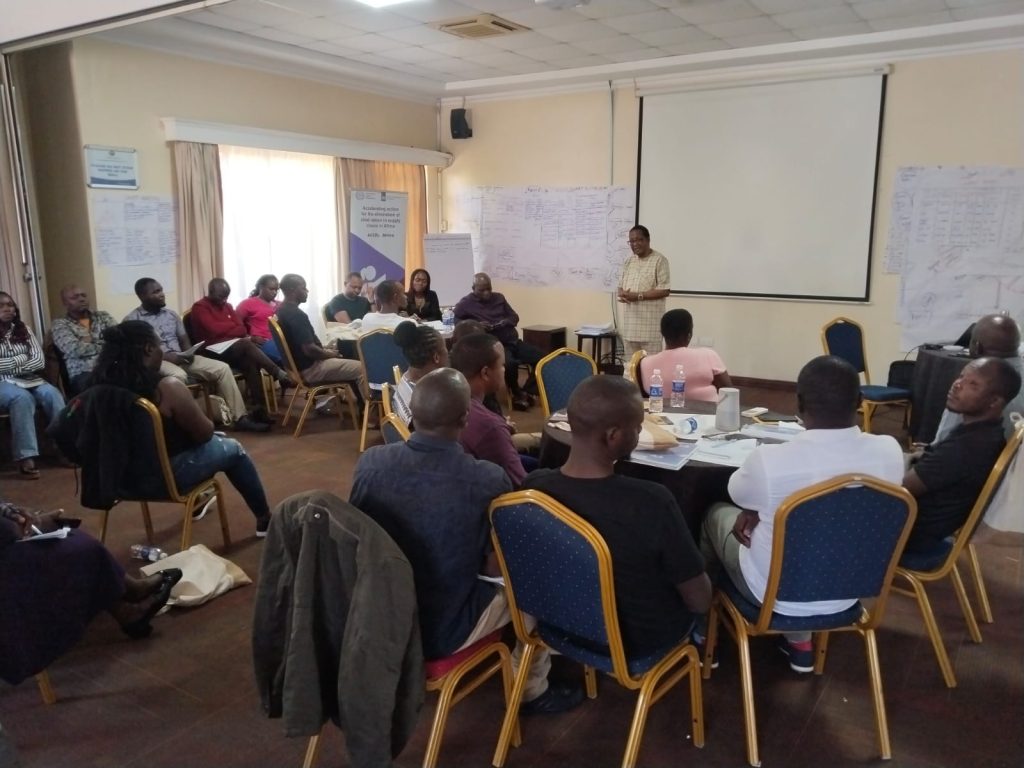
In light of the foregoing, ILO intensified its efforts in Kenya’s tea and coffee growing zones through a two-week Training of Trainers (ToT) workshop, held in Kisumu from March 2 to 14, 202. It brought together cooperative officers, union representatives, and government officials from Kericho, Kisii, Nyeri, and Meru counties.
The initiative aims to strengthen cooperatives as frontline actors in identifying and eliminating child labour from the country’s export supply chains.
Speaking at the closing ceremony, ILO National Project Officer for the ACCEL Africa Project, Mr Duncan Chando, highlighted the organisation’s historic commitment to addressing the root causes of child labour through cooperative development.
“One of the tools we use is through cooperatives, because in the cooperative movement, ILO has been here since 1920, supporting governments to strengthen cooperatives,” Mr Chando said.
He explained that by strengthening cooperative societies, issues around child labour we are not going to witness them, because at the same time, they are also looking for certification, and this certification only comes when the value chain is not tainted.”
Mr Chando further outlined the project’s multi-pronged strategy: “The way we have designed the project is that we are trying to address the root causes. One of them is providing alternative livelihoods.”
Presently, he added that they are in the process of signing an agreement with cooperative unions so they can work with cooperative societies to support alternative livelihoods, especially for women.”
Social protection forms another critical pillar. “When our farmers are covered when it comes to social insurance and health, it is very important because when they are sick, they are not able to let their kids go to work on the farm,” Mr Chando explained.
The ACCEL Africa Phase II Project (Accelerating Action for the Elimination of Child Labour in Supply Chains in Africa), is funded by the Government of the Netherlands and works with governments and stakeholders to create enabling policy environments, strengthen cooperative governance, and improve economic resilience for smallholder producers.
The ILO’s cooperative-focused approach recognises that child labour cannot be eliminated without addressing the economic vulnerabilities faced by farming households.
“Strong, well-governed cooperatives increase adult income productivity and reduce the household shocks that push children into labour.”
The global labour body achieves this through its internationally recognised cooperative development methodologies such as Think.COOP, Start.COOP, and My.COOP. It works with governments and stakeholders to create enabling policy environments, strengthen cooperative governance, and improve economic resilience for smallholder producers.
“When effectively managed, they can increase adult income productivity, and reduce household vulnerabilities that often contribute to child labour,” Chando said.
Dr Leonard Otii, Director of Cooperatives in Kericho County, emphasised the alignment between cooperative strengthening and labour standards.
“As a leading tea-producing county, Kericho recognises that sustainable growth must go hand in hand with labour standards compliance. Strong cooperatives mean better incomes for families and better protection for children,” he explained the county governments’ essential role in regulating and supporting cooperative development.
As a high poverty level continues to push children into hazardous farm work, he decried: “Mostly, you will find that most children don’t go to school they are engaged in farm work. If we can reduce the level of poverty in those countries, then we must expect that the issue of child labour may also reduce.”
He described what communities are witnessing as the rampant use of children doing farm work, which is illegal.
“We are seeing children going to pick black tea in the morning before they go to school. We are seeing children going to harvest coffee berries and cherries before they go to school or during the holidays.”
On his part, Bernard Ochieng, Deputy Director for Cooperatives in Kisii County, stressed the multiplier effect of the training: “The total elimination of child labour in the coffee and tea value chains cannot be achieved by development partners such as the ILO alone.”

The statistics, however, paint a stark picture of the scale of the challenge. In Kericho County alone, the coffee sector comprises approximately 49,000 to 50,000 farmers marketing their produce through cooperatives, while the tea stwo-weekludes around 60,000 farmers.
Kisii County has an estimated 30,000 to 35,000 coffee farmers. Across these communities, the manifestation of child labour is visible and troubling.
He, however, advised that it is possible through concerted efforts between the two levels of government and strong collaboration with partners. “This initiative strengthens systems, not just individuals.”
The participants returned to their counties equipped to cascade the training, with plans to entrench child labour sub-committees in cooperative bylaws and embed prevention in cooperative policies, education programmes, and day-to-day management practices.
It was also noted that one persistent challenge in combating child labour has been the lack of reliable, up-to-date statistics, as Kenya’s last comprehensive national survey was conducted in 2008.
Mr Chando noted that this gap featured prominently even when they were designing the ACCEL project, and because conducting a national survey is not cheap.
“For this project, there is a component on statistics. We supported the Kenya National Bureau of Statistics (KNBS) to develop a module added to the national housing survey,” he explained.

I had a quick question regarding the third point, could you clarify?
For anyone who prioritizes online privacy, accessing a solid system is absolutely crucial. That is exactly why I started relying on the get2f system. This service improves how we handle account protection. What makes this Free online 2FA code generator works so well is because it consistently mitigates common security threats. For both business applications and personal accounts, the features included prove to be indispensable for safeguarding private data. For those interested, make sure to browse https://get2f.com/ immediately.