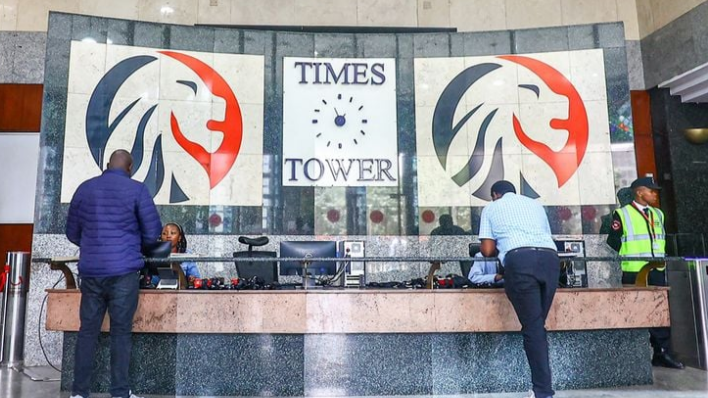
TIMES TOWER, Nairobi,7th April -In a renewed and elaborate revenue collection mechanism, the Kenya Revenue Authority (KRA) has reportedly surpassed the Sh 2 trillion mark in cumulative revenue collection by the close of the third quarter of FY 2025/26.
As at 31st March 2026, the taxman managed to collect Sh 2.038 trillion against the set target of Sh 2.122 trillion, thus representing a performance rate of 96.1% and an 11.4% growth as compared to the similar period in the previous financial year.
In a press release issued on Tuesday 7th April,2026, KRA Commissioner General Humphrey Wattanga attributes these achievements to key and deliberate institutional reforms.
“They are geared towards simplifying compliance, deepening digital integration, and embedding tax administration more seamlessly within everyday economic activity through data-driven administration,” he explained.
He, however, noted that the steady growth from Sh 1.829 trillion revenue collected over the same period in FY 2024/25 points to the resilience of the economy and in revenue mobilisation.
“Revenue collection maintained steady quarter-on-quarter growth across all three quarters, indicating improved compliance consistency and gradual strengthening in economic activity,” Wattanga noted.
Steady Growth
He further added that the consistent growth trend reflects the positive impact of ongoing compliance and facilitation intervention.
In addition, the tax agency also alluded to both Domestic Taxes and Customs performances for significantly contributing to the latest revenue growth.
According to KRA, Customs and Border Control, proved to be still a vital growth driver, thereby surpassing the target with a 100.9% performance rate and delivering Sh733.7 billion.
“This reflects a 13.3% growth compared to Sh 647.6 billion collected in the same period of FY 2024/25,” the statement reads in part.
Sh1.301 trillion was realised between July 2025 and March 2026, representing 10.4% revenue growth over the same period last year, and thus indicating that Domestic taxes remained the largest contributor to revenue performance. KRA also improved its revenue collection on behalf of other government entities that amounted to Sh204.452 billion.
“This registered a performance rate of 101.4% against a target of Sh201.705 billion. It represents a growth of 10.7% compared to the Sh184.650 billion realised in the same period of the previous financial year.”
The National Treasury revenue collection netted Sh1.834 trillion, against a target of Sh1.921 trillion with a 95.5% performance rate and a growth of 11.5 % realised compared to the Sh1.644 trillion collected in the same period in 2025.
To deliver the performance, the taxman adds that they surmounted “still-constrained macroeconomic environment” such as household purchasing power, soft consumer demand, elevated business costs, and continued global trade uncertainty.
“This resilience demonstrates continued taxpayer responsiveness, expanding compliance interventions, and improving administrative efficiency despite prevailing economic pressures.”
GDP Rise
GDP registered an upward trajectory to 4.9% in the third quarter of 2025, compared to 4.2% in Q3 2024, to offer the positive counterbalance.
As of March 2026, the overall inflation stood at 4.4%, up from 4.3% in February 2026. This is attributed to price increase for Food and Non-Alcoholic Beverages (7.7%), Transport (3.8%), Housing, Water, Electricity and Gas (2.0%). Meanwhile, the exchange rate of the Kenyan Shilling against the US dollar averaged Sh129.23/US$ in July – March 2025/26.
“This appreciation is expected to moderate imported inflation pressures and support domestic demand,” KRA notes.
Some of the Compliance and Facilitation Initiatives enhanced by the taxman include the Electronic Tax Invoice Management System (eTIMS) which continues to strengthen invoice visibility, curb VAT fraud schemes, and improve transaction-level accountability across sectors, with the expense validation initiative further reinforcing tax integrity.
GavaConnect Developer Portal, which is its Enterprise API platform, was created to expand tax administration beyond traditional portals.
“It allows businesses, fintechs and ERP providers to embed tax services directly into everyday business systems. With over 2,500 developers onboarded, the platform is creating a scalable digital compliance ecosystem.”
To further broaden the tax base of taxpayers currently outside conventional digital filing channels and simplify compliance, KRA established a WhatsApp Tax Filing and an AI Chatbot christened Shuru.
“It enables taxpayers to access pre-filled details, file returns, generate invoices, and obtain compliance certificates directly through the popular messaging app.”
The agency has also eased access to its services to taxpayers without smartphones, by introducing simplified USSD-based solutions available on both feature phones and smartphones by dialling *222#5#.
KRA’s Centralised Release Office has also significantly improved the efficiency of cargo clearance processes and realised a positive impact on customs revenue performance. It also immensely contributed to increased import values, resulting in higher average daily non-oil revenue.
Non-Oil Taxes
It also saw revenue collection for Non-oil taxes surpass the target by Sh3.555 billion, representing a growth of 16.9%, and its import values grew by 10.9%.
“This was driven by key commodities such as Vehicles, Cereals, Electrical machinery and equipment, iron and steel, and Fertiliser.”
In areas with limited or no physical KRA offices, the state agency is adopting a bank agent model to expand its footprint and enhance service accessibility, and it has also deployed Body Worn Cameras for Customs officers at customs verification stations, airports and border points to enhance transparency, compliance and integrity.
It has resolved to remain steadfast on intensifying compliance interventions, sustaining growth momentum, and closing
The remaining gap toward the annual target of Sh2.97 trillion.
“Safeguarding gains already achieved while accelerating targeted interventions necessary to deliver the full-year revenue objective,” the Commissioner General’s statement concluded.