GENEVA, April 2026 –The World Health Organisation (WHO) released its annual Results Report on Thursday, 23rd April, revealing significant global health improvements in 2025.
While the data shows millions more people are accessing healthcare and living healthier lives, the agency warned that recent funding cuts and resource constraints threaten to derail long-term objectives.
The report serves as the final assessment of the “Triple Billion” targets, a set of ambitious goals established in 2018 to improve universal health coverage, emergency protection, and overall well-being by the end of 2025.
The Numbers
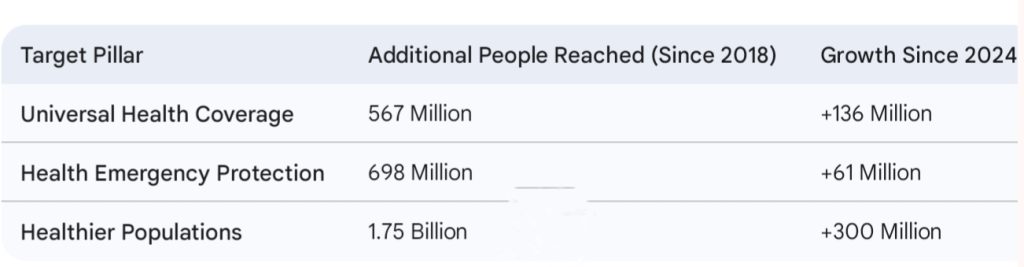
Compared to the 2018 baseline, the WHO reported substantial growth across its three main pillars. Despite a “pivotal” year of transition, the 2025 figures show a notable increase in reach since last year:
Success Amidst Strain
The WHO attributes these gains to its technical leadership in specific areas, such as the expanded use of the single-dose HPV vaccine, which saw global coverage ascend from 17% in 2019 to 31% in 2024, alongside a significant expansion of mental health support systems in emergency zones.
Other 2025 highlights include emergency response to 66 crises across 88 countries, including providing 33 million medical consultations in Gaza.
On Climate and Air, there is an updated roadmap aiming to reduce deaths from air pollution by 50% by 2040.
“The adoption of the new Pandemic Agreement and revised International Health Regulations aims to enhance pandemic preparedness,” the report partly states.
Funding Gap
Despite the celebratory figures, the report carries a sobering tone. About half of the WHO’s performance indicators were not achieved, particularly in resource-limited settings.
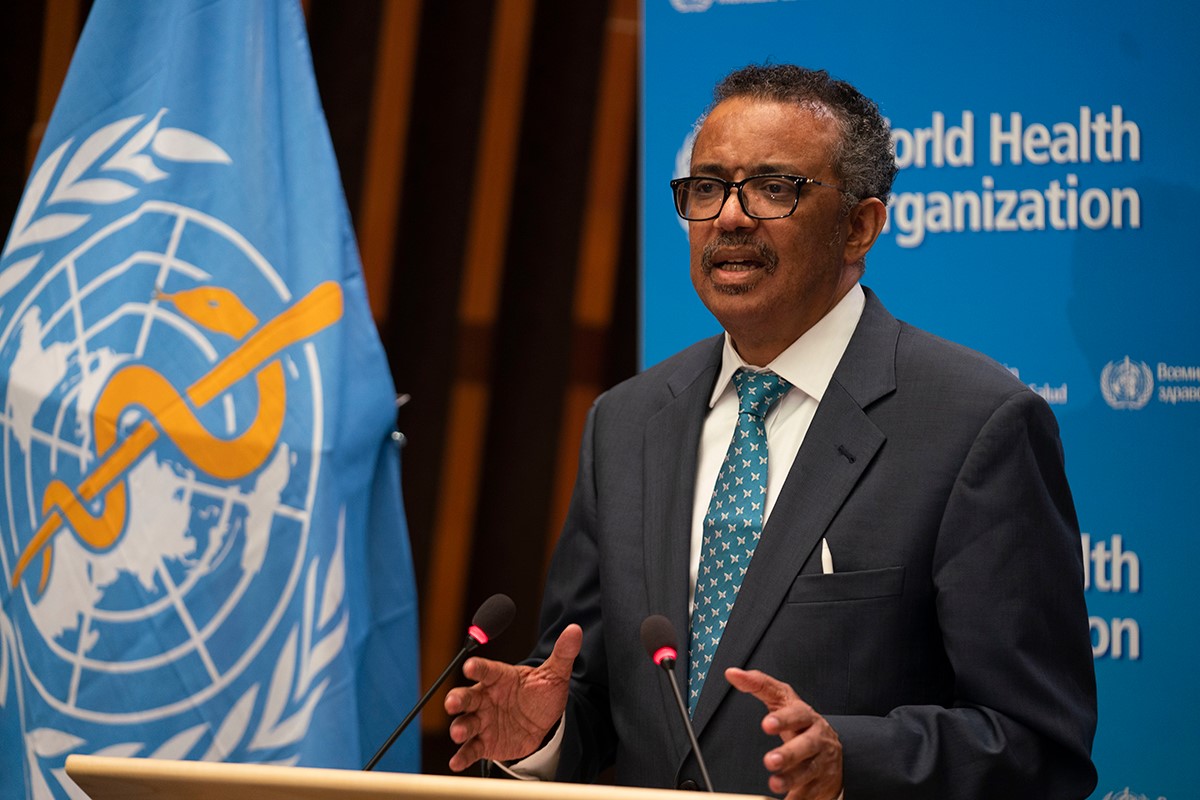
Dr Tedros Adhanom Ghebreyesus, WHO Director-General, noted that while progress is tangible, it remains fragile.
“Protecting and expanding these gains will require sustained support and investment,” he stated, pointing to “financial pressures” and a “realignment process” that have diminished the organisation’s human resource capacity and slowed technical assistance.
The report issues a warning that: “The world remains off track to meet the health‑related Sustainable Development Goals by 2030.”
Looking Forward
A significant obstacle remains the “earmarking” of funds; much of the WHO’s budget is tied by donors to specific projects, preventing the organisation from reallocating funds to where they are most needed during crises.
The full findings will be presented to Member States at the Seventy-ninth World Health Assembly, scheduled for 18th–23rd May 2026. As the global financial landscape tightens, the WHO calls for more flexible, “sustainable” financing to ensure that the progress made in 2025 is not lost in the years ahead.