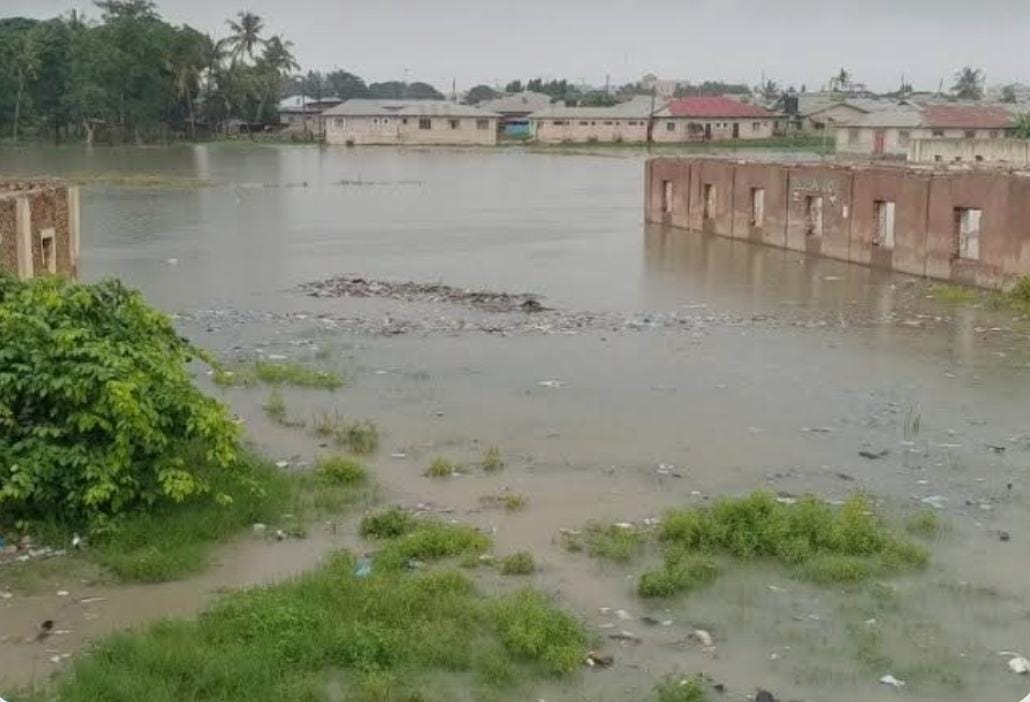
KISUMU/HOMA BAY, 25th June 2026 -The persistent stench that now hangs over sections of the Lake Victoria shoreline in Kisumu and Homa Bay is not merely an environmental concern. It is a warning sign of a deeper crisis that touches on public health, economic survival, governance, social cohesion, and ultimately, peace and stability within the Lake Region.
For years, residents, fishermen, environmental experts, public health practitioners and local leaders have raised concerns about the declining state of the Winam Gulf. Today, those concerns can no longer be ignored.
The unpleasant odour drifting from the lake is symptomatic of a larger problem: increasing pollution from untreated sewage, industrial effluent, poor waste management systems, agricultural runoff, and unchecked urbanization.
The environmental degradation of Lake Victoria is no longer simply a conservation issue. It is a governance challenge, a development challenge, and increasingly, a peacebuilding challenge that demands urgent, coordinated, and accountable action.
A Shared Resource Under Growing Pressure
Lake Victoria remains Africa’s largest freshwater lake and one of the world’s most important inland water bodies. Shared by Kenya, Uganda, and Tanzania, the lake supports an estimated 45 million people directly and indirectly through fisheries, agriculture, transportation, trade, tourism, and domestic water use.
In Kenya, counties bordering the lake, including Kisumu, Homa Bay, Siaya, Migori, and Busia, depend heavily on its resources for livelihoods and economic growth. Yet the Winam Gulf, the shallow northeastern extension of Lake Victoria, is increasingly becoming a pollution sink.
Scientific studies by the Kenya Marine and Fisheries Research Institute (KMFRI), the Lake Victoria Basin Commission (LVBC), the National Environment Management Authority (NEMA), and regional research institutions have consistently highlighted growing nutrient pollution, declining water quality, invasive species proliferation, and ecosystem degradation within the gulf.
Its geographical characteristics make the Winam Gulf especially vulnerable. Limited water circulation means pollutants remain trapped for longer periods, creating conditions that encourage algal blooms, oxygen depletion, and the foul smells now being reported with increasing frequency.
Beyond Pollution: A Threat to Livelihoods and Social Stability
Environmental degradation rarely occurs in isolation.
“When fish catches decline, incomes shrink.When water quality deteriorates, healthcare costs rise.When economic opportunities diminish, and social tensions often increase.”
Across fishing communities in Kisumu and Homa Bay, concerns are growing over declining fish stocks, rising operational costs, shrinking household incomes and increasing vulnerability among youth who depend on the lake economy.The fishing industry has historically been a critical source of employment and social stability in the region. As environmental pressures intensify, so too does competition over increasingly scarce resources.
Globally, environmental stress has been recognized as a potential driver of local conflicts, particularly where communities depend heavily on natural resources for survival. While Lake Victoria has long been a symbol of shared prosperity and regional integration, continued environmental decline risks undermining social cohesion and increasing tensions among communities competing for dwindling economic opportunities.
“Protecting the lake, therefore, is not only about protecting biodiversity. It is also about protecting livelihoods, preventing economic exclusion, and strengthening community resilience.”
Governance at the Centre of the Crisis
Kenya possesses a comprehensive legal and policy framework for environmental management. The Constitution of Kenya guarantees every citizen the right to a clean and healthy environment.
The Environmental Management and Coordination Act provides clear regulatory mechanisms for pollution control.NEMA, county governments, the Water Resources Authority, public health agencies and other institutions all have mandates that directly affect the health of Lake Victoria.
“The challenge is not the absence of laws.
The challenge is ensuring consistent implementation, monitoring, transparency, and accountability.”
Communities across the Lake Region deserve answers to fundamental questions:How many wastewater discharge points currently feed into rivers and streams that drain into the Winam Gulf? Which industries, institutions, and municipalities are fully compliant with effluent standards?How frequently is water quality monitored? Are monitoring results publicly available?What enforcement actions have been taken against violators?
Environmental governance thrives on transparency. When information is inaccessible, public trust erodes.When enforcement appears inconsistent, confidence in institutions weakens.When communities feel excluded from decision-making processes, environmental problems often become governance problems.
Why Conflict Sensitivity Matters
Any response to the Lake Victoria pollution crisis must be conflict-sensitive.Conflict sensitivity requires policymakers and institutions to understand how environmental interventions affect different groups and how inequalities can unintentionally fuel tensions.
For example:Fishermen, farmers, traders, industries, and urban residents often experience environmental challenges differently.Pollution control measures may impose costs on some sectors while generating benefits for others.
Enforcement actions, if perceived as selective or politically motivated, can create mistrust.Development projects that exclude local communities can generate resistance.A conflict-sensitive approach ensures that environmental restoration efforts are inclusive, participatory, and fair.
Communities must not merely be informed about decisions; they must be involved in shaping them. Meaningful stakeholder engagement reduces suspicion, builds ownership, and increases the likelihood of long-term success.
Building Peace Through Environmental Stewardship
Around the world, environmental restoration projects have increasingly become platforms for peacebuilding. Shared natural resources often create opportunities for cooperation across social, ethnic, political, and geographical divides.
Lake Victoria presents such an opportunity.A coordinated restoration effort involving national government agencies, county governments, civil society organizations, research institutions, private sector actors, and local communities could strengthen collaboration while addressing a common threat.
Environmental peacebuilding recognizes that sustainable resource management can contribute to:Stronger community relationships;Improved trust in institutions;Reduced competition over scarce resources;Greater economic resilience; and Enhanced social cohesion.
In the Lake Region, restoring the Winam Gulf could become a powerful example of how environmental action can simultaneously advance development, governance, and peace.
What Must Happen Next
The path forward is neither complicated nor unknown.The evidence points to several immediate priorities:
1. Conduct a Comprehensive Pollution Audit
All major discharge points entering the Winam Gulf should be identified, mapped, and publicly disclosed.
Communities have a right to know what is entering their lake.
2. Invest in Modern Wastewater Infrastructure
Kisumu and Homa Bay must accelerate investments in sewerage systems, wastewater treatment facilities, and sanitation infrastructure.
Rapid urban growth has outpaced current capacity.
3. Establish Public Water Quality Monitoring
Real-time water quality monitoring systems should be installed and data made accessible through public dashboards. Transparency strengthens accountability.
4. Restore and Protect Wetlands
Wetlands remain among the most effective natural systems for filtering pollutants before they reach the lake.
Their protection should become a regional priority.
5. Strengthen Environmental Enforcement
Environmental laws must be applied consistently and fairly.
Compliance should be rewarded, while violations should attract meaningful penalties.
6. Promote Sustainable Agriculture
Reducing fertilizer runoff through buffer zones, soil conservation, and climate-smart agricultural practices will significantly reduce nutrient pollution.
7. Create a Lake Victoria Multi-Stakeholder Governance Forum
A permanent forum bringing together county governments, regulators, civil society, academia, industries, fisherfolk associations and community leaders would improve coordination and strengthen collective accountability.
A Defining Test for the Lake Region
The stench rising from sections of the Winam Gulf is not the problem itself. It is a symptom of deeper environmental, institutional and developmental challenges that have accumulated over decades.
The science is clear, the risks are well documented and the solutions are available.
What remains uncertain is whether leadership at all levels will act with the urgency and commitment that the situation demands.The future of Lake Victoria will not be determined solely by environmental policies. It will also be shaped by the quality of governance, the strength of public institutions, the inclusiveness of decision-making processes and the willingness of communities to work together in pursuit of a shared future.
For the people of Kisumu, Homa Bay and the broader Lake Region, restoring the Winam Gulf is about far more than eliminating a foul smell.
“It is about safeguarding public health,protecting livelihoods,strengthening governance, and preventing future conflicts over diminishing resources.”
And ultimately, it is about securing peace, prosperity and dignity for generations that will inherit the lake long after today’s debates have faded.Lake Victoria has sustained communities for centuries. The responsibility to restore and protect it now rests with all of us.
The writer is a Peacebuilding, Governance, and Development Practitioner Lake Region, Kenya