KISUMU, 12th February-As a university researcher and teacher, I find deep academic fulfilment in teaching in ways that allow research, theory, and lived social realities to speak to each other. Moments of such reflection often emerge at the end of a semester, when one takes stock not only of content covered, but of ideas that matter beyond the classroom.
In this spirit, I wish to reflect on one of the lectures I delivered to my students in BPA 312: Theories of International Relations at the University of Kabianga, especially as they sit their examinations this week. This reflection draws from Lecture 7: Marxism and Its (Ir)Relevance Today, a lecture that forced us to confront uncomfortable questions about power, labour, and global inequality.
Karl Marx’s insistence that the working class must “master the mysteries of international politics” was neither a rhetorical flourish nor a utopian idealism; it was a warning. Marx understood capitalism as a global system whose survival depends not only on economic exploitation, but on the systematic political and intellectual disempowerment of labour. That this call remains unrealised more than 160 years later is not a failure of workers to awaken, but a testament to capitalism’s extraordinary capacity for reinvention.
Contemporary capitalism has repeatedly mutated, economically, ideologically, and institutionally, to ensure that labour remains fragmented, indebted, distracted, and politically neutralised. The vulnerability of the employee, far from being accidental, is actively produced and maintained through deliberate strategies that frustrate class consciousness and collective resistance.
1. Fragmentation of the Working Class Across Borders
One of the most effective ways capitalism has sustained labour vulnerability is through the globalisation of production and the deliberate fragmentation of the working class across borders. Global value chains disperse production into geographically distant and politically unequal spaces, ensuring that workers experience exploitation locally while capital accumulates globally.
In Kenya, the floriculture and tea industries illustrate this logic vividly: workers in Naivasha or Kericho labour under precarious conditions to supply European markets, yet any attempt at collective bargaining is undermined by the constant threat of relocation or automation. Similar dynamics operate in garment factories in Bangladesh, cobalt mines in the Democratic Republic of Congo, and electronics assembly plants in East Asia. By spatially disorganising labour, capitalism transforms workers into competitors rather than comrades, rendering Marx’s vision of international working-class solidarity structurally difficult to realise.
2. Systematic Casualisation and Flexibilization of Labour
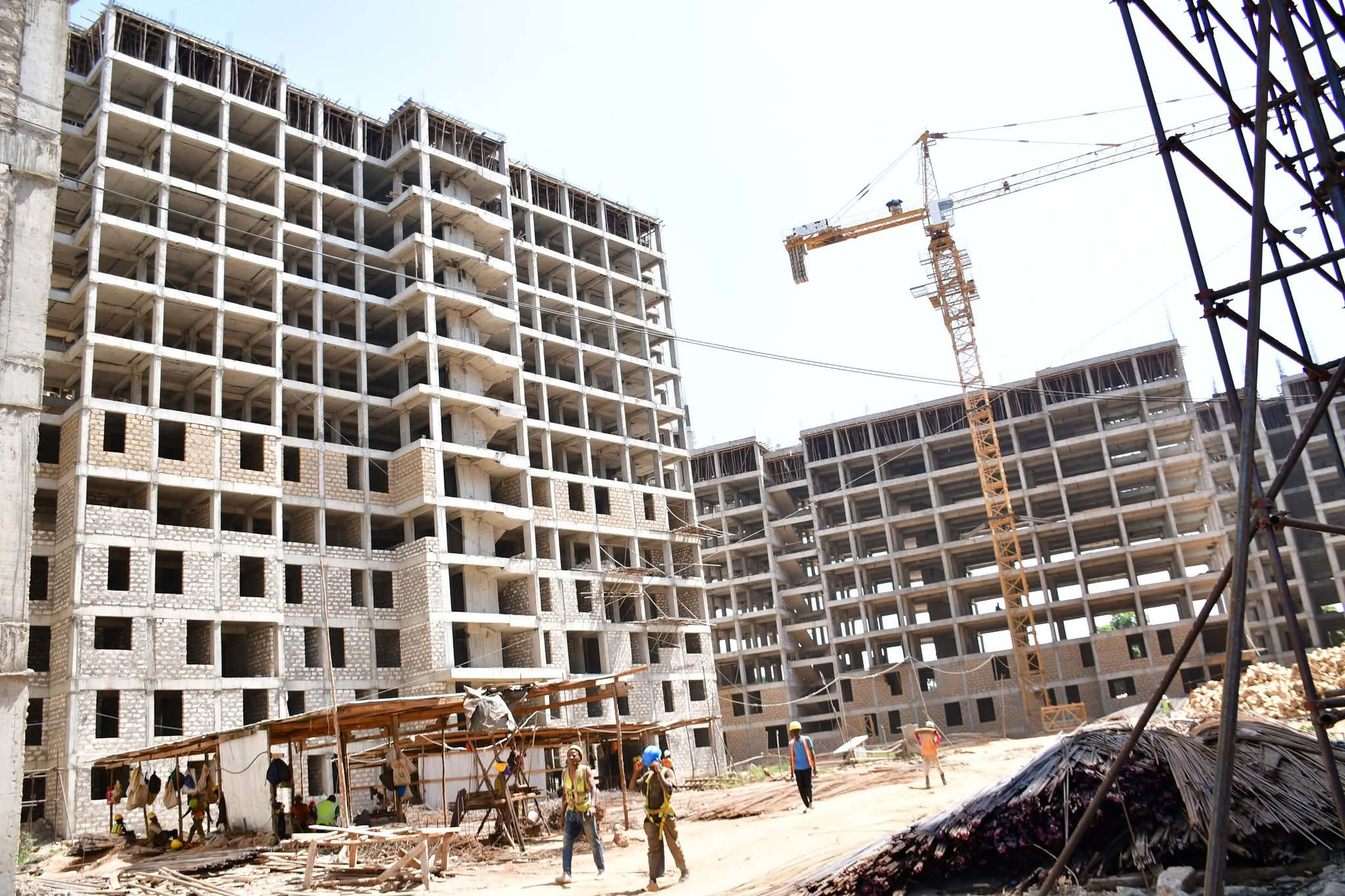
A second reinvention lies in the systematic casualisation and flexibilization of labour, which has hollowed out stable employment and replaced it with precarity. Capitalism has shifted risk downward, away from employers and states and onto workers themselves. In Kenya, the explosion of informal employment—boda boda riders, casual construction workers, domestic labourers, and platform-based drivers for Uber and Bolt—illustrates how labour is commodified without protection.
Workers are framed as “self-employed entrepreneurs,” yet remain entirely dependent on platforms and markets they do not control. Globally, the gig economy has perfected this model, celebrating flexibility while stripping workers of unions, benefits, and political leverage. Precarious workers, constantly anxious about survival, are structurally discouraged from sustained political engagement or radical critique.
3. Individualisation of Responsibility and Depoliticisation of Exploitation
Third, capitalism has reinvented itself ideologically by individualising responsibility and depoliticising exploitation. Neoliberal discourse relentlessly promotes narratives of meritocracy, hustle, resilience, and personal branding, obscuring the structural roots of inequality.
In Kenya, youth unemployment is routinely reframed as a problem of “mindset” rather than deindustrialisation, unequal trade relations, or global capital flight. Government and donor programmes celebrate entrepreneurship while ignoring the absence of decent jobs. This ideological manoeuvre is global. Poverty is moralised, inequality normalised, and failure internalised. As a result, workers are encouraged to blame themselves rather than the system that exploits them, undermining the collective consciousness Marx regarded as politically transformative.
4. Debt-Loan Trap
A fourth and particularly insidious strategy is the debt–loan trap, through which capitalism disciplines labour not only at the state level but within everyday life. While Marx focused on wage labour, contemporary capitalism has extended exploitation through financialization, trapping workers in endless cycles of debt. In Kenya, the rise of mobile lending platforms has produced a permanently indebted working population.
Salaries are advanced before they are earned, future labour is mortgaged, and workers are perpetually repaying loans. A worker who is always servicing debt has neither time nor psychological space for critical reflection or political mobilisation.
This logic extends globally through student loans in the United States, microfinance schemes across Africa and South Asia, and household debt in Europe. Debt functions as a mechanism of social control, ensuring compliance, discipline, and silence—precisely the opposite of the political mastery Marx envisioned.
5. Institutional Architecture of Global Governance
Fifth, capitalism has entrenched labour vulnerability through the institutional architecture of global governance. Institutions such as the IMF, World Bank, and WTO embed capitalist priorities into international rules, constraining states’ ability to protect workers. Structural Adjustment Programmes imposed on African countries in the 1980s and 1990s dismantled public employment, weakened trade unions, and normalised labour market “flexibility.”
In Kenya, privatisation and austerity reforms reshaped labour relations long after formal adjustment ended. Even today, loan conditionalities and fiscal discipline demands prioritise investor confidence over worker welfare. International politics, far from being neutral, has become a tool for managing labour in the interests of capital, confirming Marxist and Gramscian insights about the class character of global order.
6. The Co-Optation of the Intellectual Class and the Neutralisation of Radical Thought
A sixth and often overlooked reinvention concerns the co-optation of the intellectual class and the neutralisation of radical thought through funding, professionalisation, and endless theorising. Capitalism has learned that suppressing ideas is less effective than sponsoring them. Foundations such as the Rockefeller Foundation, Ford Foundation, Open Society (George Soros), and the Bill & Melinda Gates Foundation fund vast amounts of research, conferences, NGOs, and academic projects across Africa and the Global South. While these initiatives often produce critical language, they rarely challenge capitalist structures fundamentally.
In Kenya, scholars, policy experts, and civil society actors are absorbed into donor-funded projects, writing reports on inequality, governance, and development that diagnose problems already well known, yet stop short of advocating systemic transformation. Intellectual labour becomes busy, respectable, and well-funded, but politically defanged.
As Antonio Gramsci warned, hegemony is sustained not only by coercion but by consent—and capitalism has mastered the art of producing critical knowledge that ultimately reproduces its own ideological boundaries.
7. The Art of Absorbing Resistance
Finally, capitalism has perfected the art of absorbing resistance without transforming power relations. Limited labour rights, corporate social responsibility programmes, inclusion rhetoric, and diversity initiatives give the appearance of progress while leaving exploitation intact.
In South Africa, constitutional labour protections coexist with extreme inequality and mass unemployment. In Europe and North America, labour rights are selectively applied and easily rolled back in times of crisis. Reform stabilises capitalism by managing dissent rather than empowering labour. Trade unions are confined to wage negotiations, NGOs to project cycles, and scholars to publication metrics, while the deeper structures of commodification remain untouched.
In sum, Marx’s call for the working class to master international politics remains unrealised not because it was naive, but because capitalism has continuously reinvented itself to prevent precisely that outcome. Through globalisation, precarity, debt, ideology, institutional power, and the co-optation of intellectual labour, capitalism has ensured that workers are too divided, indebted, distracted, and professionalised to challenge the system that exploits them.
For students of International Relations, particularly in Kenya and the Global South, this reality underscores the enduring relevance of Marxist and critical theory, not as abstract critique, but as a necessary tool for exposing how global power reproduces itself while pretending to change.
Odhiambo A. Kasera is a Political Scientist and Adjunct Lecturer at Maseno, Rongo and the University of Kabianga.