African Energy Commission says over 40% of utilities lose more than 20% of electricity, pushes Efficiency-First approach to fix grids
Africa’s electricity demand is projected to nearly triple by 2040, driven by rapid population growth, urbanization and electrification, even as the continent battles crippling power losses and low access, the African Energy Commission (AFREC) has said.
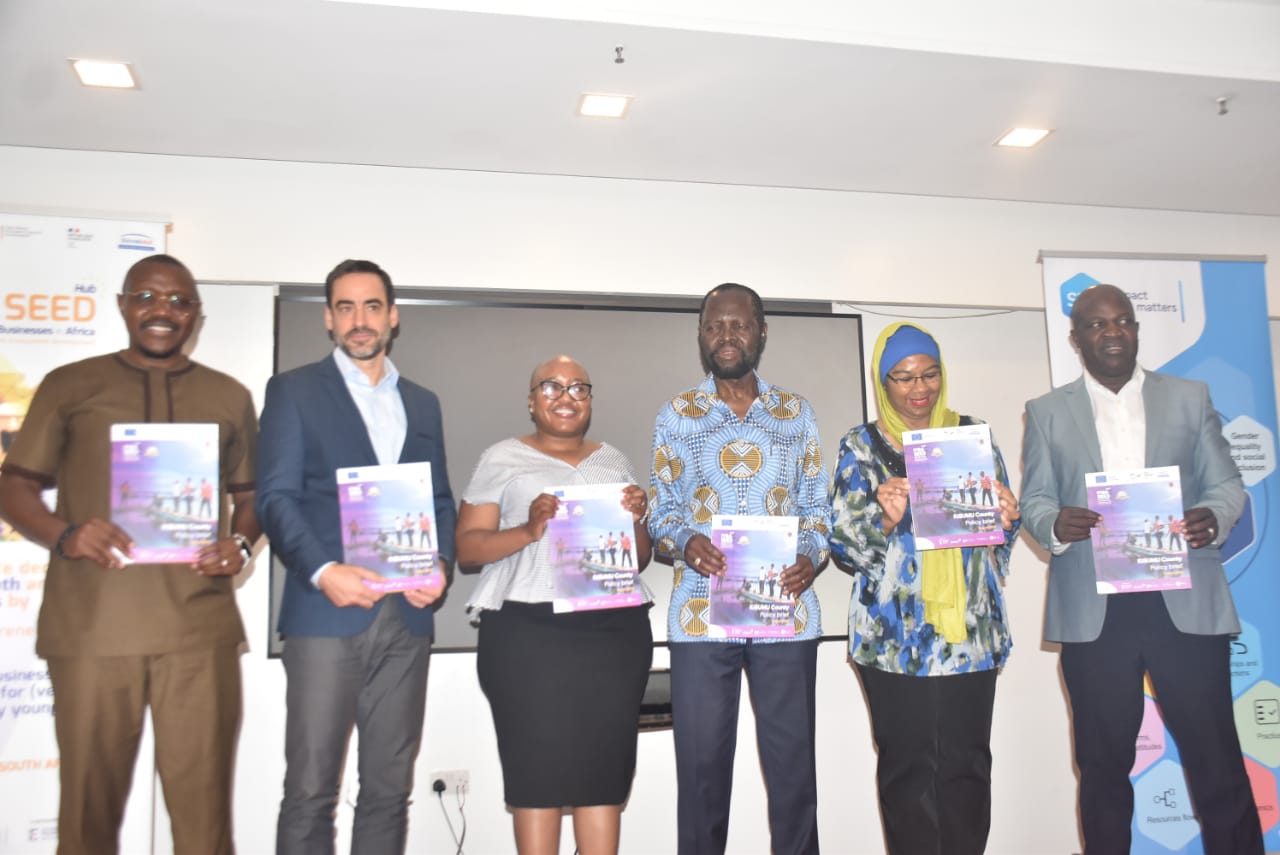
Speaking during the AFREC-IEA Webinar on Digitalisation and Grids in Africa held recently, AFREC Senior Policy Officer, Eng Nickson Bukachi Ongeri, warned that while Africa will more than double its population to 2.5 billion by 2050, over 560 million people still lack electricity, representing more than 85% of the global population without access. A further 930 million lack clean cooking.
According to Eng Bukachi, who presented under the theme, “Towards Efficient, Digitalised and Reliable Power Grids in Africa,” the challenge is compounded by poor grid quality and high losses.
“Even with low access levels, more than 40% of the population in served areas are affected by poor quality of service. More than 40% of African utilities report electricity losses of more than 20%, compared to 5-10% in developed countries,” he said, citing AFREC data.
He noted that in some areas, losses are almost seven times higher than the global average, trapping many utilities in a vicious cycle of high debt, under-investment, frequent outages, inadequate voltage management and increased customer reliance on backup generators.
On generation, Bukachi said fossil fuels still account for 75.4% of electricity generation in Africa, according to the Africa SDG 7 Report, even as the continent plans a massive scale-up in installed capacity.
Citing the Continental Power System Master Plan (CMP), he said Africa’s installed capacity is expected to grow fourfold from 263 GW in 2023 to over 1,200 GW in the continental scenario. Solar will grow from 9.8 GW to 262 GW, wind from 8.2 GW to 342 GW, and natural gas from 121 GW to 390 GW by 2040, with renewables accounting for over 60%.
Total electricity demand will surge from 878 TWh in 2021 to 3,280 TWh by 2040. The Eastern Africa Power Pool (EAPP) will see the sharpest growth, from 325 TWh to 1,452 TWh, followed by the Southern African Power Pool (SAPP) from 321 TWh to 793 TWh, according to CMP data.
To address the challenges, Eng. Bukachi said the African Union has rolled out flagship initiatives including the African Single Electricity Market (AfSEM), the Programme for Infrastructure Development in Africa (PIDA), the Continental Master Plan (CMP), and the African Energy Efficiency Strategy and Action Plan (AfEES).
AFREC, which is a specialised energy agency of the African Union under the Commission for Infrastructure and Energy, is mandated to coordinate, harmonise and integrate energy resources across the continent.
Through its African Energy Information System (AEIS) established in 2012, AFREC coordinates energy data collection and dissemination across Member States and Regional Economic Communities, while its African Energy Transition Programme aims to mobilise Africa’s own energy resources onto low-carbon pathways.
Under the African Energy Efficiency Programme, Bukachi said AFREC is promoting energy efficiency as Africa’s first fuel. The AfEES targets a 50% increase in energy productivity by 2050 and 70% by 2063, decoupling economic growth from energy consumption.
The programme targets six sectors: Industry, Buildings, Transport, Electricity, Agriculture, and Appliances and Clean Cooking, he said.
He highlighted the ongoing project, “Efficiency First: Powering Africa’s Sustainable Development,” supported by the Kingdom of Denmark, which is helping utilities reduce distribution losses through capacity building.
According to the presentation, the project aims to develop handbooks for 15 appliances under Minimum Energy Performance Standards (MEPS), train 200 experts from AU Member States, and develop a handbook on distribution grid loss determination and reduction, train 150 experts, and support eight Member States to develop loss reduction strategies.
“In this context, Africa’s electricity demand will grow, electricity losses remain high, and the AU has several initiatives targeted at addressing demand growth, decarbonising the grid and fixing losses,” Eng Bukachi concluded. Photo/Africa Energy Week