KISUMU, Sept 2026 -Imagine a young child in a village in Siaya County whose health begins to change.
At first, the symptoms may appear ordinary — persistent fever, weakness, loss of appetite, weight loss or unexplained pain. The family takes the child to a nearby health facility and receives treatment for what may initially appear to be a common childhood illness.
But the child does not improve.
The family returns to the health facility. More medicines are prescribed. Days become weeks. The child’s condition continues to deteriorate, and eventually the family is referred to a higher-level facility in search of answers.
By the time the child reaches a referral hospital, the family may already have spent considerable money on transport, consultations, medicines and food. One parent may have missed work or stopped working altogether to care for the child.
This is the kind of journey that we need to prevent.
It is important to be clear: not every child with fever, weight loss or weakness has cancer. Many childhood illnesses have similar symptoms. But when symptoms are persistent, unusual, unexplained or do not respond as expected to treatment, they deserve further medical assessment.
This matters because childhood cancer is treatable, and many childhood cancers can be cured when children receive timely diagnosis and appropriate treatment.
The global numbers demonstrate both the scale of the problem and the enormous opportunity for action.
According to the World Health Organization, an estimated 400,000 children and adolescents aged 0–19 develop cancer every year worldwide. In high-income countries, more than 80% of children with cancer can be cured, while in many low- and middle-income countries, fewer than 30% are cured. WHO identifies delayed or missed diagnosis, difficulties accessing treatment, treatment abandonment, toxicity and relapse among the factors contributing to avoidable deaths.
The disparity is particularly concerning for Africa.
WHO’s African Region has estimated childhood cancer survival at around 20%, compared with more than 80% in North America and parts of Europe. The region continues to face challenges including limited cancer data, late presentation, treatment abandonment, inadequate health-worker training and limited access to affordable medicines and comprehensive cancer services.
The latest international evidence also shows that survival varies considerably between countries and cancer types. An IARC analysis published in 2025, covering more than 16,800 children recorded in 47 population-based cancer registries across 23 countries, found substantial differences in childhood cancer survival across regions. For example, three-year survival for childhood leukaemia ranged from just above 30% in Kenya to almost 90% in Puerto Rico. These figures come from registry populations and should not be interpreted as a measurement of every child in Kenya.
Kenya has its own significant burden.
The 2024 National Cancer Screening and Early Diagnosis Guidelines estimate approximately 2,300 new childhood cancer cases in Kenya each year. The same guidelines emphasise that childhood cancer is treatable, that many symptoms are non-specific, and that health workers need a high level of suspicion when assessing children with concerning symptoms. Where childhood cancer is highly suspected, early referral to comprehensive cancer centres is recommended.
The Kenyan guidelines, using GLOBOCAN 2022 estimates, put the total number of childhood cancer cases at about 2,294 for children aged 0–19 in that year. The largest estimated groups included leukaemia, kidney cancers, non-Hodgkin lymphoma, Hodgkin lymphoma and brain/CNS cancers.
But what does this mean for Kisumu and the wider Nyanza region?
Kisumu is an important referral centre for Western Kenya, and Jaramogi Oginga Odinga Teaching and Referral Hospital (JOOTRH) provides paediatric oncology services.
In January 2023, JOOTRH reported that it was diagnosing approximately one to two new paediatric cancer cases every day, while around four to six children were receiving chemotherapy each day. This is a facility-level figure and should not be interpreted as the incidence of childhood cancer in Kisumu County. Nevertheless, it illustrates the demand for paediatric cancer services at a major referral facility serving the region.
There is also a history of childhood cancer research in western Kenya.
Earlier research involving hospitals in western Kenya found that Burkitt lymphoma accounted for 33.5% of 600 paediatric solid malignant tumour specimens examined from 1979 to 1994, with many of the tumours concentrated around the Lake Victoria region. These are historical data and should not be used as a current estimate of the cancer burden, but they demonstrate the long-standing importance of childhood cancer in western Kenya.
What we still do not have is enough reliable, current, population-based data to tell us precisely how many children in Kisumu, Siaya, Homa Bay, Migori, Busia, Vihiga and neighbouring counties develop cancer every year, how long they wait before diagnosis, how many reach specialised treatment and where children are lost along the care pathway.
That is why the development of a National Childhood Cancer Registry is so important.
In January 2026, the National Cancer Institute of Kenya reported progress towards establishing a National Childhood Cancer Registry, with stakeholders from Nairobi, Nyanza and other regions participating in discussions around standardised data, digital systems, reporting and research.
Better data will help us answer questions that matter to families and health planners.
How many children are presenting late? How long does it take from the first symptoms to diagnosis? How many children are referred from Siaya to Kisumu? How many complete their treatment? What are the major reasons children discontinue treatment? How much are families spending on transport, food, accommodation and other costs, and perhaps most importantly, where in the health system are we losing children?
The barriers are not only medical.
For a family from rural Siaya travelling to Kisumu, the cost of transport can be substantial. The family may also need money for food, accommodation and repeated journeys. A parent may have to leave employment or suspend a small business in order to accompany the child.
For households already struggling financially, a childhood cancer diagnosis can become an economic crisis. This is why childhood cancer must be considered within the broader agenda of universal health coverage, primary healthcare, social protection and health-system strengthening.
The first opportunity for action may be within the community: community health promoters, parents, teachers and local leaders can help create awareness that persistent or unusual symptoms in children should receive appropriate medical attention.
Frontline health workers at dispensaries, health centres and primary-care facilities also have an important role. They do not need to diagnose every cancer themselves. But they need to recognise warning signs, maintain an appropriate level of suspicion and know when a child requires further investigation or urgent referral.
The referral system then needs to work, not simply mean sending a family to another facility with a piece of paper. There should be a functioning pathway connecting the community, primary healthcare facility, county referral services and specialised paediatric oncology services.
Families should understand where they are going, why the referral is necessary and what they should do next. Hospitals and county health systems should also strengthen counter-referral and follow-up mechanisms so that children do not disappear from care after the first referral.
We also need to talk about the human side of cancer. Behind every statistic is a child, mother, father, grandparent, sibling, teacher and community.
A cancer diagnosis can bring fear, confusion and uncertainty. Families need accurate information, respectful communication, psychosocial support and assistance navigating the health system. They should not have to navigate the journey alone.
There is also an opportunity for Kisumu County and the wider Nyanza region to bring together county governments, referral hospitals, community health promoters (CHP), civil society organisations, faith-based organisations, development partners, private-sector actors, schools and families.
The goal should not simply be to increase awareness of cancer.
It should be to build a better care pathway where a parent recognises that something is wrong, a CHP knows where to direct the family, a primary-care provider recognises when symptoms require further investigation, and a referral is made without unnecessary delay.
“Diagnostic services are accessible, specialists receive the child in time, treatment is available and affordable, and families receive the support they need to complete the journey.”
We should also be careful about the language we use. Awareness campaigns should not create fear or encourage parents to assume that every common childhood symptom is cancer. Childhood cancers are relatively uncommon, and many symptoms have other causes.
The message should instead be simple: Persistent or unusual symptoms deserve medical attention. When a child does not improve as expected, seek further assessment. Follow referrals. Ask questions. Do not give up on the care pathway.
The statistics tell us that the opportunity is enormous.
Globally, around 400,000 children and adolescents develop cancer every year. WHO’s Global Initiative for Childhood Cancer aims to increase childhood cancer survival to at least 60% by 2030 while reducing suffering and improving quality of life.
Kenya faces an estimated 2,300 new childhood cancer cases every year, and in Kisumu, the regional referral system is already caring for significant numbers of children with cancer, while Kenya continues to strengthen the data systems needed to understand the burden more accurately.
These numbers should not leave us helpless, but should move us towards action.
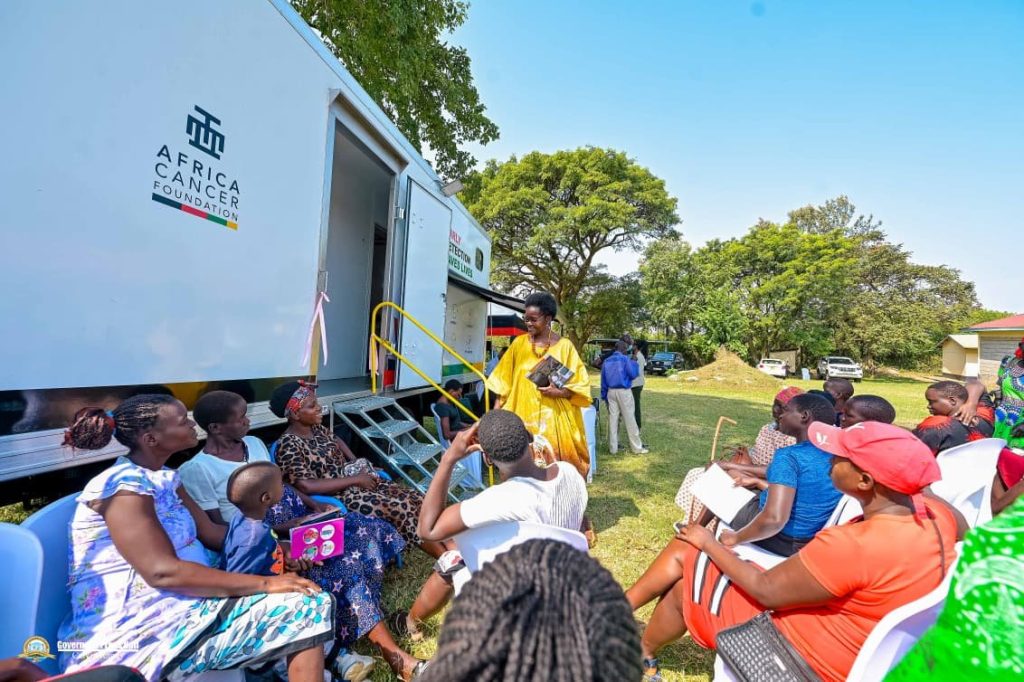
As Kisumu County and the wider Nyanza region continue strengthening healthcare, childhood cancer deserves a place in conversations about early diagnosis, referral systems, financial protection, specialised services, community health and universal health coverage.
Let us work together to drive awareness without creating fear, strengthen the capacity of frontline health workers, improve referral and counter-referral systems, support families who face the financial burden of prolonged treatment and invest in better data.
And let us ensure that a child from Siaya, Kisumu or any other part of Nyanza has an opportunity to reach the right care at the right time.
Childhood cancer should not be a story of delayed diagnosis, repeated referrals and families running out of options. It should be a story of early recognition, timely referral, appropriate treatment, family support and hope.
Every child deserves that opportunity.
Moses Kidi is a Health Advocate in Kisumu County