CGIAR report warns women in low-income countries risk being left further behind unless governments, donors and private sector improve inclusion
NAIROBI, 18 Oct 2026 -Women in low-income countries are at greater risk of being left further behind than men by the impact of the polycrisis on global food systems, unless governments, donors and development partners improve inclusion, according to a new report.
The report,Advancing equality, transforming futures: a path to resilient and productive food, land and water systems in 2050, was released by the CGIAR GENDER Accelerator on Wednesday to mark the International Day of Rural Women.
It calls on governments, funders, NGOs, researchers and the private sector to address the gender gap as food systems evolve between now and 2050.
Compounding pressure on food systems, from the fuel and fertilizer crisis to climate extremes and trade disruption, has disproportionately impacted women over the past year. At the same time, the report notes, women remain central to building resilient food systems.
“The choices we make over the coming years will determine whether food, land, and water systems become more equitable or more unequal, more resilient or more fragile,” said Ismahane Elouafi, Executive Managing Director of CGIAR.
“We cannot feed our future without including women in our food systems – this report is a manual on how to do just that by 2050.”
Among its findings, climate change will further reduce water availability, potentially increasing the time women spend collecting water by 30 percent.
It also finds that while rural women are increasingly expected to move to off-farm jobs in retail, processing and logistics by 2050, the transition is likely to be uneven without targeted support.
To address structural inequities, the authors recommend ensuring safer work environments and bundling technical training with interventions that challenge social norms that place a disproportionate burden of unpaid care on women.
On technology, the report notes that digital tools hold significant potential to bridge gender inequities, despite the current divide. In Kenya, for example, women are up to 25 percent less likely than men to access digital climate advisory services.
It calls on technology developers to involve women in the development of breakthrough technologies like AI before scaling their use.
“This report moves beyond recommending piecemeal interventions to outlining systemic structural changes that can decisively close the gender gap,” said Nicoline de Haan, Director of the CGIAR GENDER Accelerator.
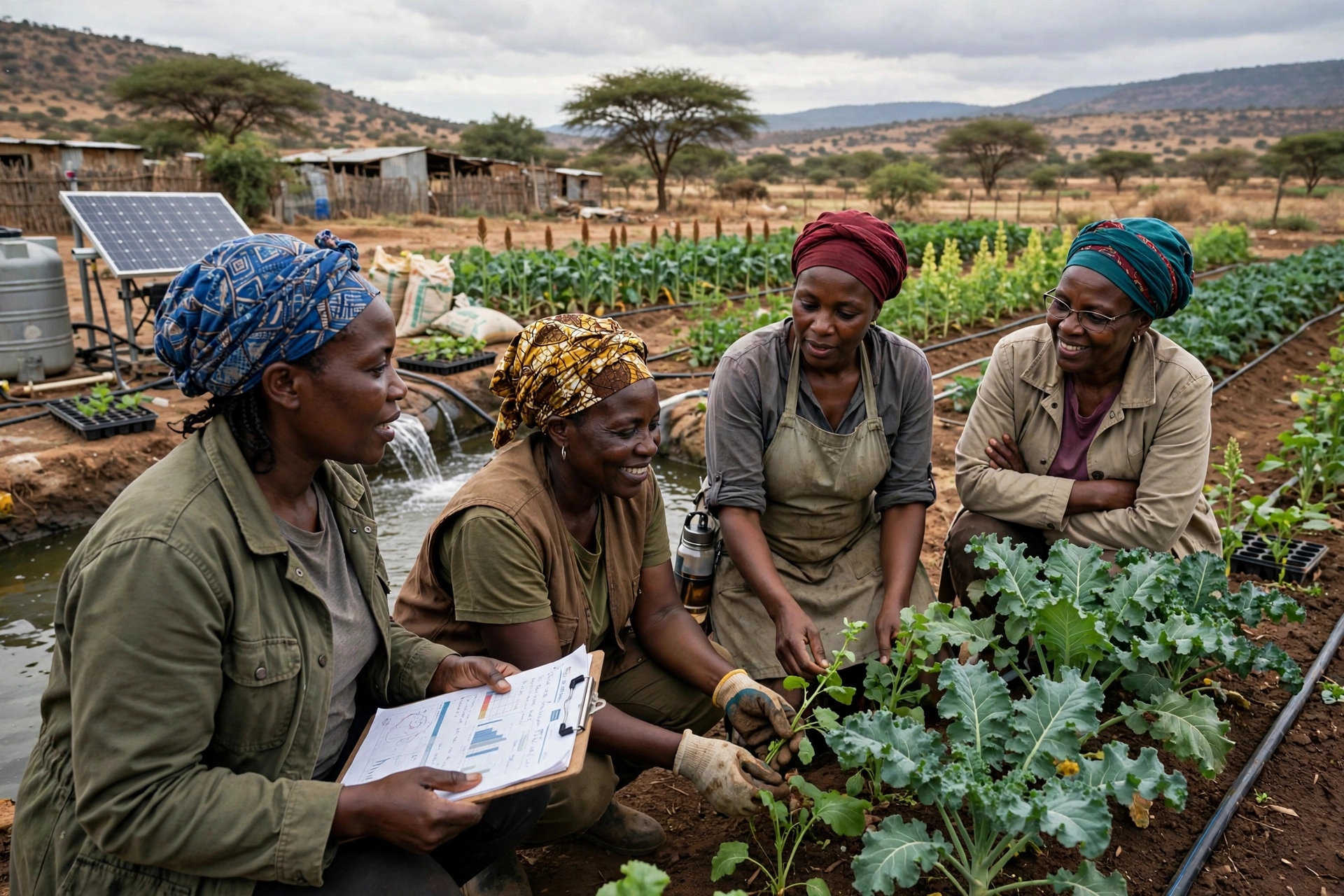
“Investing in women, not as laborers, but as leaders, is the path towards unlocking the full potential of our food, land and water systems.” Image: AI-Generated