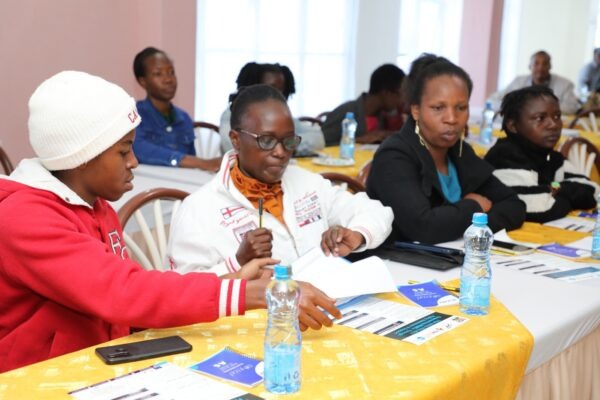
ELDORET, Uasin Gishu July 22 –The Micro and Small Enterprises Authority (MSEA), in partnership with SNV Netherlands Development Organisation, has successfully concluded a series of policy awareness forums across Uasin Gishu, Kisumu, and Nakuru counties.
The initiative, part of the third phase of the Supporting Entrepreneurship Ecosystem Development (SEED) programme under the Investing in Young Businesses in Africa -SEED (IYBA‑SEED) framework, targeted early-stage micro and small businesses, especially those led by youth and women—operating in sectors such as agriculture, digital innovation, and the circular economy.
Over 400 entrepreneurs, including women, youth, and persons with disabilities, attended the forums. A key objective was to bridge the information gap limiting MSMEs from fully benefiting from government frameworks and services.
Bridging Knowledge Gaps
MSEA’s Senior Assistant Director for Manufacturing and Agribusiness, Tabitha Gicheru, emphasised the importance of demystifying institutional offerings.
“The goal is to demystify what different institutions offer so that MSMEs can understand how to benefit,” she said, noting the sessions introduced entrepreneurs to the draft MSME Policy 2025 and the proposed MSE Amendment Bill 2025.
MSEA’s Director of Infrastructure Development and Innovation, Edward Karani, highlighted the value of business formalisation and capacity-building programs such as the SME Loop, a GIZ-partnered initiative.
He also introduced forthcoming initiatives like NYOTA (National Youth Opportunities Towards Advancement) and KJET (Kenya Jobs and Economic Transformation).
Showcasing Technologies
Participants toured Constituency Industrial Development Centres (CIDCs) and Juakali worksites, where they were shown shared machinery, digital technologies, and workspaces aimed at enhancing production efficiency.
Forums featured product exhibitions showcasing enterprises like Transcare Agencies (energy‑saving jikos), Abilag Nuts (peanut butter), and Gramon Creations (handcrafted jewellery), among others.
These components demonstrated how MSMEs can access public resources to scale operations while fostering market and stakeholder linkages.
Feedback Loops
Beyond information dissemination, the forums served as two-way platforms for policy feedback. Panel discussions included representatives from MSEA regional offices, SNV, KEBS, KIRDI, KRA, KNCCI, KAM, youth affairs, financial institutions, and county officials.
These sessions captured stakeholder perspectives on barriers such as licensing costs, regulatory complexity, infrastructure deficits, and limited digital access—especially in agribusiness and manufacturing.
This feedback will inform future revisions to the MSME Policy 2025 and the MSE Act, aiming to smooth the formalisation process and promote scalability.
Policy Advocacy Toolkit
A major outcome of IYBA‑SEED is the development of a Policy Advocacy Toolkit, designed to build advocacy capacity within ecosystem actors like Business Membership Organisations (BMOs) and Entrepreneurship Support Organisations (ESOs).
The toolkit, targeting stakeholder engagement, policy analysis, and coalition building, helps entrepreneurs participate actively in policy dialogues aligned with Kenya’s Fourth Medium‑Term Plan.
Strengthening Collaborations
SNV’s IYBA‑SEED Project Manager, Nduta Ndirangu, emphasised that the initiative strengthens collaboration between MSMEs and public and private institutions.
By linking businesses to financial services, non-financial support, and value-chain opportunities in agri-food, energy, and water sectors, the programme seeks to enhance enterprise resilience and job creation.
Looking Ahead
Aligned with the government’s review of the MSME Policy 2025 and amendments to the MSE Act, MSEA Deputy Director for Legal Services, Mary Chege, confirmed ongoing reforms aimed at creating a supportive regulatory environment.
These are expected to help micro enterprises transition into formal, scalable businesses by reducing bureaucratic hurdles and enhancing legal clarity.