An Analysis of the Revival of the Delayed Migori County Headquarters Project
MIGORI, Kenya, August 12th –After over three and a half decades of abandonment, the National Government has finally initiated steps to revive the long-stalled construction of the Migori County Headquarters.
This decision follows a high-profile visit by Interior and National Administration Cabinet Secretary Kipchumba Murkomen to the site, accompanied by a team of architectural experts and senior county and national government officials.
The tour marked a pivotal moment, signalling renewed political will and institutional commitment to complete the long-forgotten structure.
Originally intended as a centralised administrative complex, the building was designed to host all county executive and departmental offices.
This centralisation was envisioned to streamline governance by bringing critical services and staff under one roof.
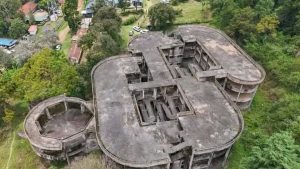
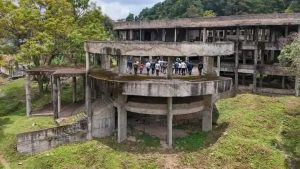
However, the building has stood as a symbol of unfulfilled promises—its structure weathered by time, with an unfinished shell that has become a visual reminder of developmental stagnation.
Despite the wear, architectural evaluations conducted during the visit concluded that the structure remains fundamentally sound and can still fulfil its intended purpose once completed.
CS Murkomen’s intervention represents a significant shift in the approach to long-standing infrastructural deficits in the region.
His commitment to mobilise resources and coordinate with relevant government agencies to expedite the project’s completion underscores a broader agenda: the reinforcement of administrative infrastructure across counties.
The project is likely to breathe new life into the Migori County complex. The government aims to enhance coordination of state functions at the local level and ensure better access to public services for residents.
During his address, Murkomen emphasised the strategic importance of the project within the framework of Jukwaa la Usalama, the national platform for strengthening governance, security, and development.
He noted that a functioning administrative hub would not only improve service delivery but also contribute to improved security coordination and socioeconomic planning in the county.
“This aligns with the national vision of empowering devolved units while ensuring cohesion with central government objectives,” said the CS.
The revival of the project is not an isolated initiative but part of a wider national strategy to rejuvenate neglected infrastructure that hampers governance.
The presence of high-ranking officials during the tour—including Deputy Inspector General (APS) Gilbert Masengeli, PAS Beverly Opwora, and Nyanza Regional Commissioner Flora Mworoa—signalled a coordinated, cross-agency commitment to delivering results.
The inclusion of specialists from civil registration, national administration, and NACADA further suggests a multi-sectoral approach aimed at ensuring the building, once complete, becomes a functional hub for multiple public services.
Moreover, the move to complete the Migori complex serves as a potential catalyst for regional development.
” Improved administrative facilities are likely to attract more government functions to the county, encourage private sector engagement, and create employment opportunities during and after construction,” according to Ayacko.
He welcomed the project revival as a game changer and a good initiative for Migori saying they will work together to transform the county.
For a region that has long felt sidelined in national development priorities, this project could also represent a symbolic and practical step towards inclusivity and equity in state resource allocation.
However, the success of the revival effort will depend on more than just political declarations.
Execution timelines, budget transparency, contractor accountability, and sustained political goodwill will be critical in ensuring the project is not derailed again.
Past experiences in similar projects across Kenya have shown that initial momentum can quickly fade without proper oversight mechanisms.
Therefore, continued public engagement and regular progress updates will be essential to maintaining momentum and building public trust.
It reflects a maturing administrative ethos that prioritises service delivery, regional equity, and long-term planning.
If implemented effectively, this project has the potential to transform governance in Migori, serving as a model for similar stalled projects across the country revived by the national government.