
KISUMU, Kenya August 12th –Kenya’s political landscape, while vibrant and dynamic, has repeatedly flirted with chaos in the wake of general elections.
The pattern is familiar: heightened political tension, contested results, civil unrest, and an uneasy calm punctuated by fragile truces.
This cycle of brinkmanship—where political actors push the country to the edge of instability in pursuit of power—has defined our post-election reality since the return of multiparty politics.
Yet, each time the nation has stood at the precipice, we have seen a recurring miracle: the pullback from the edge, often brokered through the unwritten principles of consociational democracy.
Brinkmanship in Kenya has never been theoretical. In 2007, the disputed presidential election unleashed unprecedented violence, with over 1,000 lives lost and hundreds of thousands displaced.
Ethnic tensions, political incitement, and an absence of trust in electoral institutions converged into a combustible mix.
It took the intervention of international mediators and a rare show of statesmanship—particularly from opposition leader Raila Odinga—to steer the nation toward a power-sharing agreement.
The creation of the Grand Coalition Government under the National Accord was not just a political compromise; it was the quintessential expression of consociational democracy: inclusive governance as a tool for national healing.
Consociationalism, a political model emphasising power-sharing among different segments of society—ethnic, religious, or political—has become Kenya’s default conflict-resolution mechanism.
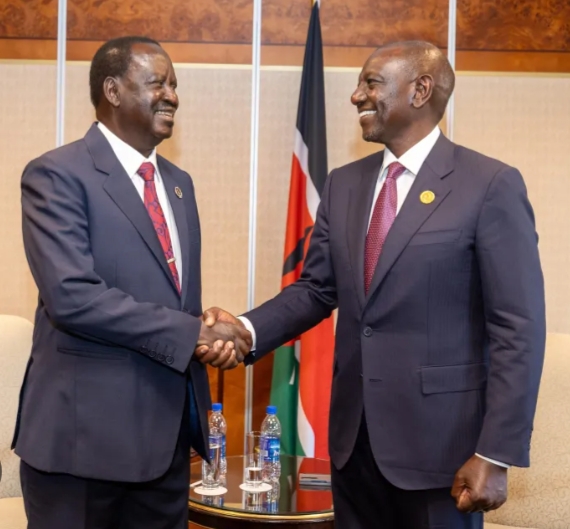
While not enshrined formally in the Constitution, it has manifested in major political moments: the 2008 National Accord, the 2013 and 2017 post-election reconciliations, and most recently, the 2018 “Handshake” between Raila Odinga and President Uhuru Kenyatta.
The Handshake, though controversial to some, was a masterstroke in political diplomacy.
At a time when the country teetered on the edge of civil disobedience and economic paralysis, Raila chose dialogue over confrontation.
We must accept that prioritizing peace over personal ambition, he helped birth the Building Bridges Initiative (BBI), which, although ultimately unsuccessful in court, reignited national conversations around inclusion, equity, and constitutional reform.
Critics argue that these elite bargains undermine democracy by sidelining the will of voters.
However, in Kenya’s deeply ethnicized political environment, such compromises have repeatedly pulled the nation back from disaster.
They have provided breathing room—time for reflection, institutional reform, and healing.
They also underscore a painful truth: our institutions are not yet robust enough to manage zero-sum electoral contests without risking national cohesion.
The 2022 elections presented another test. Although relatively peaceful compared to previous cycles, the aftermath was still characterised by political standoffs, legal contests, and claims of electoral injustice.
Again, the threat of brinkmanship loomed large. And yet again, it was the politics of inclusion, dialogue, and compromise—however informal—that de-escalated tensions.
Leaders like Raila, who could have chosen mass mobilization and confrontation, instead chose restraint, placing the nation above personal grievance. Good. Kudos Jakom
Of course, consociational democracy is not a panacea. It should not be an excuse for elite entrenchment or a substitute for genuine electoral reform.
But in a country as diverse and polarized as Kenya, it remains a pragmatic tool—a necessary bridge between competing interests, and a shield against descent into chaos.
Moving forward, Kenya must aim higher. We must invest in strengthening our institutions—especially the electoral commission and the judiciary—so that elections cease to be existential crises.
We must address the root causes of political exclusion and economic marginalization that fuel our recurrent instability.
And we must recognize and honor the leaders who, time and again, have sacrificed personal gain to preserve national unity.
Raila Odinga’s legacy is not merely that of a perennial presidential contender. It is that of a statesman who, more than once, has chosen dialogue over division, peace over populism.
His embrace of consociational ideals has been instrumental in navigating Kenya through its most dangerous storms.
As another election cycle looms on the horizon, the lessons of our past should not be forgotten. Kenya cannot afford the politics of brinkmanship.
But if history is any guide, and if our leaders summon the same spirit of restraint and dialogue, we will again choose peace and prosperity for the common good.
The author is a political analyst, media consultant and a regular advocate for democracy and good governance in Africa. kepherpeace@gmail.com

