BELEM, Brazil –ActionAid has sounded a warning over the fragility of the progress on the new just transition text, which was shared on Tuesday morning after negotiations that went until after 1 am last night.
Making remarks on the new development, Teresa Anderson, the Global Lead on Climate Justice at ActionAid, said “We are getting closer to a climate agreement that leaves no one behind. The text has unprecedented language on the needs of marginalised groups.”
This group, she mentioned are the most at risk of being forgotten and accidentally harmed by climate plans.
“It’s progress, but fragile. Without a mechanism to make sure that people really are included and supported, it’s all just words,” Anderson remarked.
She single out Canada and the UK, in particular, are playing a big, empty game on just transition, insisting on just sticking to underwhelming approaches such as guidance and continued dialogues.
“But to make sure that climate action addresses and doesn’t exacerbate inequality, the world needs coordinated action through a proper mechanism.”
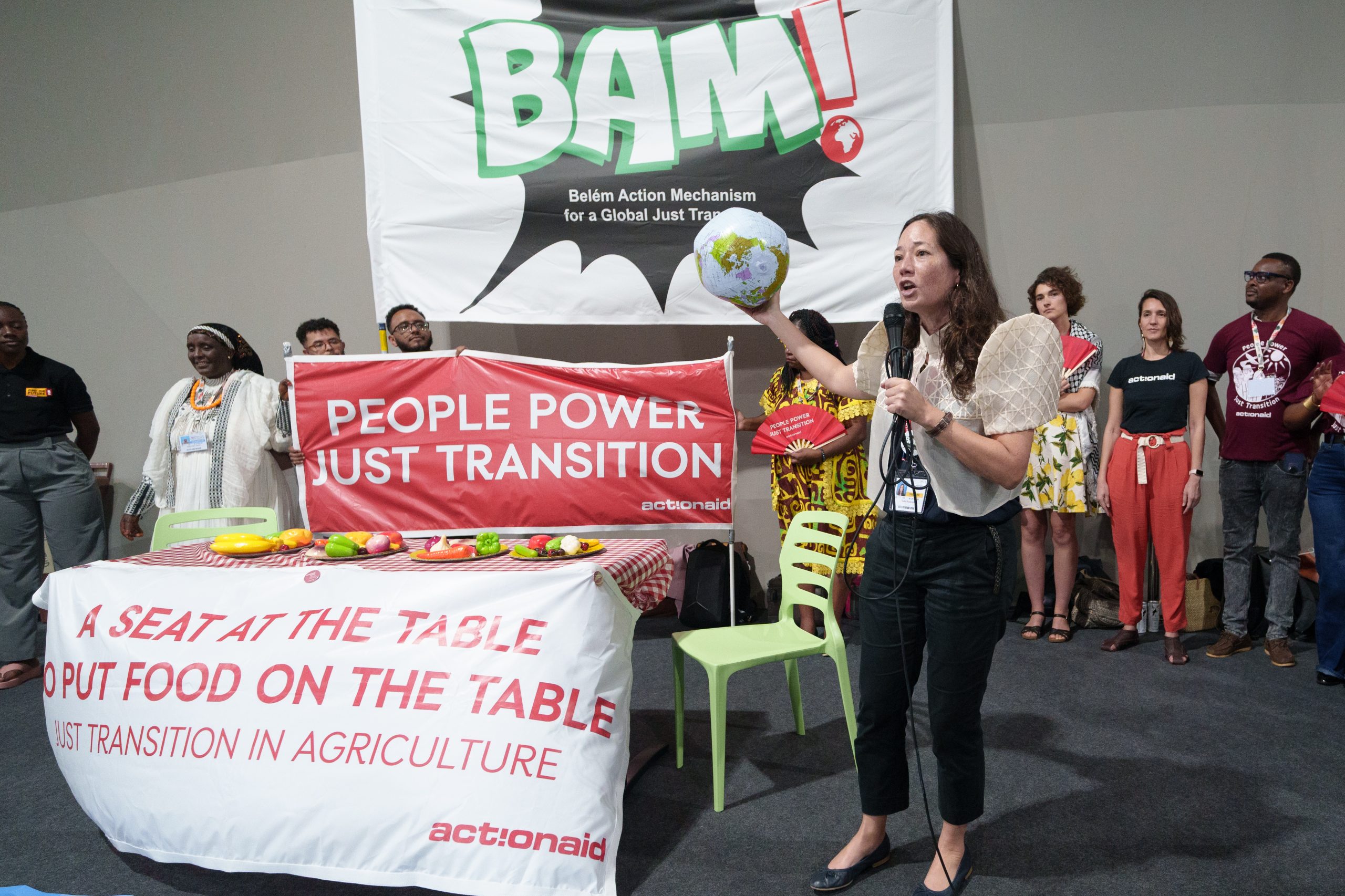
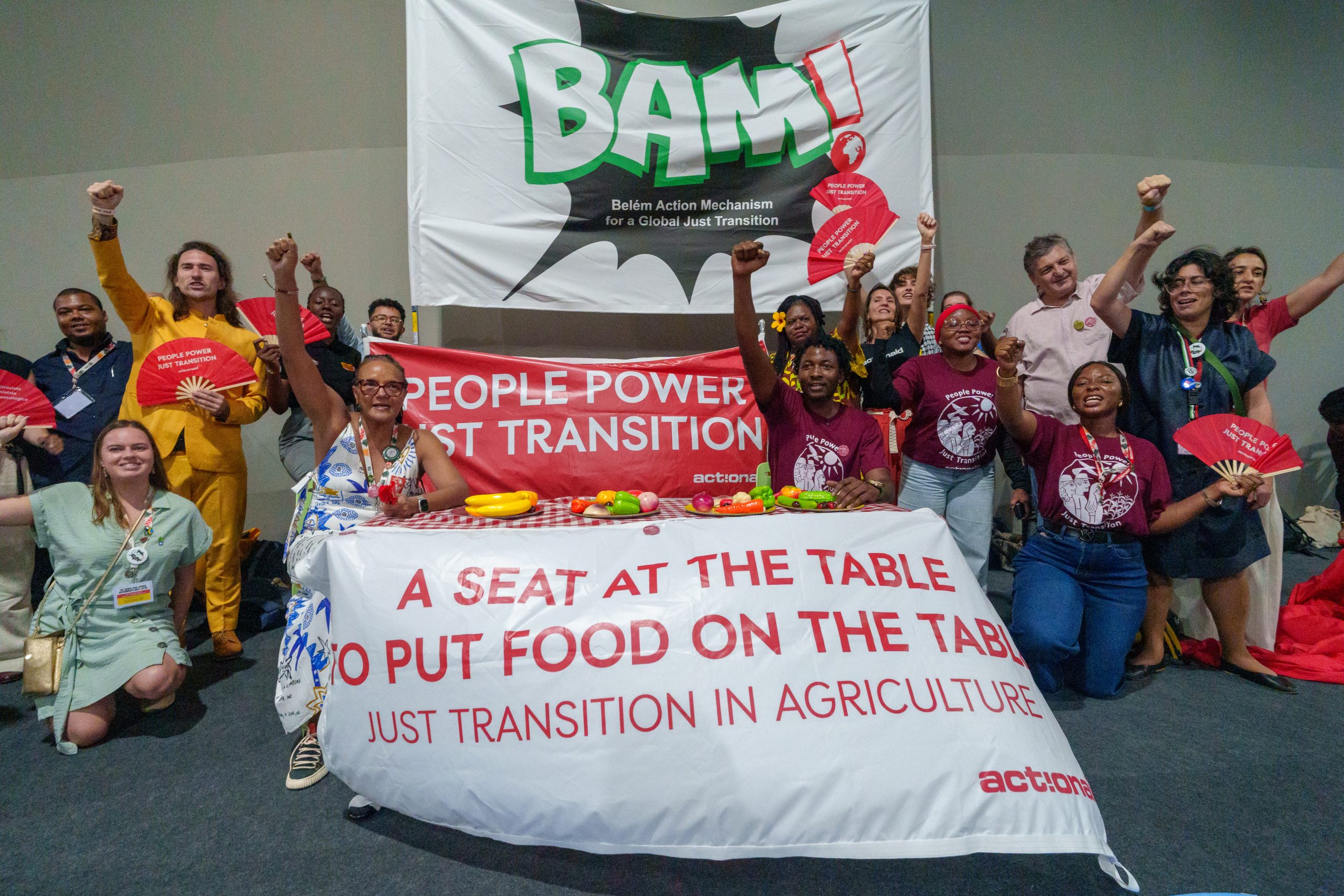
On Friday 14th November, ActionAid led other climate activists at COP30 in calling on governments to include agriculture in just transition negotiations.
This, they noted will ensure that the voices of farmers, traditional communities, indigenous people and workers in the sector are heard in all decisions about climate plans that affect them.
Together, they held banners that read “A seat at the table to put food on the table,” and “People Power, Just Transition,” while emphasising that as the world moves away from harmful industrial agriculture practices, jobs, food and land rights of indigenous farmers must be safeguarded and their voices heard about decisions that affect them.
Concurring with the sentiments, Zambian youthful activist, Valepi Banda, added that COP30 is happening without the inclusion of the people who actually feed the world, including the negotiators here.
“Farmers and indigenous communities aren’t some cute footnotes; they are experts who need a seat at the table in decision-making that affects them,” Banda noted.
Speaking at the same gathering on behalf of women, the Ethiopian Meko Adem Dawud observed that they’re facing several crises that affect their livelihoods.
“We want climate finance in the form of grants from those responsible for causing the climate crisis, which has increased the frequency of droughts and flooding, causing crop failure and food insecurity in our countries.”