KISUMU, Kenya,16th December- In conventional parlance, political assassination refers to an action that directly or indirectly leads to the death of an INTENTIONALLY TARGETED individual who is active in the political sphere, carried out to promote or prevent specific policies, values, practices, or norms that relate to the collective (Combatting Terrorism Centre, 2015).
Political assassinations are and have been a way of life since mankind invented the community as the optimal framework of co-existence. In the old times, village, tribe, and other forms of community leaders did conduct crude forms of political assassination to protect their privileged status.
In ancient times, it involved the rise and fall of empires. The father of Alexander the Great, King Philip II of Macedon, was assassinated in 336 BCE as he was entering a theatre to attend his daughter’s marriage celebrations. Gaius Julius Caesar was assassinated in 44 BCE by Roman senators who increasingly feared that Caesar would revoke their privileges.
The practice of political assassination has only increased in modern times and has had far-reaching consequences in certain societies, regions and the world as a whole. Many security analysts agree, for example, that the assassination of the Israeli Prime Minister, Yitzhak Rabin, in 1995 was a major reason for the collapse of the peace process between Israel and the Palestinians and the continued pursuit of a reverse trajectory by Prime Minister Benjamin Netanyahu and his ally, the USA, showcases the dangers that await regions and the globe through the myopic, selfish pursuit of political interests and preservation by way of political assassination.
Likewise, Arie Perliger assert that many Americans view ‘the assassination of John F. Kennedy as the crime that has had the greatest impact on American society in the last 100 years’. Kenyans can make similar observations when they remember their past visionaries and scholars per excellence, notably Dr. Odhiambo Mbai (the intellect behind devolution) Dr. Robert Ouko and others.
Despite their obvious political impact, political assassinations remain an understudied area. The Combating Terrorism Centre (C TC )’s global dataset, which covers the period 1946–2013, offers one of the most systematic datasets available, documenting 758 assassination attacks, involving 920 perpetrators and resulting in 954 deaths of political figures worldwide. While limited, the research provides important insight into recurring global patterns. Let me highlight a few of these:
Trends in causes
1. Political assassinations are more likely in countries with restricted political competition, deep polarisation, and fragmented societies, especially where politically excluded groups exist.
2. Periods of elections and heightened domestic violence consistently show spikes in assassinations.
3. Countries experiencing territorial fragmentation, where the state loses control over parts of its territory, see higher assassination rates as both state and non-state actors resort to violence to assert legitimacy.
Who tends to be targeted?
1. The most common targets globally are members of parliament (21%), opposition leaders (18%), and heads of state (17%).
2. Other targets include ministers (14%), diplomats (10%), local politicians such as governors and mayors (5%), and vice heads of state (3%).
3. Opposition leaders are especially vulnerable in authoritarian systems and weak democracies, often during periods of internal conflict or political transition.
Who tends to do the targeting?
1. Most assassinations of government officials are carried out by sub-state armed groups, including terrorist and militant organisations. However, non-conventional knowledge shows that this type of PA results from a conspiracy of sub-state and government operatives.
2. In contrast, assassinations of opposition leaders are frequently linked to ruling political elites or their proxies, highlighting the state’s role as an active or indirect actor.
3. Over 51% of assassins had prior involvement in criminal or militant activity, suggesting these attacks are usually carried out by experienced operatives rather than spontaneous actors.
Kenya’s Embedded Narrative
Examining the Kenyan case, we see that political assassinations rarely present themselves as assassinations in the conventional sense. They are instead embedded within everyday explanations that feel familiar, reasonable, and socially digestible.
A keen observer sees that death is not announced as political but narrated as accidental, personal, or self-inflicted. Over time, these narratives repeat themselves with such consistency that they form a recognisable pattern, one that Kenyan public memory can resonate with, even when official records do not.
Unfortunately, such trends are almost impossible to detect due to the very MECHANICS OF EMBEDDED NARRATIVE. Small wonder, therefore, that between 2,022 and 16 Dec, Kenya has lost over 9 active and former MCAs, over 4 MPs – active and former, a former president and the country’s most consequential Chief of Defence Forces, but life seems normal. Usual explanations and short-lived SOCIAL MEDIA EMOTIONAL activism in certain cases, and life is back to normal. Below, I list some trends relevant to Kenya’s PA.
A recurring element in several high-profile Kenyan political deaths is the introduction of an intimate distraction, often through the naming or insinuation of a woman who allegedly featured in the deceased’s final hours. In the case of J.M. Kariuki, early state-aligned narratives sought to reduce his murder to a private fallout rather than a political execution, despite overwhelming evidence that his killing was organised and political.
For Dr Robert Ouko, public discourse quickly fixated on a female acquaintance allegedly linked to his final movements, a framing that gained prominence even as the focus gradually shifted away from the political tensions surrounding his Washington trip and internal cabinet rivalries.
Similarly, in the death of Mutula Kilonzo, media and informal narratives foregrounded the presence of a woman said to have been with him shortly before his death, despite unresolved questions around tampered evidence, delayed forensic processes, and contradictions in official accounts.
What this pattern achieves is not clarification but privatisation of political death; attention subtly redirected from motive, threat, and power to companionship, morality, and personal judgment. The political actor is recast as a private individual whose death appears self-generated, an outcome of personal choices rather than political consequence where intimacy becomes a narrative instrument, deployed to blunt political inquiry and neutralise collective outrage.
Closely tied to the intimate-distraction narrative is the invocation of substance use or overuse; alcohol, prescription medication, exhaustion, stress, or declining health. In several past cases, this framing appears early and persistently in media and official commentary. For example, following the death of Mutula Kilonzo, public explanations repeatedly emphasised exhaustion, blood pressure medication, stress, and possible overmedication, even as questions emerged about missing organs, delayed post-mortems, and interference with the hotel room where he was found.
In the case of Robert Ouko, early narratives foregrounded stress, depression, and personal strain before broader political dynamics surrounding his Washington visit and internal cabinet conflicts were fully interrogated. Similarly, in the controversial death of businessman Jacob Juma, heavy emphasis was placed on alcohol use and lifestyle almost immediately, effectively crowding out discussion of the public threats he had openly reported before his killing.
This framing performs a powerful narrative function by individualising responsibility. Death is transformed into a lifestyle outcome rather than a political event. The implicit moral is simple and socially persuasive, namely, that what kills you is what you overuse.
The big danger is that once this logic settles into public consciousness, questions of power, motive, threat, and political consequence lose urgency. Substance becomes explanation; explanation becomes closure; and closure replaces accountability.
Perhaps the most sanitised and socially acceptable explanation is the road accident narrative, often accompanied by references to prior “irresponsible driving” or recklessness. Roads kill daily in Kenya; accidents are ordinary, tragic, and non-political.
As such, they provide the safest possible explanation for sudden death. When a political life ends on the highway, public inquiry often ends there too. It is a narrative that requires no commissions, no enemies, and no accountability.
What then completes the anatomy is narrative coordination. State-aligned media houses and well-resourced social media influencers – domestic but increasingly diasporians, many of whom rarely speak without incentive, move swiftly to endorse the SIGNPOSTS of EMBEDDED NARRATIVE; accident or personal-failure narrative, often well before any formal investigation is concluded.
Where investigations are announced, they tend to arrive late, conclude quietly, or affirm the initial story. Over time, repetition replaces evidence, and closure replaces truth.
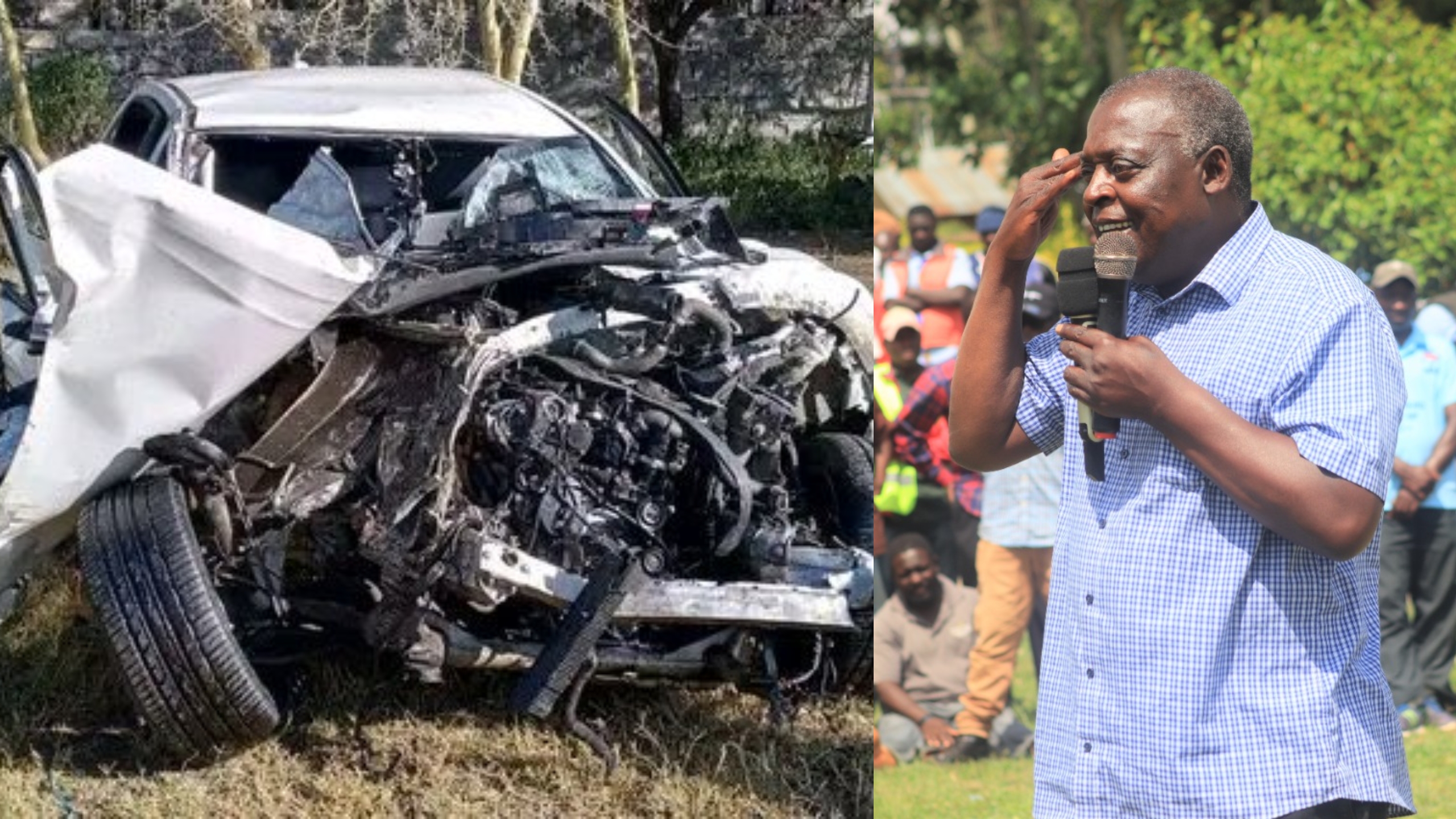
It is within this context that the death of Cyrus Jirongo should be situated. His passing cannot be examined in isolation from the earlier death of his daughter’s boyfriend, nor from the publicly expressed fears and anxieties he voiced thereafter.
To ignore this broader context is not neutrality; it is escapism. In Kenya, political assassination is less about the act itself and more about how death is explained, circulated, and finally normalised.
Everything else is narrative building. Everything else is meant to make us stop asking questions.
Odhiambo A.Kasera is a Political Scientist and Adjunct Lecturer at Maseno, Rongo, and the University of Kabianga. Photos Courtesy