OSIRI MATANDA, Migori, April 2026-In Osiri Matanda, in Migori County, a troubling question is unfolding in real time: what happens when a community is dispersed overnight, and a sub-county hospital falls silent? Hundreds of people living with tuberculosis (TB) and human immunodeficiency virus (HIV) are left in limbo?
This is not just a local disruption. It is a public health fault line.
Migori County already carries a heavy tuberculosis burden, shaped by high HIV prevalence, artisanal mining, and constant cross-border movement. According to routine surveillance data from the National Tuberculosis, Leprosy and Lung Disease Program, the county reports over 2,000 TB cases annually, placing it among Kenya’s higher burden regions.
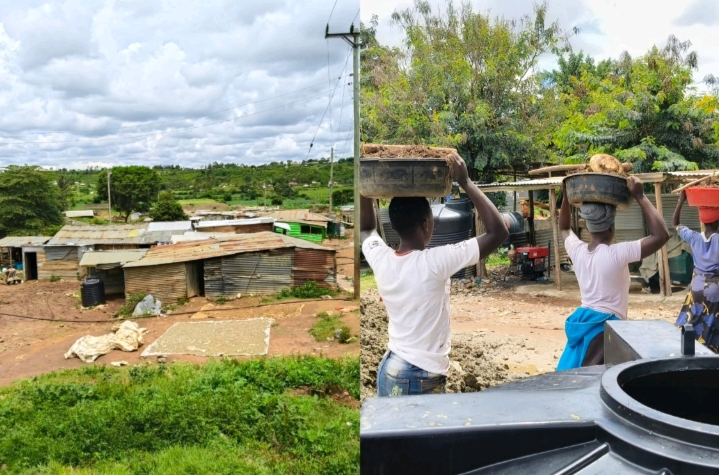
Artisanal mining communities contribute significantly to this burden, with about 191 cases, roughly 10 percent of total notifications, emerging from these high-risk settings. These are not just numbers. They reflect a population living and working in conditions that make both transmission and treatment extremely difficult.
In public health terms, it is a high-risk convergence zone where TB transmission is amplified and HIV vulnerability deepens. Within the county, Nyatike sub-county stands out as a hotspot, with TB incidence estimated at 209 per 100,000 people, significantly higher than the county average of 155 per 100,000, based on surveillance aligned with the Ministry of Health Kenya.
In mining communities, the overlap between TB and HIV is stark, with co-infection rates reaching 37 percent, compounding treatment complexity and increasing mortality risk.
Even more concerning is the silent burden among children. In 2024, 161 children in Migori County were diagnosed with TB, underscoring ongoing transmission and gaps in early detection.
Now imagine this already strained system abruptly disrupted.
When security operations scatter artisanal miners, they do more than restore order. They unintentionally dismantle one of the few lifelines holding vulnerable populations in care. Treatment for TB requires strict adherence. Interrupt it, and you risk not only worsening illness but also fuelling drug-resistant strains. HIV treatment depends on consistency. Break that chain, and viral suppression is lost, with consequences for both individual health and community transmission.
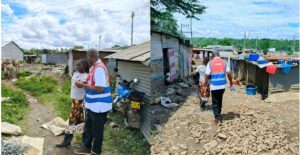
The challenge is compounded by mobility. Cross-border movement between Kenya and Tanzania already presents a major barrier to treatment continuity, as documented in national TB program reports. Patients frequently move before completing treatment, contributing to loss to follow-up and ongoing transmission. Displacement only accelerates this pattern, turning a local disruption into a regional public health concern.
And here lies the uncomfortable truth: our systems are not designed for people who move.
To its credit, the Migori County government, through its Department of Health, has taken important steps aligned with the national strategy. Workplace interventions targeting mining populations are being promoted. Community-based TB case finding and routine screening have been strengthened in high-burden areas.
Partnerships with organisations such as Network of TB Champions Kenya, Stop TB Partnership Kenya, KELIN Kenya, Médecins Sans Frontières, and Centre for Medical Mobilisation Board (CMMB) are strengthening diagnostic capacity, advancing human rights, and supporting community-led monitoring, including expanded access to rapid molecular testing. TB diagnosis and treatment remain free of charge under national policy guided by the Ministry of Health Kenya.
These efforts matter. They save lives every day.
But they are built on an assumption of stability. They depend on people being present, reachable, and consistently linked to care. When a population like that of Osiri Matanda is suddenly scattered, even the strongest interventions struggle to hold.
Policies and frameworks exist at national and global levels. Institutions like the Ministry of Health Kenya, guided by standards from the World Health Organisation, recognise the need to prioritise high-risk and mobile populations.
Yet the lived reality in places like Osiri Matanda exposes a persistent gap between policy and practice. Artisanal miners live outside formal systems. They often lack fixed addresses, social protection, and continuous relationships with healthcare providers. When they are displaced, they do not transition smoothly into another facility. They disappear, carrying interrupted treatment and unmet health needs across counties and borders.
What happens in Osiri Matanda does not stay in Osiri Matanda. It travels. A miner who interrupts TB treatment today in Migori may surface weeks later elsewhere, sicker and harder to treat. A person who misses HIV medication may lose viral suppression and unknowingly contribute to new infections. This is how local disruption becomes a wider public health setback.
The question we must confront is simple: do our systems truly plan for this reality?
Because if enforcement actions proceed without integrating public health safeguards, we risk undermining the very progress we are working so hard to achieve. Security operations should not mean treatment interruption. Displacement should not mean abandonment of care.
The way forward demands integration.
Multi-month drug dispensing must become standard in high mobility settings, as recommended within national TB and HIV guidelines. Patient-held records and interoperable systems must allow seamless continuation of care across counties and borders.
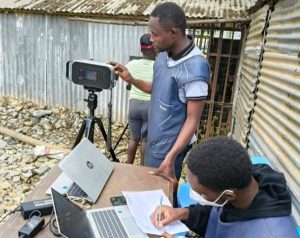
TB champions, community health promoters, and peer networks must be empowered to follow recipients of care beyond facilities. Above all, coordination between health authorities and security agencies must be deliberate and consistent.
Osiri Matanda is not an isolated story. It is a warning. It reminds us that a health system anchored only in fixed facilities will fail mobile populations.
“It exposes the cost of overlooking informal, high-risk communities, challenges us to act with urgency and foresight, because when people scatter, care must not scatter with them.”
Erick Okioma is a TB and HIV advocate, AHD Champion, Team Leader of Nelson Mandela TB HIV Information CBO, and Vice Chair of the Network of TB Champions Kenya.