

Lavina Oduor is a co-founder of Heart to Heart Smile Organisation, which focuses on preventing disabilities, fighting for the rights of caregivers, and creating a more inclusive Kenya. In this exclusive interview, she reveals to ROLEX OMONDI insights into her journey.
Q: Lavina, thank you for the opportunity, and to start us off, can you tell us what inspired you to start Heart to Heart Smile Organisation?
Lavina: The reason it was founded and officially registered in 2018 is very personal: I am a caregiver to my brother, my follower, Kevin, who has a mental health condition known as Schizophrenia. When we were growing up, I saw my brother struggling with this condition. I saw my mom struggling to raise us. It was not easy to manage, as Kevin could at times be wild. There were situations where we had to involve the police to get him to the hospital.
He was always taken to Kisumu County Referral Hospital (KCRH), Ward 8, where they would give him an injection to calm him down. It’s been 25 years down that lane with that condition, and the experience shaped my destiny. That is why I started the organisation, me being the chairperson …to turn that pain into purpose.
Q: Your organisation covers several key areas. What are your main thematic focuses?
Lavina: Our primary focus is on Maternal and Newborn Health, with a laser focus on young mothers. We are talking to them about how some types of disability conditions can be prevented, such as Hydrocephalus and Spina bifida. We always advise them to go to antenatal clinics or start taking folic acid and iron supplements three months before getting pregnant. These conditions can manifest in the first trimester, so early intervention is key.
Our other focus area is on Education and Referrals, whereby we don’t pay for education, but we refer caregivers to the International Assessment Centre (IAC) for educational assessments. Based on their condition, children are then placed into learning institutions.
In Rehabilitation, we do medical outreaches with partners like Nyabondo Rehabilitation Centre to create awareness in the community. During field sessions, we find children born with conditions like Clubfoot (Congenital Talipes Equinovarus) that can be corrected at an early age, and also donate assistive devices.
Q: You mentioned assistive devices. How many have you been able to provide since you started?
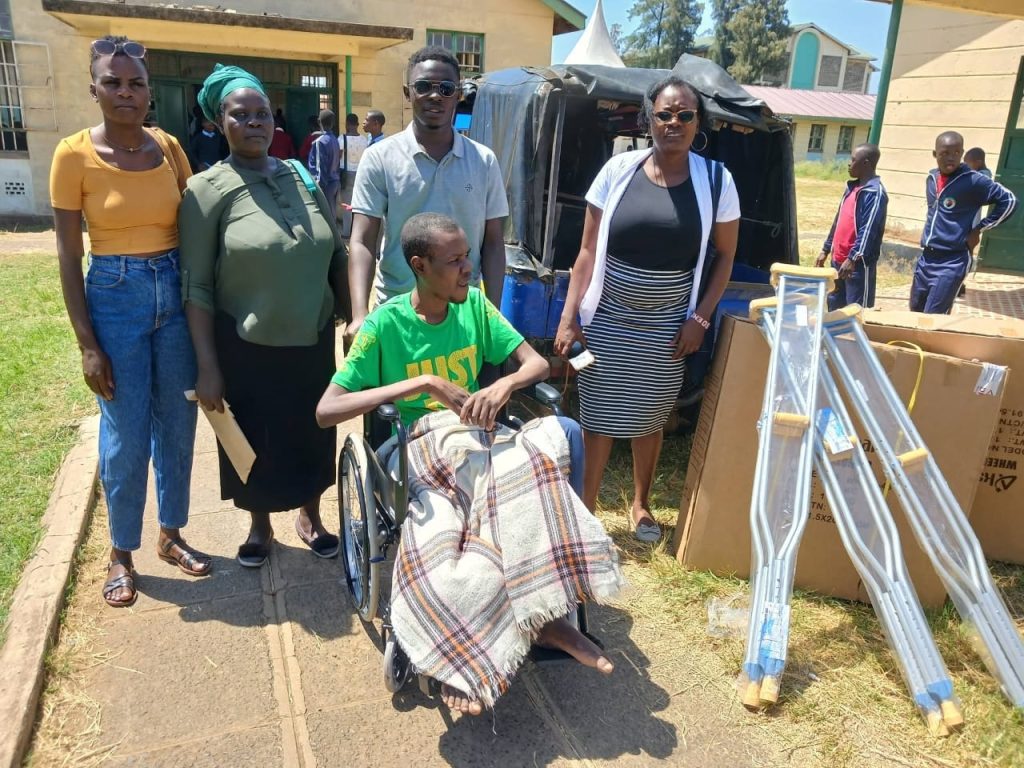
Lavina: Since our inception in 2018, I can say we have given out over 800 assistive devices in the community. Since our organisation doesn’t have funds, we rely on friends and well-wishers to donate these items, which include wheelchairs, crutches, and walking frames.
Q: Beyond physical health, how do you support the economic well-being of the families you work with?
Lavina: We also focus on Economic Empowerment, whereby we have a support group for caregivers and persons with disabilities. We use a Voluntary Learning and Savings (VSL) model where we make small contributions. People can then take small loans from that pool to use for their household expenses.
We also link them to government funding. For example, all the youths with disabilities in our support group are beneficiaries of the NYOTA funding. I help them with the applications. There was a boy who didn’t even know about it, and when he got it, he came back to appreciate the help.
Q: Advocacy is another pillar of your work. What does that look like for you?
Lavina: A lot of our advocacy is done on our social media platforms. We don’t have a website yet, but I’m hopeful we will have one soon. But advocacy is also about direct action as we work closely with the directors of social services to ensure caregivers are enrolled in the cash transfer program, so they can get the Sh2,000 social protection payment.
This is something that I’ve been doing as a mission work, whereby nobody pays me. But I thank God. I have many friends and fellow well-wishers. Another thing we do is that we donate clothes and sanitary towels to young girls with disabilities in our community. We also focus on adolescent girls with disabilities, where we work closely with their caregivers on how they can be taken care of, especially in terms of hygiene. This is because you find that some are intellectually disabled or have cerebral palsy.
Some of them cannot do the daily activity skills (ADL), as the parents are the ones who do them for them. We also offer home visits to fellow caregivers and to help children get the disability card, which is crucial for accessing these benefits.
Q: You mentioned a support group. What is the composition of that group, and what challenges have you observed?
Lavina: We currently have 20 members, and we want to keep the numbers small so we can manage effectively. But, it’s a composition of only one male in the group, who is our chairperson (…she says smiling), and the rest are women and girls. We always meet twice a month and always have organizations such as TINADA, which provide capacity building in mental health training. One caregiver has empowered through the program and is currently attached to Lutheran Special Education as a coach.
What I’ve realised is that there is a lot of Gender-Based Violence (GBV) in households where children are born with disabilities. So this is a challenge; if a woman gives birth to a child with a disability, they are often chased away from the family. So you find that mothers are the ones left to care for the children. The fathers are absent.
Q: Your organisation started in Kondele Ward, Kisumu Central Sub-County, but how far does your reach extend?
Lavina: We are registered as a Community-Based Organisation (CBO) under Kisumu Central, but we work in the entire Kisumu County. If necessary, I always go the extra mile, as I have even donated a wheelchair to someone all the way in Uasin Gishu County.
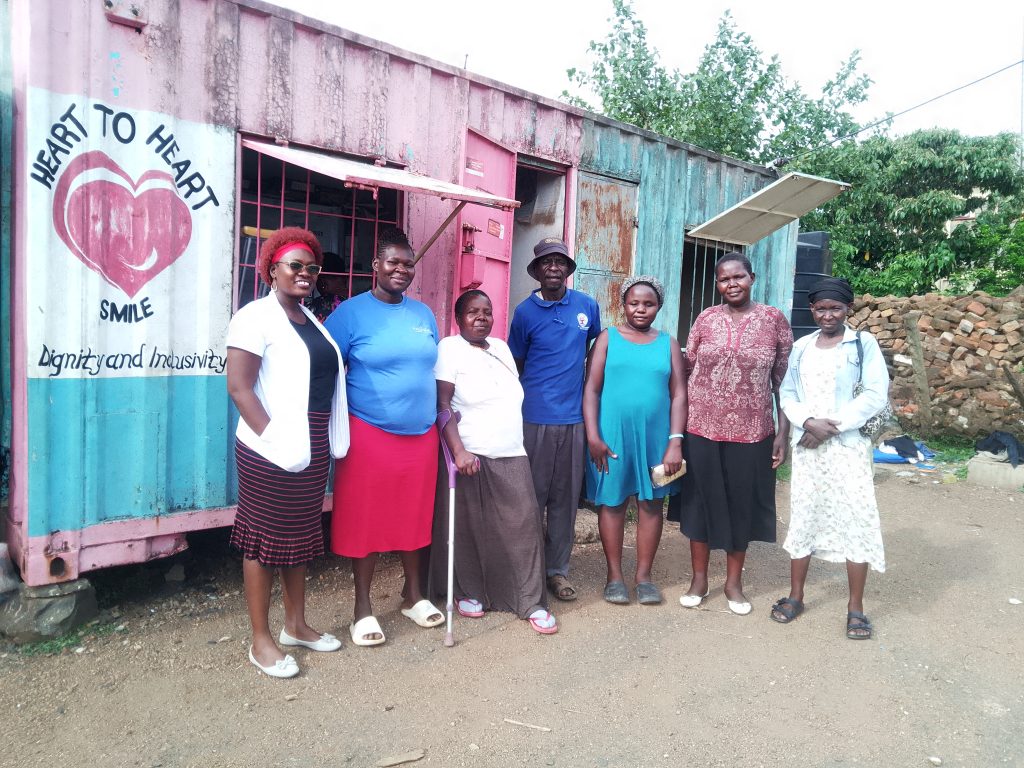
When there is a need, we try to meet it, like when I find a donor, I link them directly to the person individually, and not the institution. We are also working closely with the county government and civil society organisations.
Q: How many people would you say you have empowered since you started?
Lavina: It’s more than just assistive devices. The core part is through psychosocial support, such as just sitting and talking. In this way, I have empowered thousands, and I would confidently say the number is over 2,000. Even today, you saw me talking to a woman who was emotional because her husband abandoned her after she had a child with a mental disability. The empowerment is in the listening, the referring, and the linking.
We also help with school fees, and this year (2026), I had a Grade 10 child whose mother is a widow. Through my network, we raised over Sh50,000 to pay her fees for Term One and Term Two. That girl performed well and joined Kisumu Girls’ High School. The mother is so happy.
Q: Looking at the national level, what’s your take on the need for the government to expand support to include people with other forms of disabilities, such as sensory, intellectual and mental health, given some criticism that the recent Act primarily focuses on persons with disabilities?
Lavina: My take on that is that it’s a reality that the support is not even. Disability, there are those which you cannot see and those which you can see. The constitution provides for a 5% job allocation for Persons with Disabilities (PWDs), but it’s not being adhered to. And even when it is, you’ll find most of those employed are those with physical disabilities. You don’t see those with hearing impairments or albinism being employed. We need true disability mainstreaming in all institutions.
Additionally, that 5% doesn’t help caregivers as many of them are qualified and have papers, but they don’t have jobs because they are too busy caring for their children. And for those who are working, they get frustrated. If your child has a severe disability, they need to go to the hospital three times a week. They can get sick at any time. Unfortunately, employers often fail to understand those situations.
Q: What is being done to change this for caregivers specifically?
Lavina: Last year, a national act was passed that speaks to the rights of caregivers. It still lacks regulations, but we are organizing. We have a national platform for caregivers under the National Coalition for Parents of Children with Disabilities-Kenya (NCP-DK), headed by Jonathan Metet (Chairman) and Ibrahim Adan (Secretary General).
In Kisumu, I serve as the county coordinator, and we are creating WhatsApp groups down to the constituency level to enable all caregivers to have a voice. Once the coalition is fully registered, we will have the necessary documents to sit down with the government and create the regulations for that act. That is our next big fight.
Statistics on Schizophrenia
According to the global health body WHO, Schizophrenia affects approximately 23 million people or 1 in 345 people (0.29%) worldwide. The rate is 1 in 233 people (0.43%) among adults (2), while World Population Review, reports that the overall prevalence rate of Schizophrenia in Kenya is 243.88 cases per 100,000 people in 2026.

