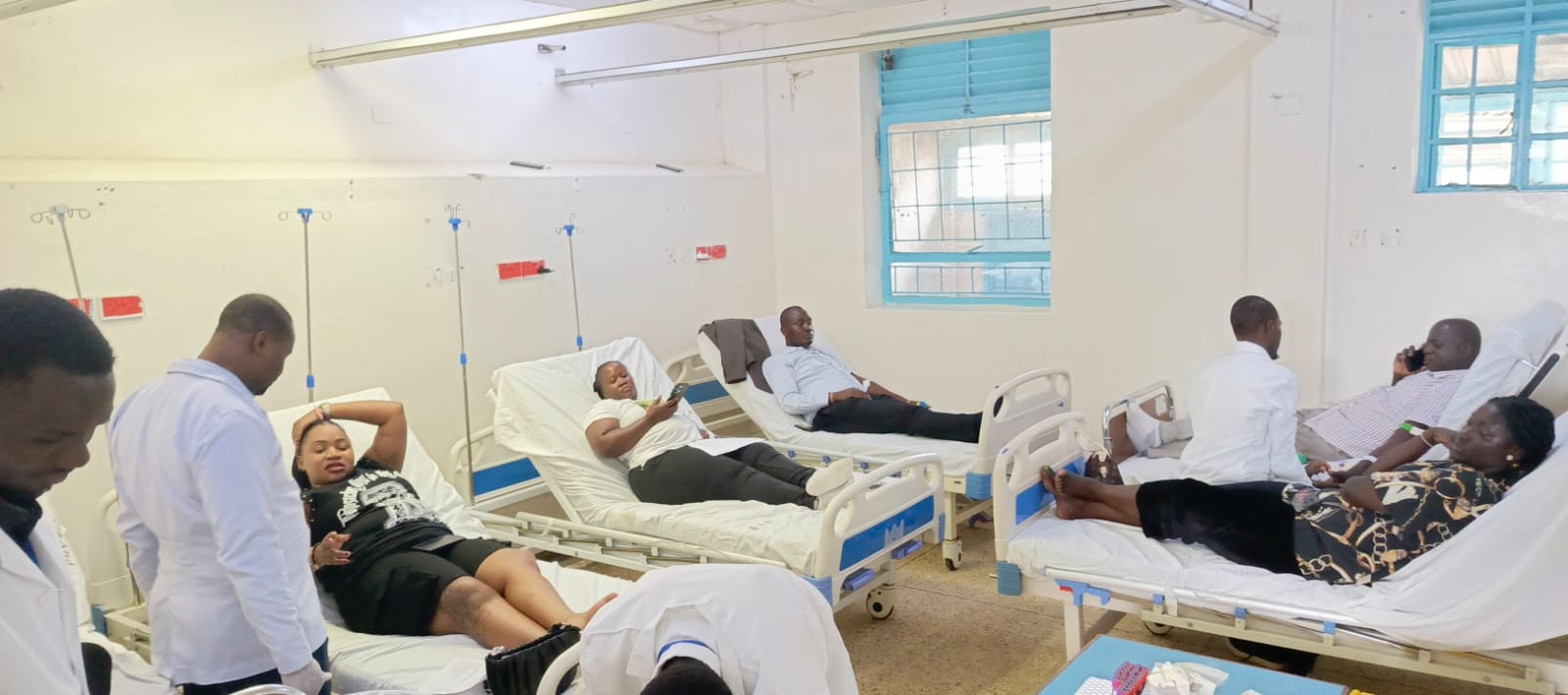
KISUMU, May 2026 – As the old adage goes, ‘A Stitch in Time Saves Lives’, the Kisumu Journalists’ Network (KJN) responded to the call by donating blood to patients to help bridge the gap caused by high demand in the Western region.
Led by its Chairman Rushdie Oudia, over 70 participants demonstrated that their role extends beyond merely reporting problems in various aspects of life.
This took place during the celebration of World Press Freedom Day, under the theme “Shaping a Future at Peace: Promoting Press Freedom for Human Rights, Development, and Security,” held at Jaramogi Oginga Odinga Teaching and Referral Hospital (JOOTRH) on Monday, May 4th.
Oudia explained that the call to action reminds journalists that ethical and independent journalism forms the backbone of peace, democracy, and progress.
“We are often first on the scene of tragedies, but today as Kisumu journalists, we choose to also be part of saving lives,” he remarked.
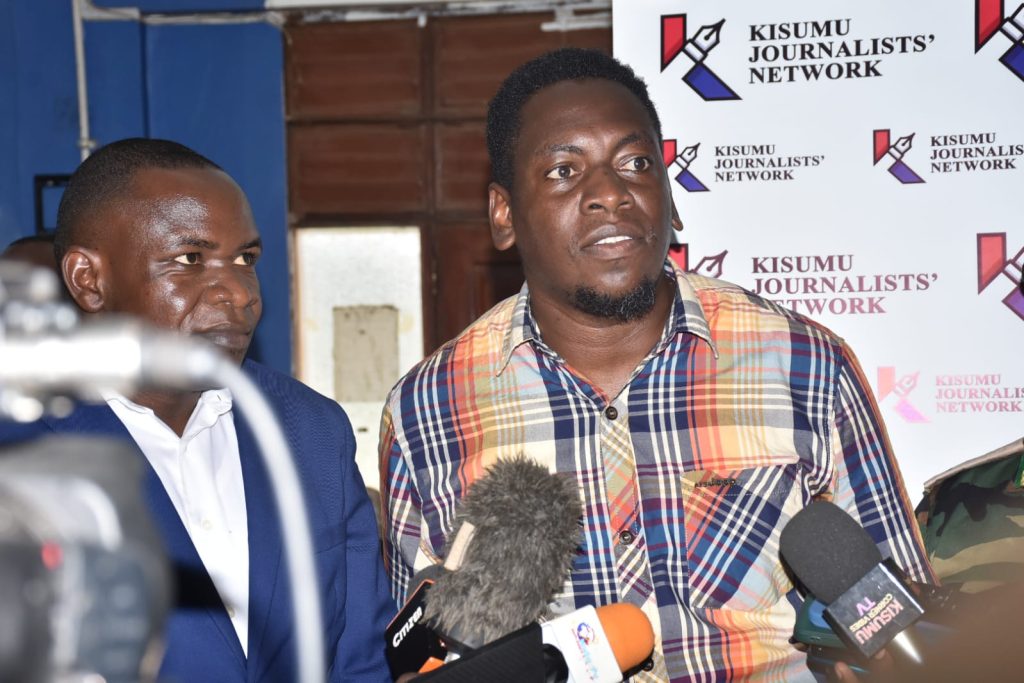
Dr Joshua Okise, Acting CEO of JOOTRH, emphasised that blood is an essential commodity in the health facility, especially now that they have started RBCX treatments, particularly for patients with Sickle Cell Disease (SCD).
He added that the Level Six health facility continues to upgrade its Blood Transfusion Unit (BTU) to meet the increasing healthcare needs.
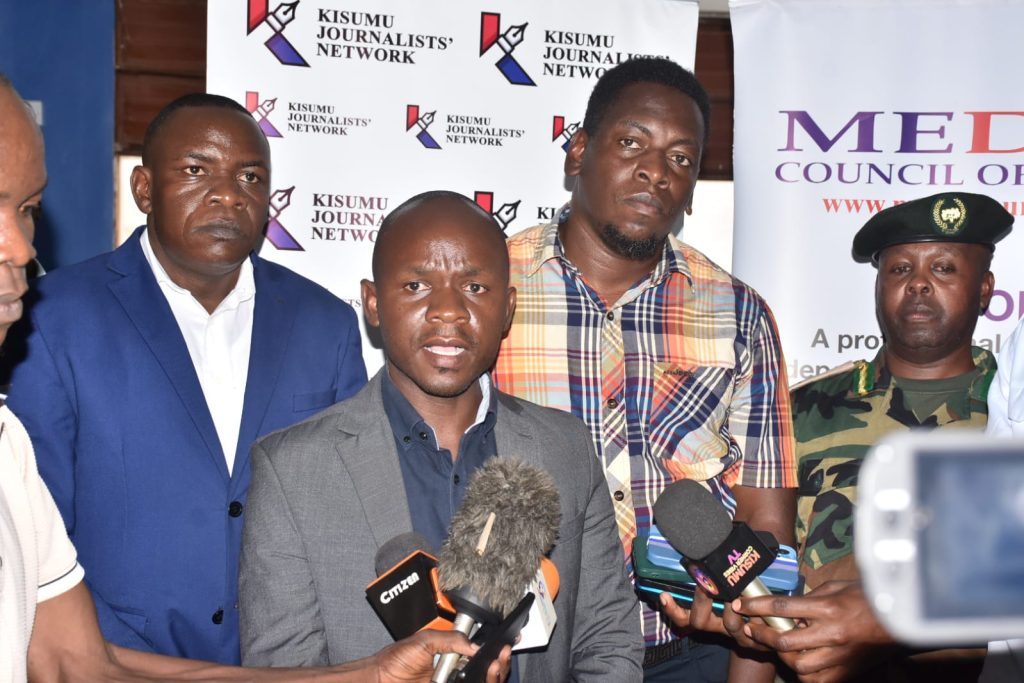
“We are experiencing an acute blood shortage in this region and call upon people from all walks of life to donate blood, which is in high demand. This health facility currently performs apheresis procedures, which require up to 10 pints of blood per patient,” Dr Okise urged.
He reassured that the facility is not “selling blood,” but rather it is: “They give it to our patients for free.”
Looking ahead, he called for a legally binding collaboration and partnership with the journalists’ network, believing it would enhance transformative healthcare by increasing community awareness in the Western region.
Dr Okise stressed that journalists need support, and leaders should provide space for them “to do their work” so they can gather tangible information.
Teddy Evans, the Media Council of Kenya (MCK) Western region director, challenged the journalists to uphold accurate, balanced and verifiable reporting.
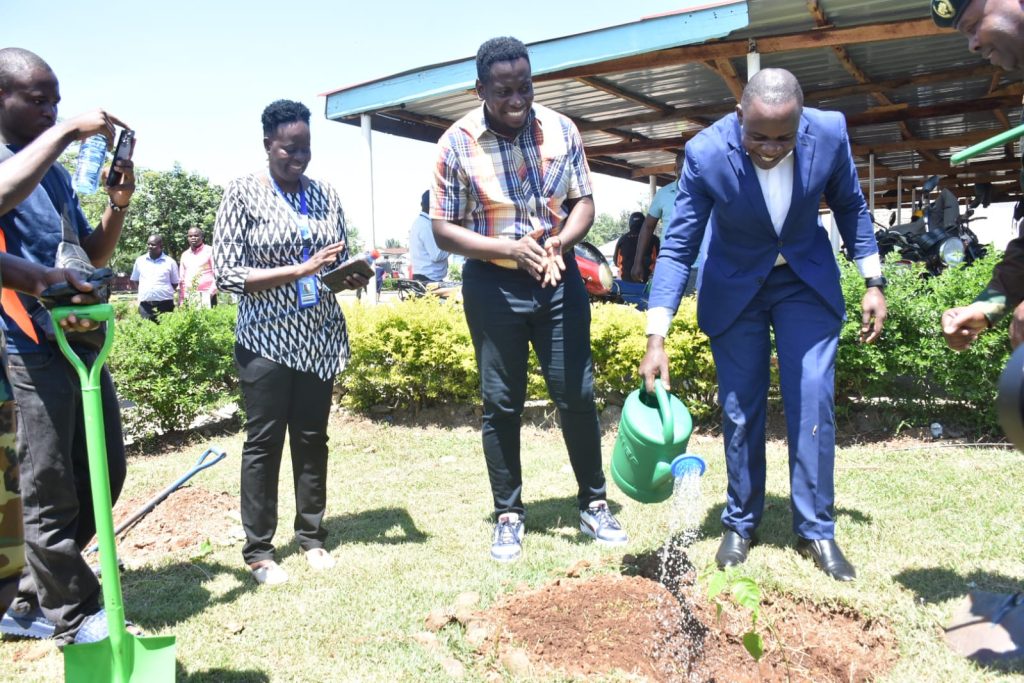
During a separate event, which included a tree-planting activity within the hospital grounds, the Kenya Forest Service (KFS), led by Mr Kemei, advocated for environmental conservation.
“We are aiming to surpass 22% forest cover to reach the target of 15 billion trees by 2032, in line with President William Ruto’s agenda,” he noted.
Kevin Omolo, Chair of the Kenya Correspondents Association (KCA) in Nyanza region, commended the collaboration between KJN and other stakeholders involved in the blood donation drive at JOOTRH.
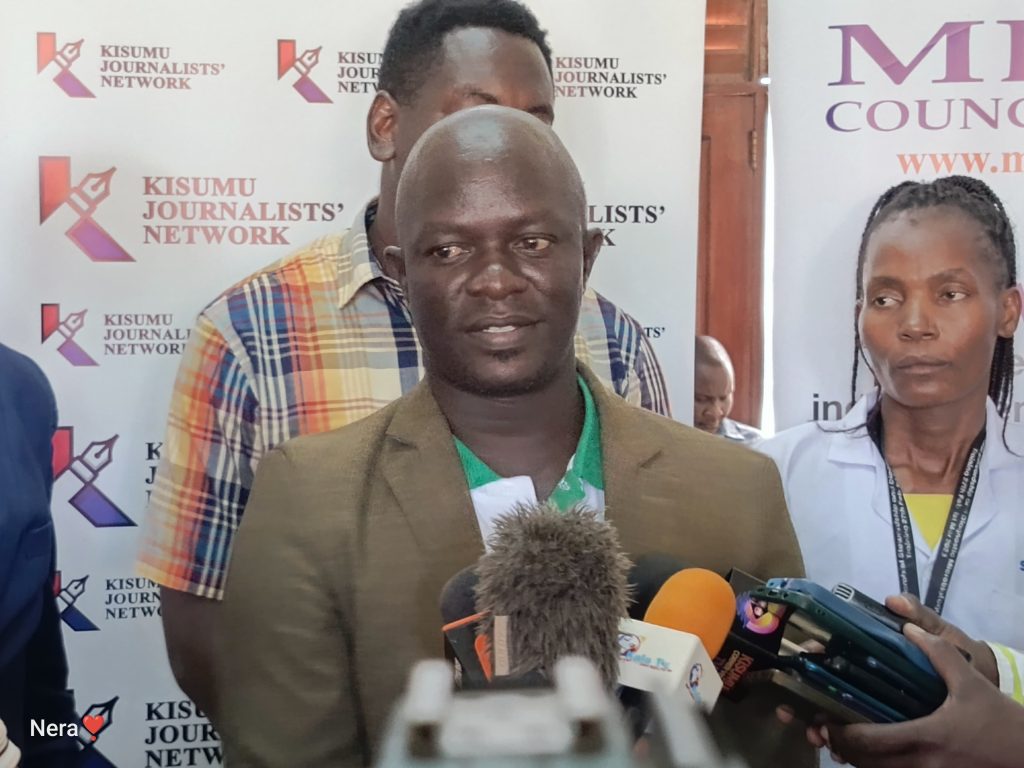
As journalists, he pointed out that they’re always quick to report and tell the world how the hospital struggles to support its people because it lacks sufficient blood.
“Therefore, we want to take the lead by coming out and also donating blood and showing the world that we can participate not just by observing, but also by acting and giving blood,” Omolo concluded.