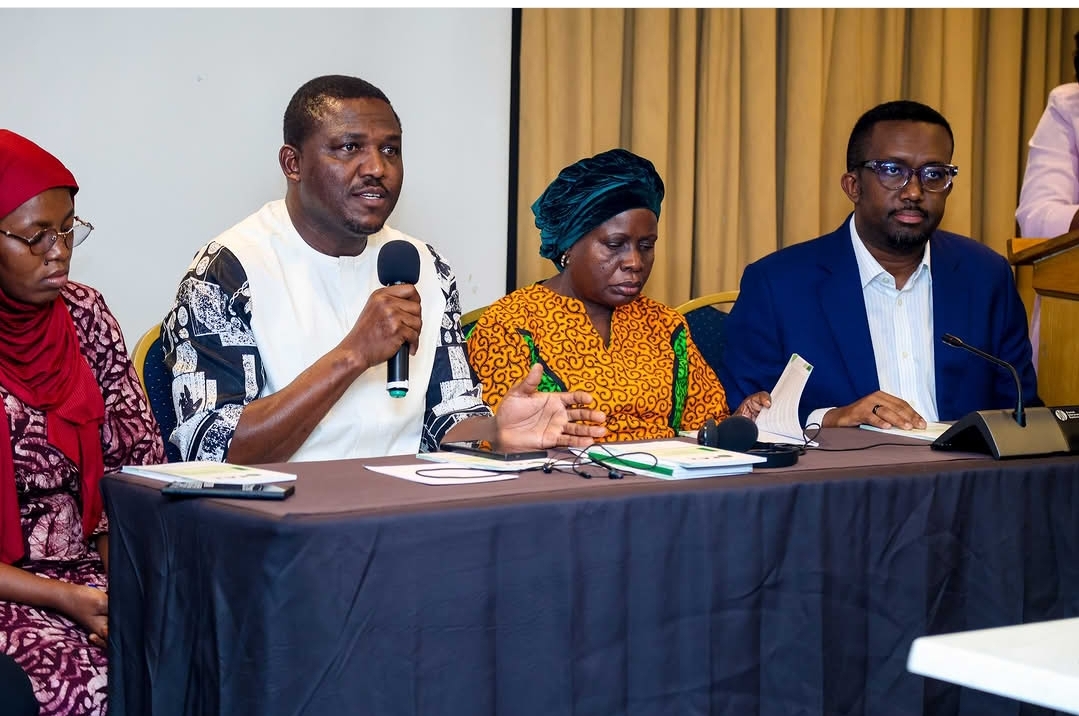
MOMBASA,Kenya,13th Dec-The global discourse on climate change has shifted from mere discussion to a demand for delivery. This was the core message emerging from the recent COP 30 talks, a pivot that holds profound implications for Africa, according to Dr. Mweetwa Mudenda, speaking at a recent MESHA Science Café.
Dr. Mudenda stated emphatically that for Africa—which contributes minimally to global emissions but bears the heaviest burden of climate shocks—the crisis is not political or environmental, but a “profound and urgent matter of public health and survival.”
The central takeaway from COP 30 is the death of the “pledge era,” replaced by a demand for concrete implementation. Dr. Mudenda defined this new approach using the Portuguese term “mutirão”—a whole-of-society, coordinated collective effort.
“The key message from the COP 30 Presidency was the mutirão across six vital systems: energy, transport, industry, food, nature, and human development,” Dr. Mudenda ex plained.
Momentum is strongest in the energy sector. Commitments like the Belém 4x Pledge to quadruple sustainable fuel use by 2035 and advancements in low-emission hydrogen projects are crucial for Africa. These solutions promise to help the continent leapfrog fossil fuel dependency and unlock necessary green industrialization.
Nature as Adaptation Infrastructure: The launch of the Tropical Forest Forever Facility with its initial USD 5.5 billion capitalization institutionalizes the science-backed understanding that protecting nature equals cost-effective adaptation. Protecting vital resources like the Congo Basin forests and coastal mangroves is now considered crucial adaptation infrastructure for East and West Africa.
One of the most significant yet under-reported outcomes is the embedding of human health across all systemic transitions. Dr. Mudenda noted that this validates the long-held position of African health scientists: “Climate change is now officially recognized as a present public health emergency, not a distant environmental threat.”
The mechanism is clear: climate volatility (changes in temperature and rainfall) is directly expanding the geographical range and seasonality of dangerous diseases.
Climate solutions are being championed as powerful, immediate health interventions. The commitment to enable access to clean cooking solutions for 140 million people annually, for example, directly translates into millions of saved lives by reducing household air pollution, a top cause of premature death across Africa. Similarly, investing in clean public transport cuts urban air pollution and the burden of respiratory illnesses.
Africa’s Triple Hurdle: Finance, Coordination, and Data
Despite the positive shift to implementation, African negotiators expressed serious concerns forming a “critical triple hurdle” to effective delivery:
The scale of investment required for adaptation and resilience far outstrips available public capital. Heavy reliance on private finance risks neglecting essential community-level projects and pushing vulnerable nations into further adaptation-related debt.

Effective delivery demands strategic, cross-ministerial alignment—coordination spanning Finance, Health, Energy, and Agriculture. Failure to operationalize shared strategies results in fragmented and ineffective climate action.
Data and Metrics: Inconsistent and fragmented data systems hinder the ability of African countries to accurately track progress on emissions, resilience, and health outcomes in a comparable, transparent manner necessary for global accountability.
A New Mandate for African Journalists
The MESHA Science Café concluded with a powerful mandate for journalists: move beyond reporting on policy debates to becoming vigilant reporters on implementation and grassroots impact.
Journalists are urged to champion the health co-benefits (clean energy = clean lungs) to amplify public support. Furthermore, they must aggressively fact-check misinformation, challenging the misconception of scientific disagreement and clearly linking local weather extremes (droughts and floods) to the global climate crisis using evidence-based climate attribution science.
Dr. Mudenda concluded: “The time for ambition has passed. The time for verifiable, impactful delivery, especially on the health and resilience of the African continent, is now.”