“This dual-fund architecture forms the core of a roadmap designed to transition Kenya into a first-world economy through long-term development and fiscal discipline,” Cabinet says.
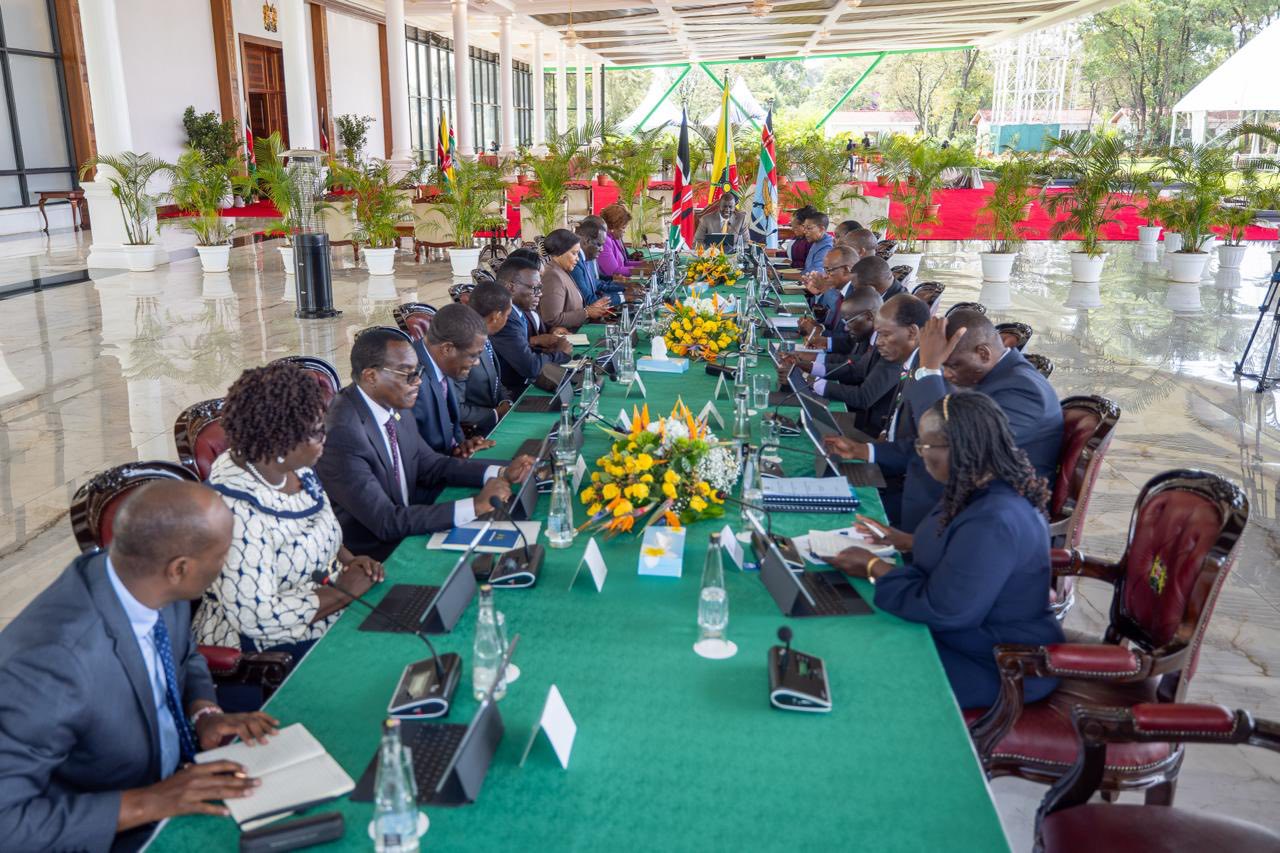
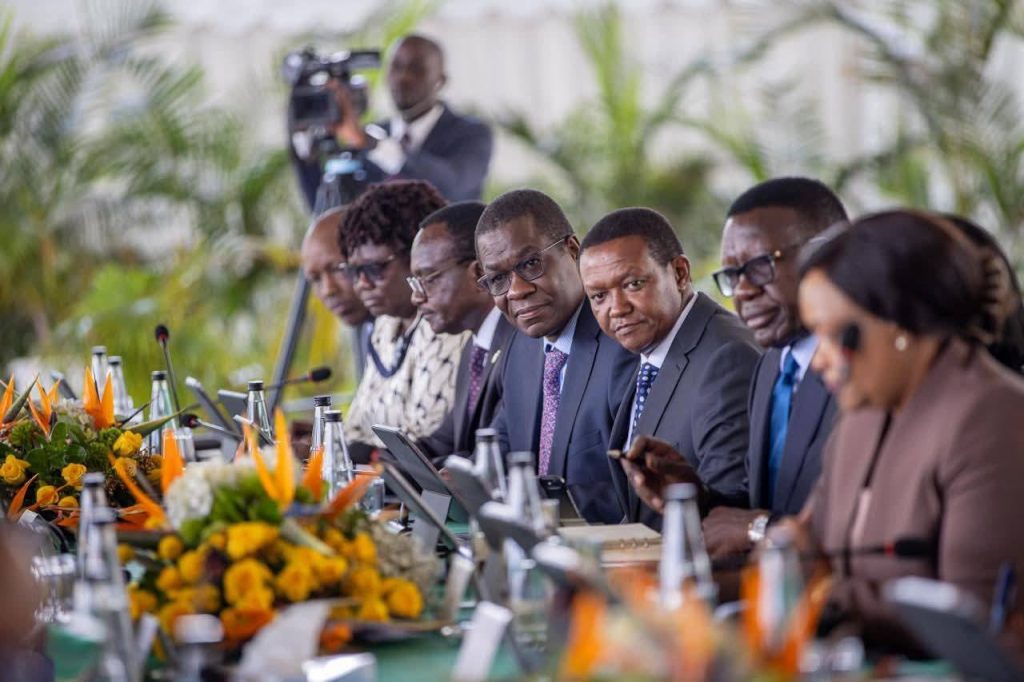
STATE HOUSE, Nairobi, December — The Cabinet on Monday 15th December approved the creation of two financial institutions: the National Infrastructure Fund (NIF) and the Sovereign Wealth Fund (SWF), in a transformative move geared towards redirecting Kenya’s economic trajectory.
In its meeting chaired by President William Ruto, this dual-fund architecture forms the core of a Sh5 trillion roadmap designed to transition Kenya into a first-world economy through long-term development and fiscal discipline.
Approved as a limited liability company, the NIF is established to act as the central engine for aligning the government’s financial resources with pressing national development priorities.
“The fund’s strategy involves the innovative mobilisation of domestic resources, strategic monetisation of mature public assets, democratisation of ownership via capital markets, and the deployment of national savings,” the Cabinet dispatch reads in part.
This approach is designed to unlock large-scale private sector capital for priority investments, thereby systematically reducing the nation’s historical reliance on public borrowing and taxation.
A key highlight of this new framework mandates that: “All future privatisation proceeds be ring-fenced and strictly invested in public infrastructure projects that generate and preserve long-term value.”
The President Ruto-led government projects a significant multiplier effect, estimating that every shilling invested through the NIF will attract up to Sh10 in additional funding from long-term investors. These investors are expected to include pension funds, sovereign partners, private equity funds, and development finance institutions.
In addition, the Cabinet sanctioned the Sovereign Wealth Fund Policy, which establishes a comprehensive governance framework for the prudent management and investment of Kenya’s future wealth. This fund will pool revenues from mineral and petroleum resources, dividends from public investments, and a portion of privatisation proceeds into a dedicated national fund.
Anchored on the principles of inter-generational savings, protection against external economic shocks, and strategic investments with commercial returns, the SWF aims to strengthen fiscal discipline, enhance national economic resilience, and bolster long-term competitiveness.
The SWF also operationalises Article 201 of the Constitution concerning inter-generational equity and advances a key commitment of the Kenya Kwanza Manifesto.
Transformation Agenda
SWF and NIF are designed to finance a sweeping national transformation agenda focused on three vital pillars: Strengthening Food Security, Expanding Transport and Logistics, and Scaling Up Energy Generation.
In food security, it aims to position Kenya as a net-exporting economy with the government undertaking large-scale modern irrigation via the construction of 50 mega dams, 200 mini-dams, and over 1,000 micro-dams.
“This water infrastructure plan is projected to bring an additional 2.5 million acres of land into productive use, reinforcing food and water security, supporting agro-industrialisation, and uplifting rural livelihoods,” says the Cabinet.
To drive productivity and trade, the government seeks to dual 2,500km of highways and tarmac 28,000km of roads across the country. Further investments will include the extension of the Standard Gauge Railway (SGR) to Malaba, the expansion of regional oil pipelines, and the modernisation of airports and the ports of Mombasa and Lamu.
“These projects are intended to strengthen critical connectivity across farms, industries, cities, and regional markets.”
Powering this growth will require a decisive expansion of energy capacity, with an elaborate plan that commits to adding at least 10,000 megawatts of new generation capacity over the next seven years. This will support manufacturing, value addition, digital expansion, e-mobility, and emerging technologies by harnessing Kenya’s geothermal, hydro, solar, wind, and nuclear potential.
Both funds are mandated to operate under clear governance, transparency, and accountability frameworks. The NIF will be overseen by a competitively appointed Board and CEO, while the SWF will function under a robust policy framework to ensure prudent investment, fiscal discipline, and inter-generational equity.
Energy Policy
In a related move to support the energy expansion goals, the Cabinet approved a new National Energy Policy. This policy is designed to guide sector reforms and accelerate access to modern, reliable, and sustainable energy.
It addresses challenges such as low electricity access, reliance on traditional biomass, unreliable supply, limited investment, and climate risks, while actively promoting renewables, private sector participation, and climate-resilient development.
They also endorsed an updated National Petroleum Policy, replacing the outdated 2004 framework. This new policy aligns with the Constitution and recent oil discoveries, aiming to strengthen governance, attract investment, enhance energy security, promote value addition and LPG uptake, improve revenue management, and safeguard the environment.
Infrastructure Financing
Further supporting the infrastructure priority, the Cabinet approved an innovative financing model to mobilise funding for specific key transport projects. These include the Naivasha-Kisumu SGR (Phase 2B), the SGR link to Uganda, the Nairobi Railway City Central Station, Bus Rapid Transit (BRT) Lines 2 and 3, as well as commuter rail and non-motorised transport networks.
It noted that the Ministry of Roads has fully settled all pending bills for certified works and accrued interest up to 31 December 2024. A total payment of Sh123 billion has been made, a move that restores contractor confidence and has enabled works to resume nationwide.
This payment programme, the Cabinet observed has led to the unlocking or acceleration of 875 road contracts since April 2025.
To enhance national security, the Cabinet approved the establishment of a National Integrated Security Command and Control System.
“This system will modernise public safety infrastructure by replacing an obsolete platform with an integrated, technology-driven architecture.”
It will link all security agencies to enable real-time intelligence sharing and coordinated response. Initial deployment will prioritise major urban centres and corridors, including Nairobi, Mombasa, Kisumu, Nakuru, Eldoret, and key border counties.