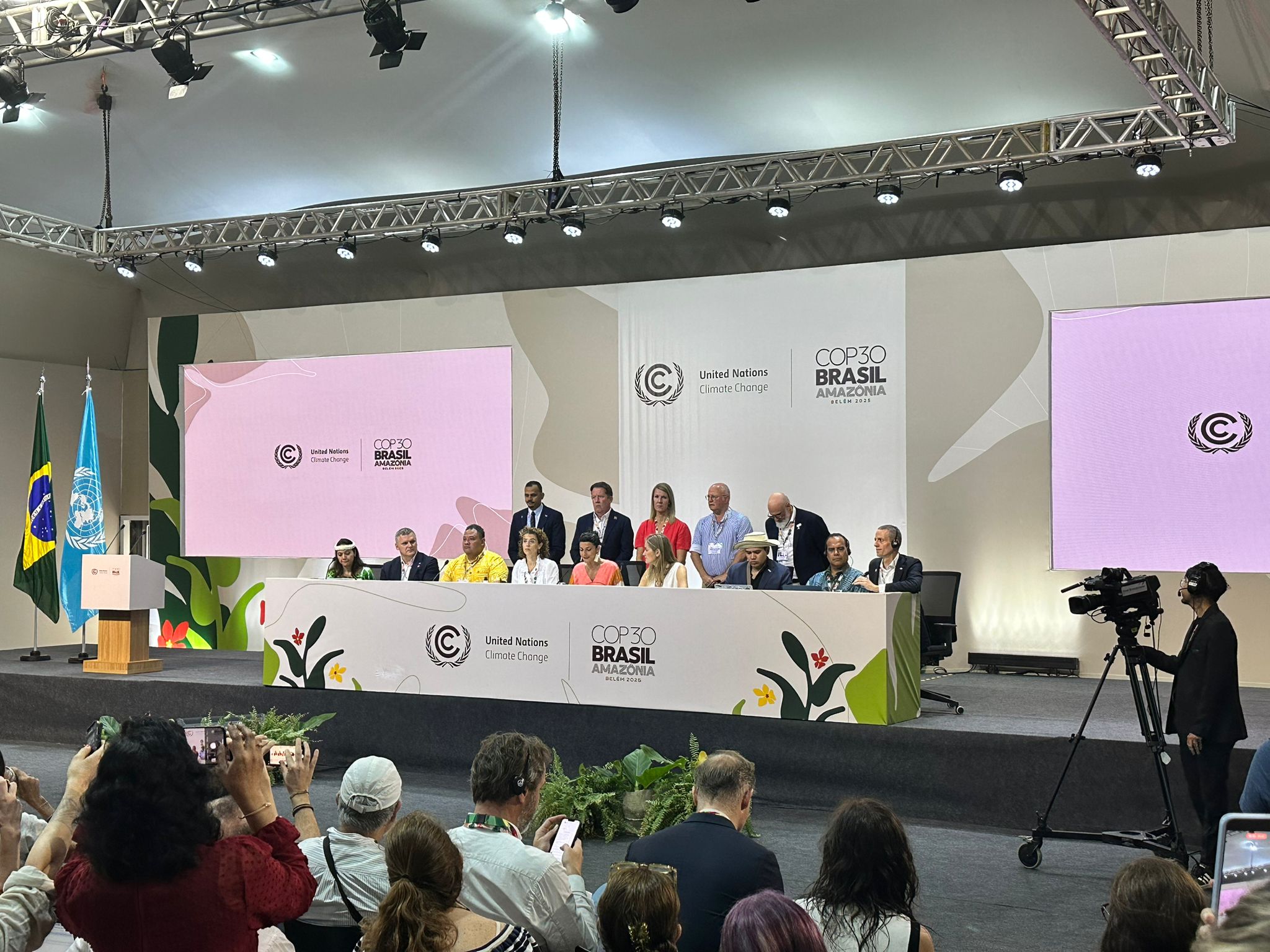
BELEM, Brazil – ActionAid International has praised the efforts of COP30 for achieving a just transition mechanism, which is crucial in supporting countries to develop and implement transition plans across sectors.
Energy, agriculture, and minerals are some of the sectors that not only cut emissions but also protect the rights of communities and workers.
Reacting to the outcome, Teresa Anderson, the Global Lead on Climate Justice at ActionAid International, said that COP30 in Belem has gifted the world with a major legacy: a new mechanism for just transition.
“It’s a huge win for workers, women, and civil society groups who pleaded for a framework to ensure climate action also safeguards jobs and improves lives,” Anderson remarked after the event concluded in Brazil.
She noted that despite increasing economic insecurity and climate scepticism, this is precisely the signal needed to get the planet back on track to tackle the global crisis.
‘It can provide real support to countries so they can better address complex challenges such as transitioning away from fossil fuels.”
According to the organisation, the 2025 summit was a particularly challenging COP to negotiate. A lack of adequate climate finance continues to obstruct progress on climate issues.
These developments occurred amidst a series of concerted efforts to promote climate finance, led by the organisation, along with other climate activists, at COP30.

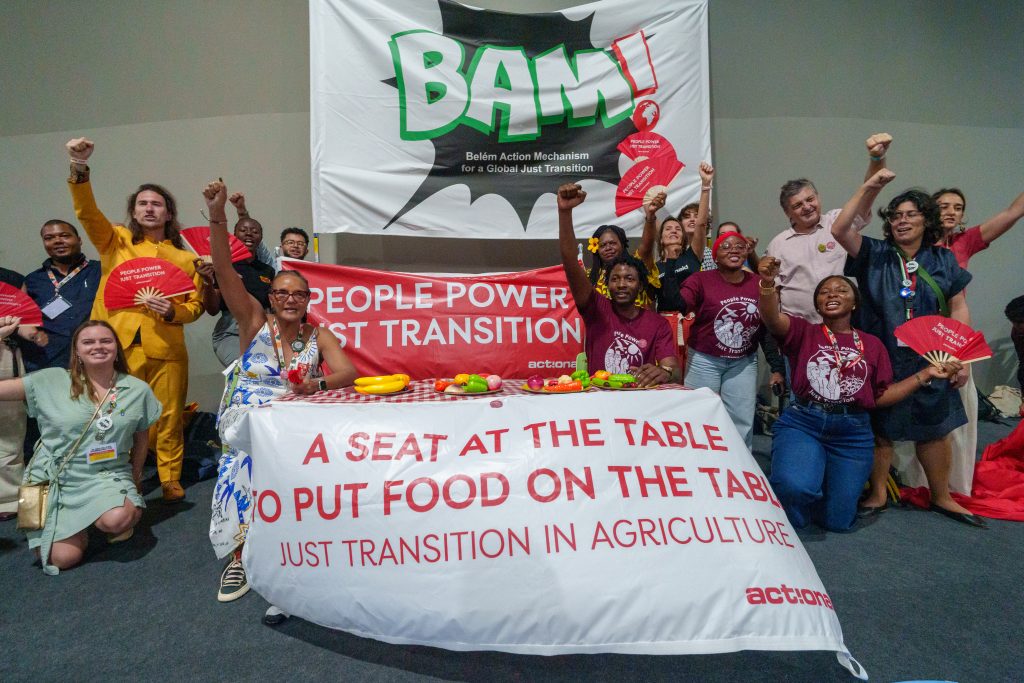
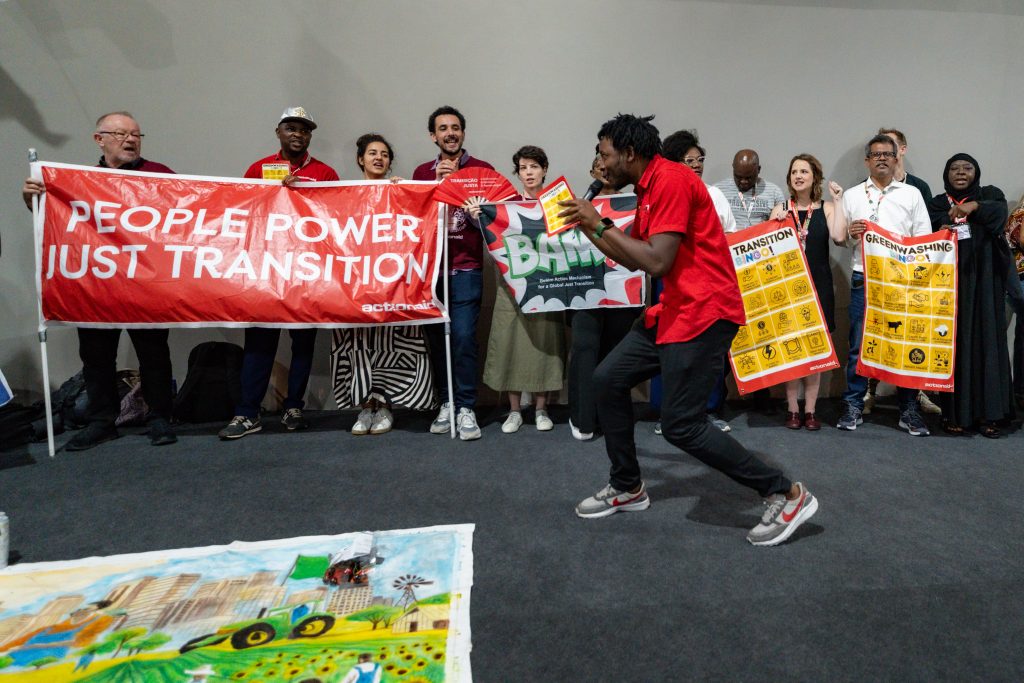
It is worth noting that on 20 November, dressed in distinctive red jackets and colourful ‘just transition’ bingo cards, they called for climate talks to deliver an outcome that prioritises people.
The calls were made during a ‘Just Transition Bingo’ action organised by ActionAid and the Asian Peoples’ Movement on Debt and Development (APMDD) inside the COP30 venue.
Shouts of ‘We want just transition and we want it now’ echoed through the corridors during the photo opportunity. The reverse side of the bingo cards also featured ‘Greenwash Bingo’, listing tools used by polluters to avoid genuine climate action.
At this event, Anderson highlighted the need for women, workers, and communities to be given the opportunity to shape and benefit from climate plans that impact them.
“Just transition approaches set in place measures to protect people and their rights, ensuring they are not unintentionally pushed into poverty by narrow carbon-focused strategies. It is time for climate action to evolve and to place people at the heart, with a milestone decision on a global mechanism for just transition at COP30,” she stated.
Her sentiments were echoed by Lidy Nacpil, Coordinator of the Asian People’s Movement on Debt and Development, who referenced COP30 establishing a Just Transition Mechanism that, if agreed upon, will represent a significant step towards delivering real action for the lives and livelihoods of billions.
“This wouldn’t have been possible without the unity and collective effort of trade unions, social movements, indigenous peoples, and civil society advocating for a Belem Action Mechanism (BAM),” Nacpil said, reaffirming their ongoing call for all affected sectors to be formally represented in this mechanism.
Global South countries, the global climate watchdog suggests, are already bearing the costs of the climate crisis they did not cause, and desperately require support from wealthier nations to take on further commitments.
“Nowhere was this more stark than on the issue of fossil fuels, where specific text once again ended up unfunded and on the cutting room floor,” ActionAid concluded.