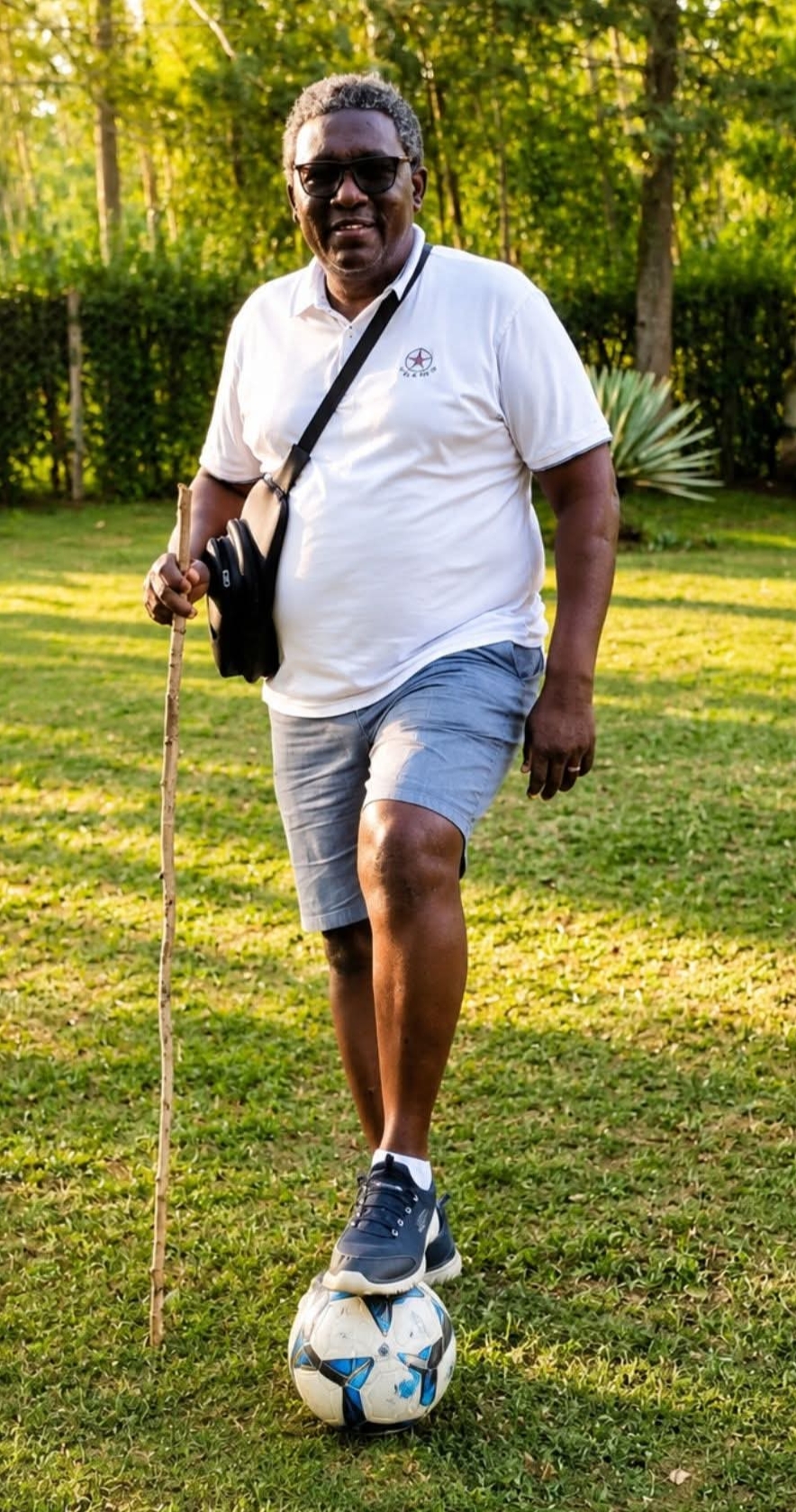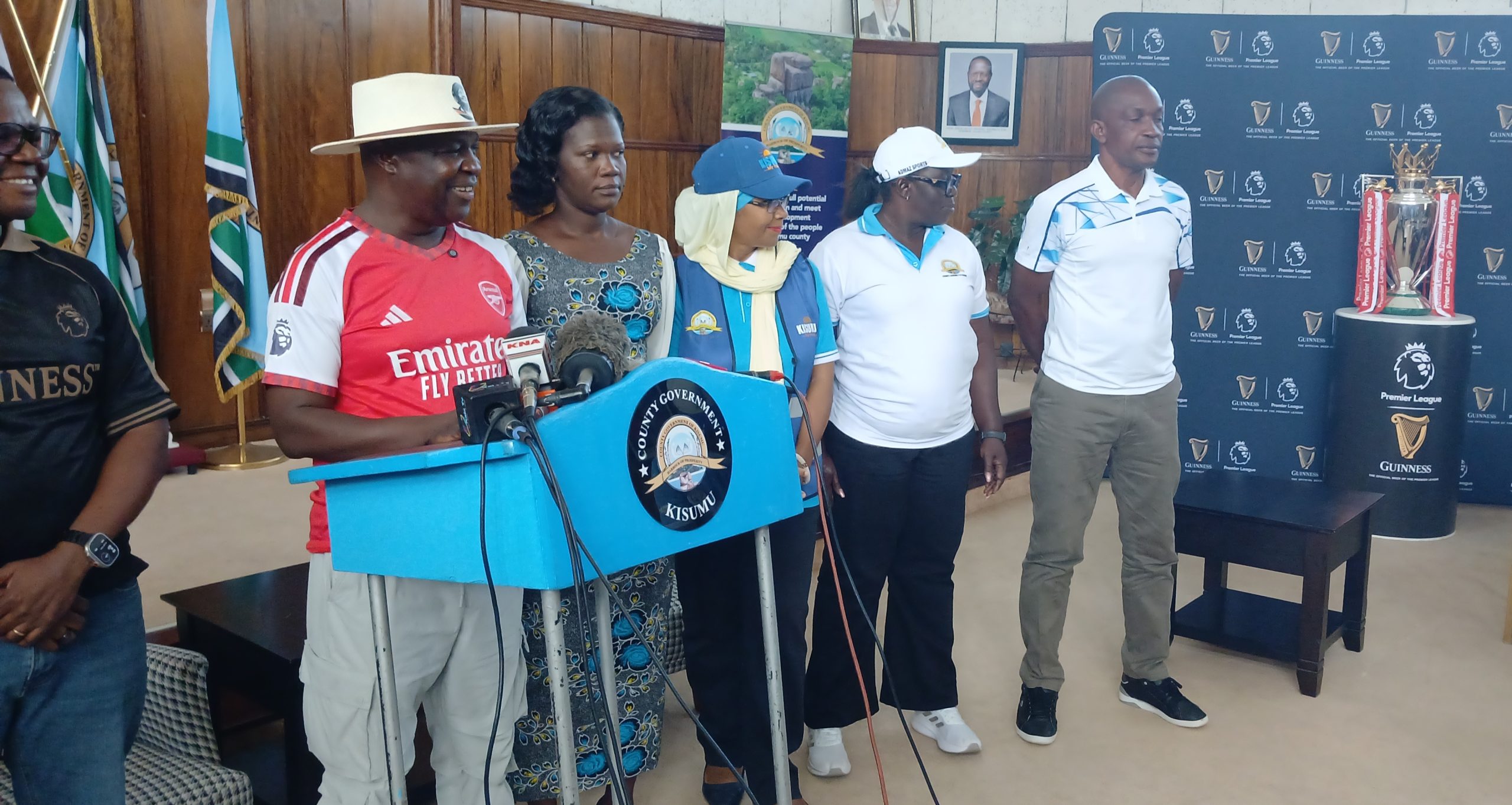
Kisumu, 19th July, 2026 -As the old adage goes, the fruit does not fall far from the tree. For James Otieno Omondi, that saying rings entirely true.
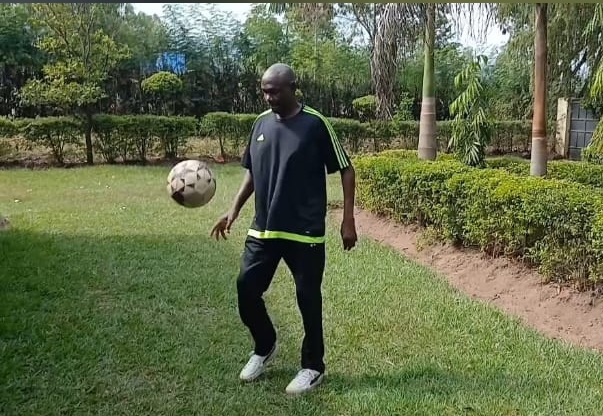
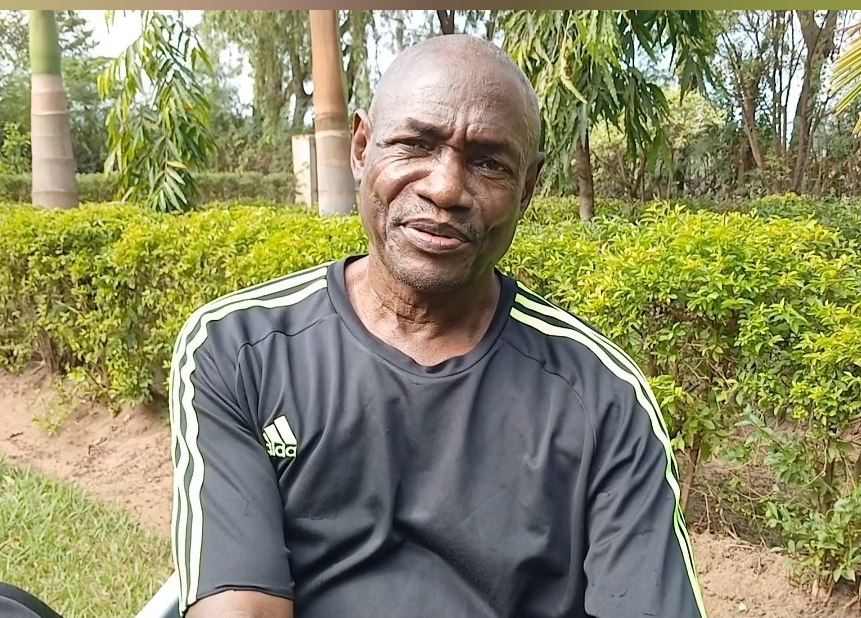
Standing at 6.0 feet tall and dressed in his signature sports gear,a black, three-striped Adidas t-shirt, black track trousers, and white sports shoes to boot-Otieno still moves with the distinct gait of a seasoned player.
He dribbles, passes, and controls the ball with the fluid ease of a man who lived for the game. It is a clear testimony to the rule: once a footballer, always a footballer.
Speaking exclusively to Eyes Watch Sports at his Korando-Otonglo home in Kisumu West Sub-County, Otieno traced his deep love for Jogo Bonito (the beautiful game) back to his late father, Julius Omondi Odawa Lang’o, who was a dependable and indefatigable left-back.
Captain Odawa played for Kitale FC in the 1940s while staying with his uncle, and later teamed up with Peter Oronge to form Luo Union FC, based in Naivasha, in the late 1950s.
“From the age of six, my father made it a religious commitment to take me to watch football every weekend. That is what emboldened my resolve to make a mark in football… and to be just like him,” Otieno recalled. He sat in his serene compound as birds chirped, his cat wandered by, and the joyful shouts of children playing nearby filled the air.
From Ajuala to Abisidi
Otieno notes that his playing days started when he was in Class Two. “We had a routine of playing Ajuala, a ball made from woven polythene bags, from morning to evening. We used stones for goalposts and only stopped briefly for water and lunch,” he said.
To sharpen their skills, he and his peers eventually graduated to Abisidi, a small leather ball about the size of a golf ball.
“That was our ABCD of football,” he explained with a chuckle. “In those days, a ball cost one shilling, so we had to befriend whoever had one. We played freely, without rigid positions. Anyone could score in any goal and defend any side. It made us highly versatile—we could play anywhere, even in goal if the need arose.”
According to Otieno, he earned several nicknames during his football heydays, including Oti, Otis, and later Otinga. These names marked his journey starting from Ondiek Estate for their intra- and inter-estate matches, primary and high school games, and eventually club football.
It was at Kibuye Boys Primary School where Oti truly came into his own. In 1973, he helped the school team dethrone the reigning Kisumu District champions, Kisumu Youth Centre, with a resounding 3-0 win.
“That was the day we ended their dominance, which had lasted since independence. That was also the day our tiki-taka style was born under our Ugandan coach, William Okello. They didn’t see the ball for 90 minutes. He taught us one-touch football and perfect wall-ball control drills,” he said, his face lighting up at the memory.
“We would hit the ball against a wall, let it bounce back, and control it. That taught us exactly how to receive a ball and how much strength to use,” Oti recalled, adding that his exceptional talent saw him named team captain while he was still only in Class Seven.
Game Time
In 1974, Oti joined Ambira High School for Form One. Football was calling, but the door was temporarily shut in his face by his senior schoolmates.
“They chased me away from training. They told me I still had plenty of time left in that school,” he recalled, laughing as the scorching sun rays beamed onto his face.
He patiently bided his time, and by Form Three, they finally allowed him to train. However, they still never fielded him in inter-class or school matches. His big break finally came at the District Championships. With the regular substitutes unavailable, he was drafted to play at position seven, and he delivered an outstanding performance.
On Monday during the school assembly parade, the headmaster showered him with accolades. The following year, through the headmaster’s direct influence, Oti was appointed school captain. In just four months, he built a brand-new team from scratch, even though nobody believed in them at first.
“But growing up in Ondiek Estate, we didn’t have a rigid team structure per se. I would simply assemble guys and motivate them. I knew it was achievable,” he remarked.
“Believe it or not, that Ambira team became invincible. We finished the season unbeaten and, for the very first time, we beat St. Mary’s Yala to win the district championship and proceed to the provincials.”
Man-marking was Oti’s specialty as during that era, stopping Erick Omonge of St Mary’s Yala, prolific forward who regularly tormented defenders locally, nationally, and across East Africa -was a daunting task. He also mentioned successfully marking other top talents like J. Lukoye and James Siranga.
“If you ask Omonge, he’ll tell you he had never met a defender quite like me. I used to thoroughly enjoy marking him, and he enjoyed playing against me too. Because of that mutual respect, we became very good friends,” Oti said, wiping away a tear of quiet satisfaction.
Club Football
His friendship with Omonge blossomed further when Omonge convinced Oti to sign for Kisumu Black Stars while he was still a student, aged just 17, something Oti had never originally planned.
While in Form Four during a school half-term break, he went to watch a match at Kisumu Stadium between Kisumu Black Stars and the Ministry of Works. Accompanied by a friend, he was spotted in the main stand by Omonge.
“Can you assist us? We don’t have a full team today,” Omonge requested.
Oti declined at first, but after heavy persuasion from club officials, he finally agreed. They handed him a pair of Bata rubber shoes and told him to play at number two. After the game, legendary player Jared Ingutia pulled him aside and said, “You’re not bad at all. Keep it up.”
“Our fourth game was against Gor Mahia. The next day’s newspaper headline screamed: ‘Otieno Omondi Keeps Gor Mahia At Bay in Kisumu Stadium.’”
His father, an East African Industries (EAI) salesman, didn’t even know it was his own son playing. He came to the very next game, walked straight into the dressing room after the match, and said, “Kijana, you really know this thing.” He then handed him Sh100 -which was an absolute fortune back then. “From there on, I played for my father. He truly loved beautiful football,” Oti reminisced.
From that launchpad, Oti’s football trade took him all across the country: Kenya Farmers Association (KFA) in Nakuru (1978–1979), Ramogi FC in Mombasa (1982), Kenya Textile Mills (KTM) in 1983, and Kenya Breweries (1984–1988).
At KFA, he was coached by Sammy Nyongesa, whom he fondly refers to as a father figure. “He was the best coach I ever played for. He perfectly studied a player’s character, attitude, behavior, strengths, and weaknesses.”
For two consecutive years, giants Gor Mahia could not beat KFA. “We beat them both home and away, including one memorable 3-0 win in Nairobi.” They faced iconic players like Allan Thigo, George “Best” Yoga, and Jerry Imbo. It was Thigo who nicknamed him Japien, meaning “one who truly understands football.”
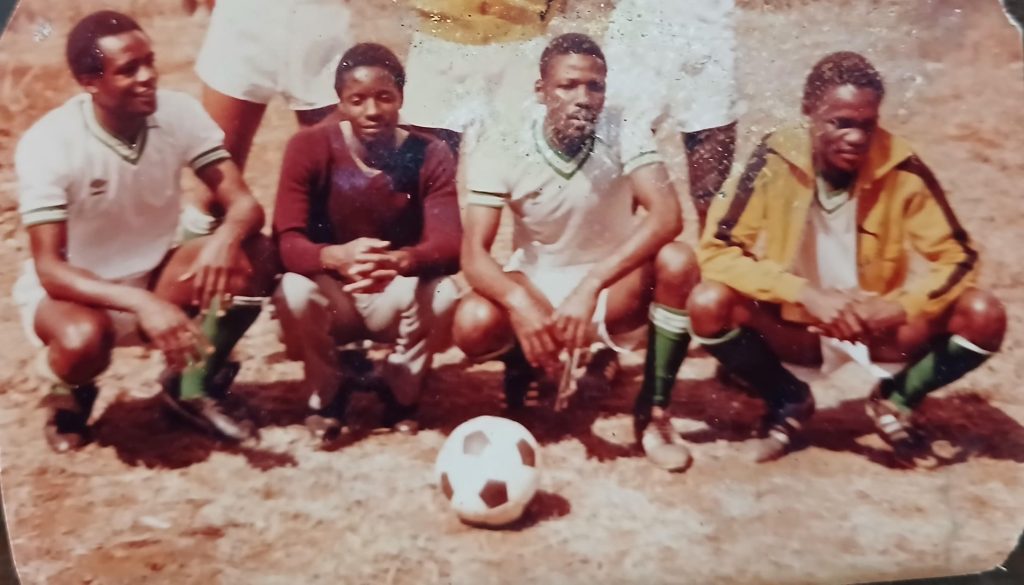
At KFA, he played alongside his father’s namesake, Odawa. After two successful seasons, he returned to Agoro Sare High School for his A-Levels because, as he noted, “he wanted to secure his future outside of the pitch.”
According to Oti, he later joined Ramogi FC with the prospects of landing a stable job at the Mombasa ports. While there, he played with football greats like George Onyango ‘Fundi’ and Ben Oloo ‘The Breakdance’. However, after an unsuccessful job hunt, he left the coastal side and signed up for KTM, where he lined up alongside Kenyan football legend Rishadu Shedu.
At Breweries FC, he played under the guidance of coaches Peter Odera, Elly Odera, and Ray “Burnfield,” while his teammates included Charles Otieno, Mutua, Makuto Mulupi, Paul Onyiera, Apollo Oketch “Bach”, Dino, and Ouma Jacaranda. “That team later went on to win the Super League and the East and Central Africa Club Championship Cup.”
Harambee Stars Call-Up
Between 1978 and 1979, Oti proudly wore the national team jersey under the tutelage of head coach Jonathan Niva. He played alongside stalwarts like Jerry Imbo (Gor Mahia Captain), Mathews Ragama (Maragoli FC Captain), Abdul Baraza (AFC Captain), Marakao (AFC), Okwiri (Breweries), and Masanto Soro (Gor Mahia), while Allan Thigo served as a player-number-eight and deputy coach.
“At Harambee Stars, we played friendly matches, including one against Taifa Stars in Arusha. I remember I played at number 6. It wasn’t a bad game at all; we actually drew nil-nil.”
During the Malawi Independence Day celebrations, they were beaten 1-0 by the hosts, courtesy of a header from Phiri who connected with a well-placed cross. They also traveled to Egypt for a return World Cup qualifiers fixture. “We had previously beaten Egypt 3-1 back in Nairobi.”
During Niva’s tenure, a major turning point occurred just as the team was preparing to depart for the East and Central Africa Championship taking place in Malawi.
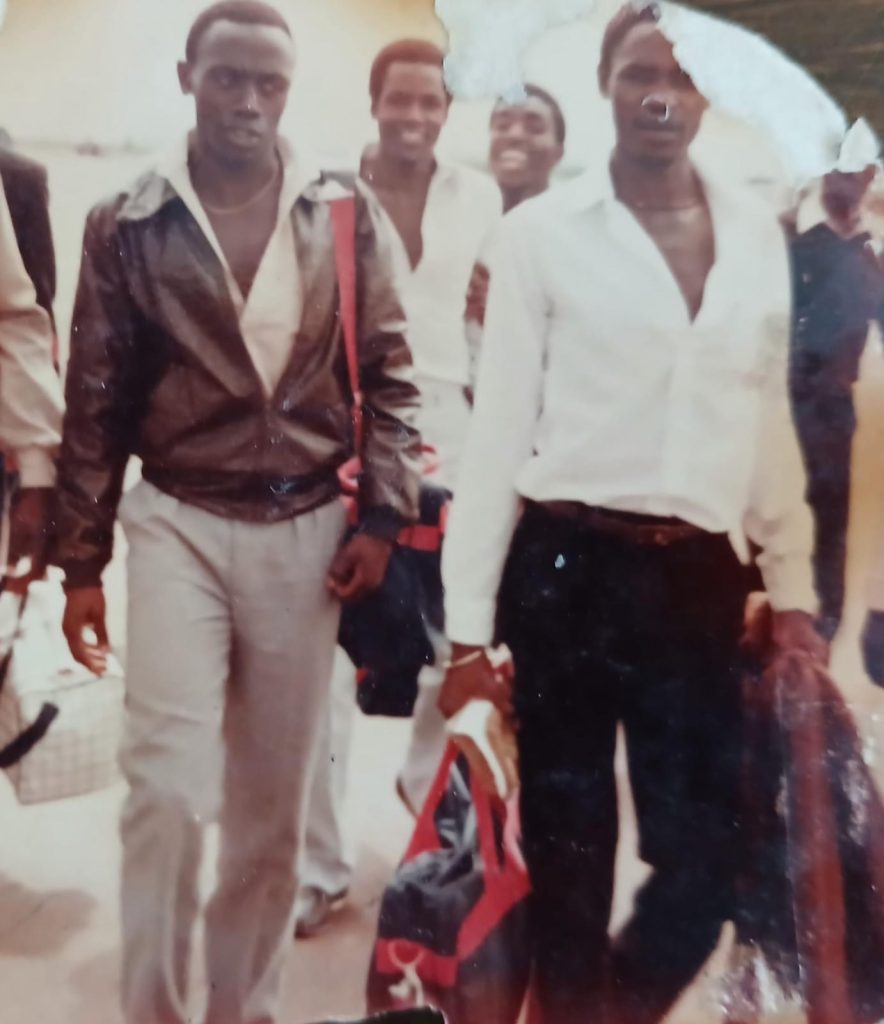
One of Oti’s biggest frustrations during this period was the rampant era politics governing the national team selection criteria.
“It wasn’t that Niva didn’t have great players available. It was this forced political balance between Gor Mahia and AFC Leopards that messed him up. He felt pressured to pick equal numbers from both teams, and then fill the remaining slots from other clubs.”
The clearest case of this bias, he notes, involved George Ayuka the Kogalo goalkeeper who went entirely unbeaten the entire league season but was never invited to the national camp.
“Why? Because if Ayuka joined the squad, Mahmoud Abbas wouldn’t be the undisputed number one choice,” Oti alleges.
His own unexpected dropping from the squad came just a day before the team left for the championship in Malawi. According to Oti, Sammy Nyongesa, his club coach at KFA who was also serving as Niva’s deputy, protested the decision vehemently.
“If you can drop James from this team, then I can see you’re not genuinely interested in the success of the national team,” Nyongesa told Niva bluntly.
“I’ve successfully used James at numbers 2, 5, and 6 at KFA. Whenever there’s a positional shortage, James steps in and gives his absolute best. The boy is ready for national service.”
In mutual protest, Oti explained how Nyongesa packed his bags and traveled back with him to Nakuru, leaving Odawa as the lone KFA player left on national duty. That heavily compromised squad was subsequently thrashed 9-0 by Malawi, marking the immediate end of Niva’s tenure as the national tactician.
“Why I Didn’t Play for Gor Mahia”
Despite intense, recurring pressure from his community club, Oti never turned out for Gor Mahia. They approached him initially in 1977, and on the day he put on a masterclass against them at Kisumu Stadium, they pursued him again.
“A year later, club officials even came directly to our house in Arina Estate, right next to the primary school. I told them, ‘Give me time.’ But the truth was, I was still a student and couldn’t fully commit. Long-term job opportunities mattered immensely to me, and Gor Mahia simply couldn’t guarantee corporate employment at the time.”
Today, Oti belongs to the Hedge Watch Association, a welfare and talent-scouting body formed by former players. In October 2025, they participated in a veterans’ tournament featuring former stars from Tanzania, Uganda, and Kenya in Nairobi.
Tanzania fielded legends like Abdallah “Kibadeni” King, while Kenya entered two veteran teams consisting of stars like John Bobby Ogola, Michael Otieno, Josephat Murila, JJ Masiga, and Tobias Ochola representing the Nairobi contingent.
Oti was among the 18 selected players representing Kisumu, playing alongside Laban Jobita (formerly of Western Stima), Goro Oronge (Kisumu Black Stars/Gor Mahia), and George Ondula.
“We lost to Tanzania, drew with Nairobi, and beat Uganda 1-0. That was actually my very first competitive game after 20 years without touching a football,” he said with a smile. “Now, we’re great friends with the ball again.”
Players and Fans Testimonials
James Goro Oronge, a former standout forward for Black Stars and Gor Mahia, first met Oti when Oti was about 12 years old and Goro was 10, back during their childhood games of abisidi. Goro was the captain of the Upper Ondiek team, while Oti captained the Lower Ondiek squad.
“We’d actively try to rule him out of games because his skills were just so silky. He was such a cool, composed player that if you were a striker, you had to think twice before approaching him; he could easily make a fool out of you on the pitch,” Oronge told Eyes Watch Sports at the Jaramogi Oginga Odinga Sportsground recently.
Oronge points out that while Oti comfortably reached the national team level, his progress was frustrated by Niva, who stubbornly tried to deploy him as a winger despite his specific tactical pace. “He was pure central midfield, stopper, sweeper, or full-back material.”

They eventually played together at Kisumu Black Stars alongside Omonge Jaboma. One day in late 1977, they traveled to Nakuru to play against KFA and the Ministry of Works in two friendly matches, where Oti stunned the local crowd with his immense confidence and footballing intelligence. KFA refused to let him leave Nakuru; he remained behind to challenge the established Sammy Tabu for the defensive midfield role.
“Believe it or not, Tabu was ultimately benched and had to leave the club to join GEMA FC. After two seasons with KFA, Oti left and joined KTM, where he played alongside Jared Ingutia. As fate would have it, he was once again challenging Tabu for the exact same position. Tabu could not take the competition and left for AFC Leopards, where he went on to play great matches alongside Keffa Tasso.”
According to Oronge, he still frequently asks him: “Why didn’t you ever play for Gor Mahia?” Oti’s answer remains unchanged: “His answer was always jobs. Gor Mahia couldn’t assure him of a career outside football. At KTM, he secured a proper job and was perfectly happy.”
Reflecting on his school days, fan Richard Obonyo recalls: “Otis was the absolute anchor of the Ambira High School football team, playing alongside the likes of Wasonga between the posts, Obara Mangla, and Baridi Olando.”
For his part, Philip Oyoo remembers: “Otis was a supremely confident all-rounder, a stylish and very reserved midfielder. I have never seen such a highly talented player capable of playing virtually any outfield position aside from goalkeeping. I will never forget what I saw him do to JJ Masiga and Wilberforce Mulamba during a tense League match at the City Stadium in 1983,” he wrote in the comments section of the Soccer Chat: 70s and 80s facebook group.
Nelson Ogola-Obota recounts that Oti and Omonge shared an iconic rivalry in secondary school games pitting Ambira against St. Mary’s Yala.
“Anyway, James Otieno was truly a players’ player. He possessed all the qualities of a thorough professional. Despite his relatively slim physique, he could easily bully and tease much better-endowed strikers-he was a stylish utility player who always delivered eye-catching displays,” Obota wrote.
Talent Abundance
Oti’s core message to both tiers of government (national and county) and the Football Kenya Federation (FKF) is simple: actively utilize former players for grassroots talent scouting.
“We have talent in absolute abundance across this country. All we need is proper, structured management. Cape Verde has a population of just 1.5 million people and they successfully qualified for the 2026 World Cup. With over 50 million people, Kenya has the capacity to create 30 very good, world-class national teams.”
For him, proper management boils down to basic care. “You need to know what the boy is doing in the morning. Is he going to school? How are his school fees being paid? Give him a steady side-pay to keep his life going. Big salaries will naturally come later. I’ve personally experienced how well I performed when I was fully taken care of, and how it felt when I wasn’t.”
He fondly recalls being paid Sh30 in his early playing days. “We often gave that money to the guys who had established homes. Personally, I didn’t even need the money just to play football.”
However, looking back, Oti posits that: “We ‘wasted a generation.’ Imagine if James Siranga, Samuel Onyango, Lule, Hamisi Shamba, Eric Omonge, Charlie Ochieng, and I had all played together in our prime? Kenya would have witnessed a completely different level of football.”
A Sporting Family
Born in 1960 in Ondiek Estate, Kisumu, to Joyce Asin and the late Omondi Odawa Lang’o, Otieno is the proud firstborn in a family of six children.
His siblings have similarly left marks in various fields: Florence Auma is a prominent choir leader; Julius “Apache” Oyoko was a fine footballer; and Wilkista Oduor is a legendary three-time African MVP in both basketball and netball.
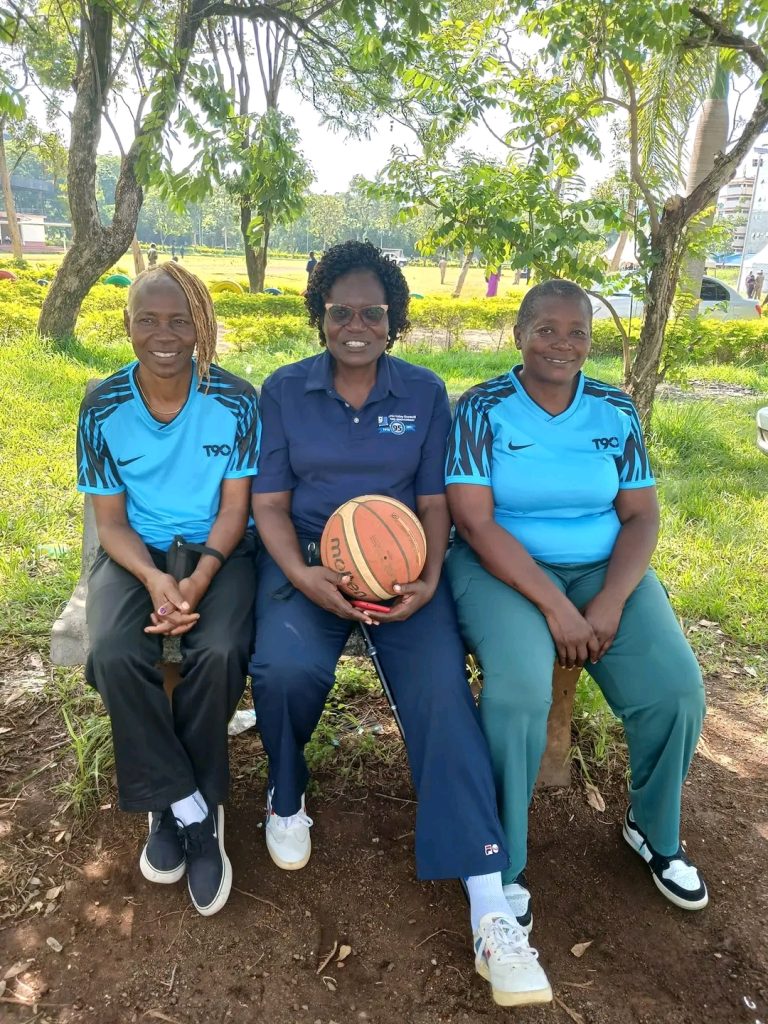
Grace Achieng is a national netballer; and Philip Gabriel Omondi was a highly skilled striker named after the late Ugandan football legend Philip Omondi.
“Philip also played competitive hockey because he firmly believed that was the only viable path for him to participate in the Olympic Games.”
Away from the soccer pitch, Otieno also starred in the arts. While studying at Agoro Sare in 1982, he co-wrote a play titled “The School Headmaster” alongside Stephen Mogaka.
“We spent an entire year editing it. I performed as the lead actor. It became the best play in the District and Province, and finished as the runners-up at the National Drama Festivals behind Alliance High School’s Neurotics.”
Their performance received a prolonged standing ovation at the Kenya National Theatre. “People enthusiastically told me to take acting seriously as a career. But I already had my undeniable first love: FOOTBALL.”
Oti finally hung up his competitive boots in 1988 following his corporate promotion to ICT Operations Supervisor at Kenya Breweries. The demanding job required far more time and professional concentration, which ultimately forced him to turn down Reinhardt Fabisch, the Harambee Stars head coach at the time, for national duties, including sitting out the 1987 All Africa Games and a technical bench role at Breweries. After years of dedicated corporate service, he was retrenched in 2002.
In his parting shot to the emerging crop of young footballers, Oti concludes with a piece of timeless advice: “Modern football is a highly serious corporate business, which is why so many parents are actively taking their kids to academies. In our days, we just found ourselves playing naturally. My advice to youth today is: take it completely seriously because football pays. I honestly wish I was playing in this modern era, I would undoubtedly be a millionaire.”