
KISUMU, 3 Sept 2026 – The National Assembly Public Investment Committee on Governance and Education (PICG&E) has flagged what it terms as “illegal contributions of billions of shillings in public funds” to the Kenya Secondary Schools Heads Association (KESSHA).
The Committee said KESSHA, formed in the late 1960s as a welfare group for secondary school principals, operates like a private members’ club whose activities are not subjected to audit by the Auditor General.
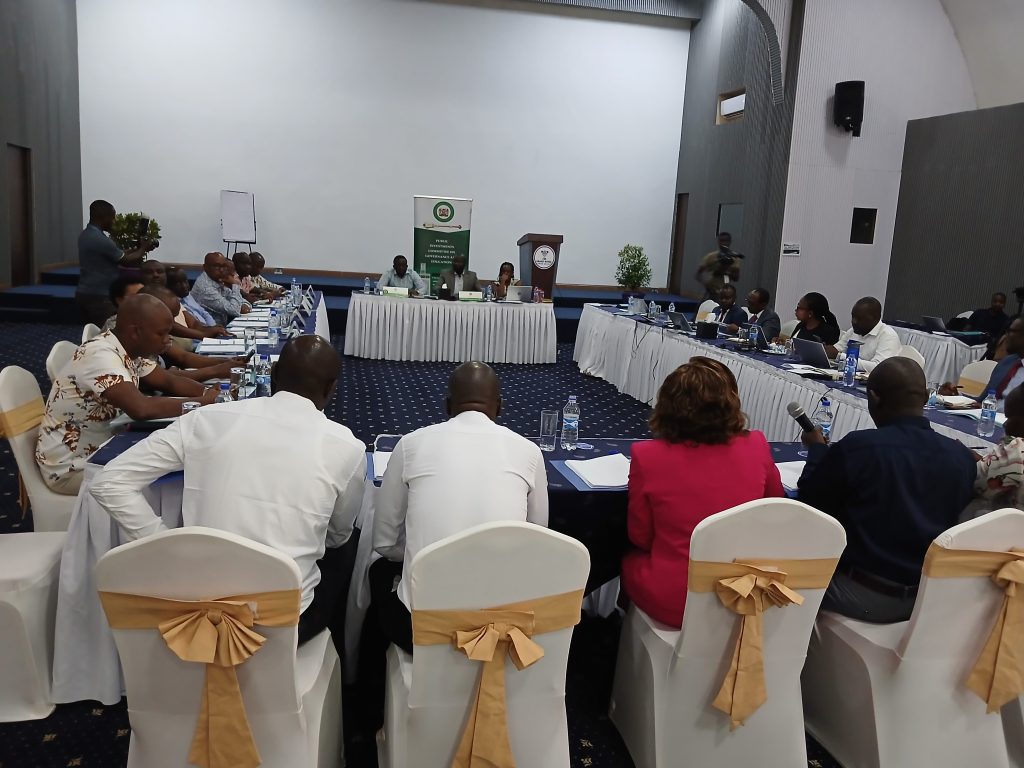
Speaking in Kisumu during day three of a retreat to examine audit reports for national schools from the greater Western region, Committee Chairperson Dick Opiyo Maungu (Luanda MP) and Vice-Chairperson Boyd Were Ong’ondo (Kasipul MP) said principals should stop remitting money to KESSHA until the matter is clarified.
“As you are aware, this is a club, a welfare group for principals. The first and second schools we cross-examined had paid Sh6 million and Sh5 million to KESSHA respectively,” Maungu said.
“What we are asking is, these are billions when you convert it to all schools in the country that go into KESSHA. That is an issue we want to dig deeper into. This Committee will summon the leadership of KESSHA to establish under what legal entity they operate,” he added.
Maungu said the delay in raising the queries was due to workload before Parliament split the Public Investment Committee into three – Education and Governance, Agriculture and Energy, and Social Services.
“We need to find out why a private members’ club should enjoy public money,” he said.
For the first time in history, the Committee is auditing books of secondary schools. Maungu said it was impractical to audit all schools from national to primary level at once, hence they started with C1 schools – the national schools estimated at 120 to 130.
“We are examining Auditor General reports for the last five financial years, from 2020/2021 to 2024/2025. We are impressed with what we have seen, though there are governance issues because schools are being audited this way for the first time,” he said.
The Committee examined reports for Ng’iya Girls, Maseno School, Maranda Boys, Bunyore Girls, Kisumu Girls and Chavakali Boys, among others. Principals appeared to respond to queries on management of public resources.
The team also flagged overstocking of textbooks in some schools while others have none, against the recommended learner-book ratio.
“We have seen a school that received 400 extra books. The question is, when you receive extra, it means there is a school somewhere, maybe in my constituency in Luanda, where learners don’t have books,” Maungu said.
The Committee will summon the Kenya Institute of Curriculum Development (KICD) to explain why it supplies excess books to some schools while schools in far-flung areas like Mandera and Turkana go without.
The Committee further raised concern over millions of shillings in fee arrears dating back to 2010, after the Ministry directed that certificates should not be withheld over unpaid fees.
“This puts schools in a difficult position. We agree certificates should not be withheld because many learners come from vulnerable backgrounds, but principals should seek waivers from the Ministry of Basic Education which will forward them to Treasury. In finance, we have bad debts that can never be collected, so there is no point retaining them in the books,” Maungu advised.
On capitation, the legislators called on the government to disburse funds on time to stop schools from resorting to bank borrowing.
“Some receivables are due to capitation not being sent. We call upon the government to make work easier for headteachers by sending capitation in good time. Ideally, principals should not walk into a bank for a facility without approvals from the Ministry of Education and Treasury,” he warned.
The Committee also recommended that national schools employ qualified procurement officers, while smaller schools can use Sub-County procurement officers, and that school managers and bursars be capacity-built to effectively manage public resources.