Kisumu County has officially launched the Community-Led Monitoring (CLM) to boldly amplify community voices right from the grassroots level.
Dubbed as the people-centred health reform, it also seeks to transform the healthcare delivery services.
“The lakeside county is among Kenya’s 25 high-burden counties grappling with TB, HIV, and malaria. These intersecting health challenges require not just funding or services but a reimagined approach, one where people receiving care are seen not just as beneficiaries but as agents of change.CLM offers exactly that opportunity.”
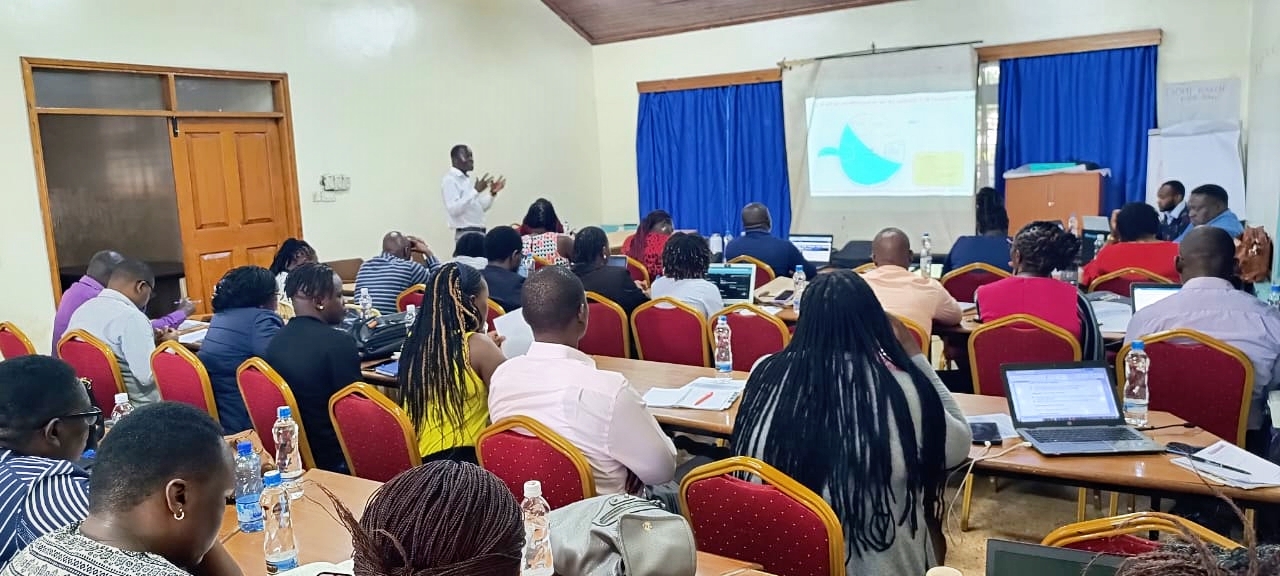
Speaking during the launch at a Kisumu hotel recently, County Director of Health Dr Fred Oluoch, underscored the value of community voices and data in making the health system more accountable and responsive.
“We cannot build a responsive health system without listening to the very people it is meant to serve,” he remarked, setting the tone for the day.

Dr Oluoch’s words reflected a shift in perspective, one that embraces trust-building, collaborative dialogue, and sustainable solutions born from the people themselves.
Supported by the Global Fund through Amref Health Africa, with Our Lady of Perpetual Help and local partners serving as sub-recipients, the CLM process is now firmly rooted in Kisumu.
Why CLM Is Unique
What distinguishes CLM from traditional monitoring systems is its focus on service users at the centre.
“It prioritises the perspectives of adolescents, young women, key populations, persons with disabilities, and other communities affected by HIV, TB, and malaria, empowering them to speak out, organise, and lead.”
The launch meeting was more than symbolic.
Stakeholders agreed to form County CLM Technical Working Groups to guide and oversee the rollout of activities.
These groups will help ensure that information coming directly from service users through peer monitors, community forums, and suggestion platforms is documented, analysed, and applied to improve service delivery.
Importantly, CLM will begin with high-volume health facilities identified by the County Department of Health.
This phased approach ensures that the initiative starts where the needs and patient loads are greatest, creating an opportunity for immediate and measurable impact.
A significant milestone shared during the event was the planned training of thirty-six peer monitors across Kisumu County.
I Monitor: The Digital Platform
These community monitors will be trained on I Monitor, a digital platform that facilitates real-time community feedback and evidence collection.
The platform will also include super users who will respond to and act on issues at various levels through the backend dashboard.
These super users will support the entire process, ensure smooth follow-up, and escalate unresolved issues appropriately to higher authorities.
Their insights will drive community-led advocacy and help fuel policy and service delivery changes that reflect the actual experiences of those receiving care.
As the county team was sensitised on the CLM model, they explored collaborative approaches to implementation and engaged in rich discussions around community ownership, structured feedback mechanisms, and long-term sustainability.
The team emphasised the need to align with other sectors, engage political leaders, and develop strategies that go beyond donor timelines.
Everyone agreed that strong political goodwill, structured resources, and multisectoral support are essential for success. The group also reinforced that CLM is not just about statistics.
It is about dignity and respect, and ensuring that people are not treated as numbers, but as rights holders whose voices lead to real changes.
Participants emphasised the need to fix problems at the lowest level possible before they escalate.
Whether it is stockouts, stigma, long waiting times, or poor provider attitudes, communities must have the tools and platforms to raise issues and propose solutions through dialogue, not protests.
Key Takeaways
CLM must be owned by the people. The community must co-design, participate in, and lead its implementation.
“This is not about doing things for the people. It is about doing things with them and ensuring they are never left behind.”
CLM is no longer an idea in Kisumu. It is a living process built on data, dialogue, and determination.
The landmark gathering brought together key stakeholders drawn from government departments, grassroots organisations, and affected communities.
The commitment exhibited in the meeting is a clear testimony that; “Kisumu County is well on its way to setting a new standard for community-powered health accountability in Kenya.”
The writer is the Vice Chairman of the Board at the Network of TB Champions of Kenya.