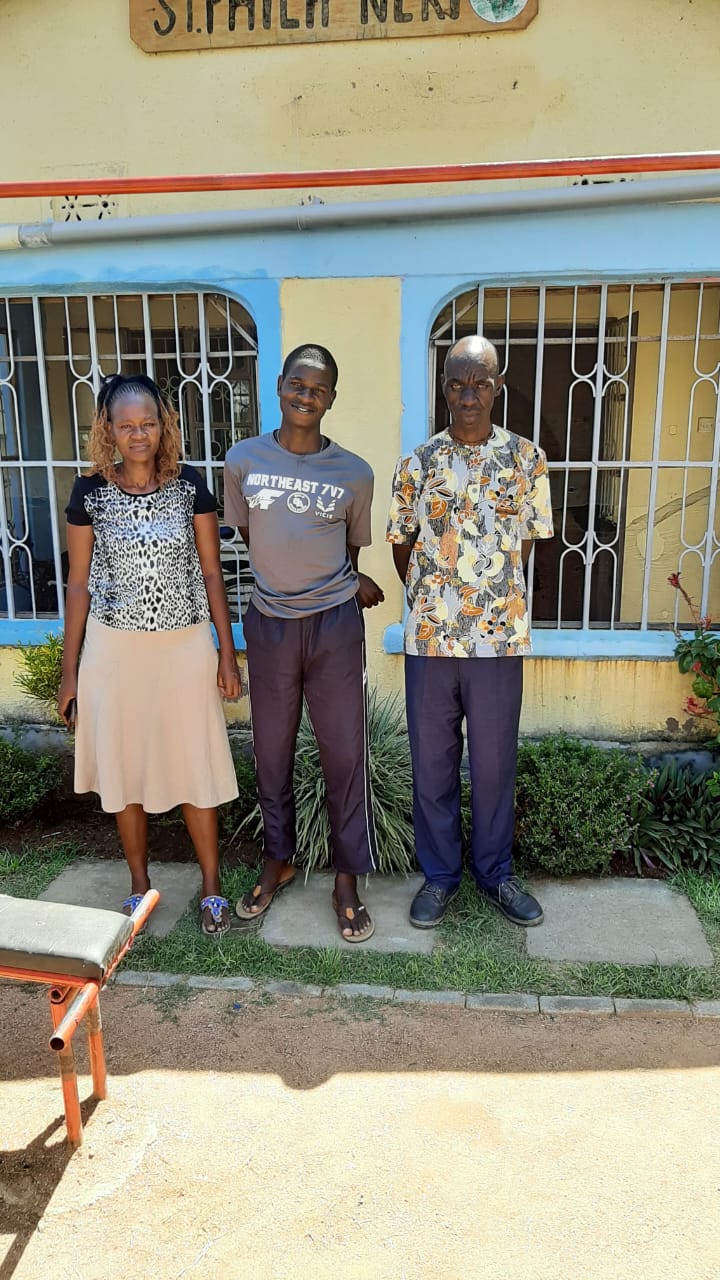
HOMABAY, Kenya, 17th November-Yesterday evening, as I visited my grandfather, Mzee Ogolla, 87, the oldest living member of our entire clan, Jo-Ka Abuor Rachilo, and the last surviving elder of his generation, I found myself, as expected, in a very serious debate. My uncle, Charles Owuor, 82, wearing his usual ODM cap, joined us just as the conversation was about to start.
The whole debate was triggered by the Wazees’ (senior citizens)utter perplexity with a tool I had carried with me, my laptop. I take it along so that as I receive wisdom from my grandfather, I can also prepare my ODel lecture slides for IRE 120: Diplomatic Practice, which begins at 7.30pm.
Uncle Owuor: What is this you are carrying? It seems you rarely leave it behind.
Me: This is what they call a laptop.
Mzee Ogolla: Wow! What does it do?
Me: This can do many things. Video meetings, writing, research, producing content. I can meet anyone in the world through this laptop, as I will do at 7.30pm this evening.
Mzee Ogolla: This is a miracle. How does it work?
Uncle Owuor: That is my greatest wonder as well.
Me: This thing is a masterpiece of invention and innovation. Many features inside it are patented under several people’s names. Hundreds of people are earning right now because I’m using their inventions in this single tool. All these components work together to help me teach, write, and meet people. While you keep sheep and goats here, someone’s asset is inside this machine. They earn every time I open it. Some of those people are as old as you, Mzee, but their creations continue earning for them even now.
Mzee Ogolla: Eh! I tell you the white man is an invented animal. Everything we see today that is powerful or revolutionary, he made it.
Uncle Charles: Very true. The white man is the owner of all things. The black man cannot invent anything, not even this plastic chair I am sitting on.
Me: I want to hear more about that. Why do you think so? What makes the white man the only one who can invent?
Mzee Ogolla: (adjusting himself, clearing his throat, and taking on the authoritative tone that means, “Listen carefully; this is ancient knowledge.”
Mzee Ogolla: Many of you do not know this. The source of it all is that we were cursed. A curse that has never left us.
Uncle Charles: (interrupting urgently as if fearing I might dismiss what was coming)
Uncle Charles: Exactly! The black man is cursed. I agree, I know the story.
Mzee Ogolla: Yes. The young do not know these things. But this one, (he tapped my knee), he knows many things. He sits with me every time he comes home. But this part he does not know yet. (Coughs, then laughs.)
Everyone: A round of laughter, long, warm, almost teasing.
Me: Hahaha! You know I love hearing from you. As the only person left from your generation, spending time with you is a blessing. That’s why I’m putting together a book on the Genealogy of Abuor Rachilo. Your ideas are key. I’ve already gathered a lot from Mzee Asha Nwani (a.k.a Onjum), and from Dani Risper Aketch (a.k.a Nyoloo). Uncle Naph (a.k.a Owuor Baba) was helpful too, though age is catching up with him. Luckily, I interviewed him two years ago and recorded everything.
Mzee Ogolla: Yes, that is good. Many of your age mates, and even your uncles, do not know their roots. Abuor Rachilo is our starting point. Without him, you cannot understand how the clans connect today. But you know there are other Abuors in our genealogy, that confuses people. You understand that?
Me: Yes, I understand. (I gave him a quick recap, but deliberately hurried through it to steer him back to the topic I was eager to hear). But that is a conversation for another day. I want to hear clearly why you think we are cursed. What is the story? Where did it begin?
Mzee Ogolla: Now listen. There were three brothers. One was black, the second was white, and the last one was brown. The black one became the African. The white one became the American, Ja-RaChar. The brown one became the Indian. (Uncle Charles nodded vigorously in support).
One day, their father came home drunk and naked. When the black son saw him, he burst into laughter and mocked him. The white son was sorrowful—he looked for a cloth and covered their father. The brown son did nothing. He neither laughed nor helped.
I nodded slowly.
Uncle Charles: Yes—that’s exactly the story.
Mzee Ogolla: And that is the reason for our backwardness today. The black man is a cursed being. His white brother must be above him, superior, innovative, powerful. We were cursed.
Me: Interesting. Who told you this?
Mzee Ogolla: My father, and their father told them.
Me: I like this story. But to me, it is a good story with a very illogical conclusion.
I proceeded gently, knowing I stood on sacred cultural ground, but also aware of the quiet violence such myths have inflicted on generations of African self-perception. I began by explaining that Africa is not, and has never been, a cursed continent. If anything, it is the cradle of civilisation.
Long before Europe or America knew literacy, Africans had built complex societies in the Nile Valley, developed mathematics, medicine, astronomy, agriculture, architecture, and systems of governance that still inform global civilisation today. Our ancestors taught the Greeks, whose philosophers later became the pillars of medieval European thought. What the West calls the “birth of knowledge” was in fact the continuation of African intellectual traditions.
I reminded them that the foundations of the Western world—America, Europe, and the entire industrial age—were built by African hands. Enslaved Africans did not only work on plantations; they laid railway lines, constructed cities, invented tools, and contributed ideas that were later patented under European names. Many innovations attributed to white inventors were refined, inspired by, or directly borrowed from black ingenuity.
I explained the subtler truth. Colonial systems were deliberately designed to suppress African intellectual curiosity. The white man did not merely conquer territory, he also conquered the African mind. Through missionary education, he taught our grandparents to be obedient, to fear questioning, and to believe that innovation was his domain.
The Bible was interpreted selectively to praise humility and condemn inquisitiveness (that’s why when Odinga questioned the naming ritual, he faced the whiteman head-on). Schools produced clerks and servants, not scientists or inventors. When you systematically teach people that creation is sin and questioning is rebellion, you do not need chains to control them. Their minds will do the work.
As I spoke, the old men shifted in their chairs. The wind had changed direction. I could see, in their faces, an internal battle between the myths they inherited and the evidence unfolding before them, through a young man, not trained in ancient mythologies, myself.
Then I brought the argument home.
I told them that while their myth of the three sons might sound old, even outdated, it represents something real. Not a curse, but a narrative carefully planted to perpetuate white supremacy across generations. In fact, I explained, there are two worlds today that continue to reinforce the same belief—that Africans are naturally inferior.
The first is ‘their’ world: the world of colonial-era teachings, missionary authority, the myth of the “dark continent,” and the lived experience of being treated as subhuman by the colonial state. Their generation absorbed stories that placed the white man on a divine pedestal and positioned Africans as children needing guidance. This first world was an era of white supremacy through the tool of isolation, lack of exposure.
But the second world—the world of today, is equally dangerous, though much more sophisticated. Modern white supremacy no longer arrives in missionary robes but in the form of ‘socio-digital’ transformations and their attendant influences.
Through Hollywood, through Western-funded leadership programs (e.g. YALI), through scholarship structures that teach young Africans to admire Western institutions more than their own (and come back home to push the agenda of the white man with the state and at the market), through development agencies that train young leaders to copy and paste Western frameworks without question.
The irony is therefore crystal clear, both the unexposed elder in the village and the highly exposed African youth in the city often share the same subconscious conclusion. That greatness is Western. One believes it because of ancient myths; the other believes it because of modern indoctrination. Different routes, same destination.
As I concluded, Mzee sighed deeply. His eyes softened, the weight of a lifetime shifting ever so slightly. “Maybe,” he said slowly, “maybe the story was meant to blind us.” Uncle Charles murmured in agreement, adding, “We just accepted it.”
Whether clothed in mythologies or hidden in contemporary socio-digital technologies, we must continue to battle white supremacism.
Odhiambo A. Kasera is a Political Scientist and Adjunct Lecturer at Maseno, Rongo and the University of Kabianga.