
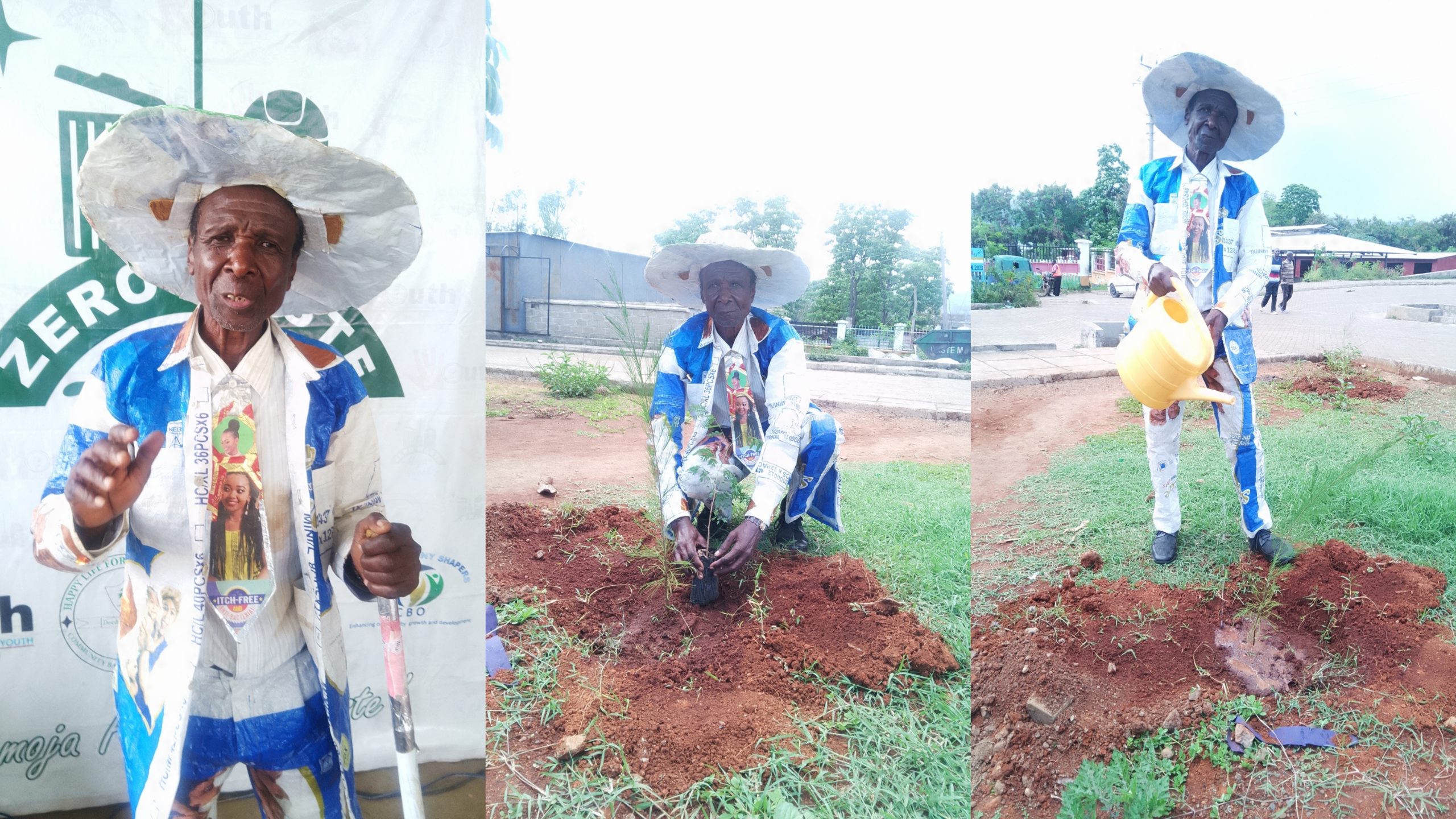
As the old adage goes, ‘Age Ain’t Nothing But a Number.’
But, how deeply do we believe in it?
It’s just a number marking our years, but it can’t dull the burning fire in our spirit, or unscaled heights, whether at 20 or 80 years.
In the quiet village of Kajulu-Kadhola, Kisumu East Sub-County, one man has become a beacon of hope: Mzee Barack Ojwang Nyawara.
At 73 years old, he pulls a different magic wand…Turning waste sacks into beautiful products to earn some income.
His tell-it-all story isn’t just about years lived, but it’s about obstacles shattered, limits ignored, and a life that screams: “What’s next?”
Mzee Nyawara has set an unparalleled example for the conservation of our ecosystem in Kisumu County and the country.
Global Waste
In 2023, the world produced 2.1 billion tonnes of solid waste which is projected to reach 3.8 billion tonnes by 2050.
Developed countries, though comprising only 16 percent of the global population, generate a disproportionate 34 percent of the world’s waste.
The cost of waste management is substantial, with the direct cost estimated at $252 billion in 2020, rising to $361 billion when factoring in hidden costs without urgent action.
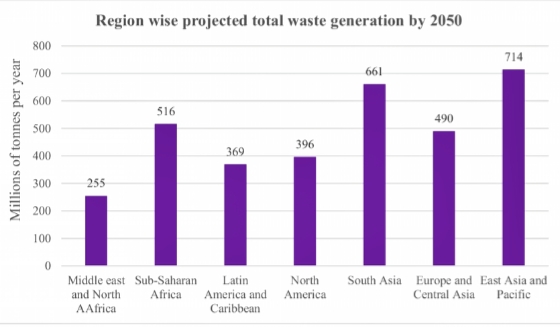
The National Environment Management Authority (NEMA), the government agency responsible for managing the environment and implementing environmental policies estimates that Kenya generates eight million tons of waste annually.
Most wastes in the cities are incinerated or disposed of in illegal dumpsites, along the side of the road, or in waterways, thus contributing to the ever-spiralling pollution.
Early Life
When the Eyes Watch visited Mzee Nyawara at his home, he was true to his element- a man on a mission to succeed in cleaning up his surroundings where others dreaded.
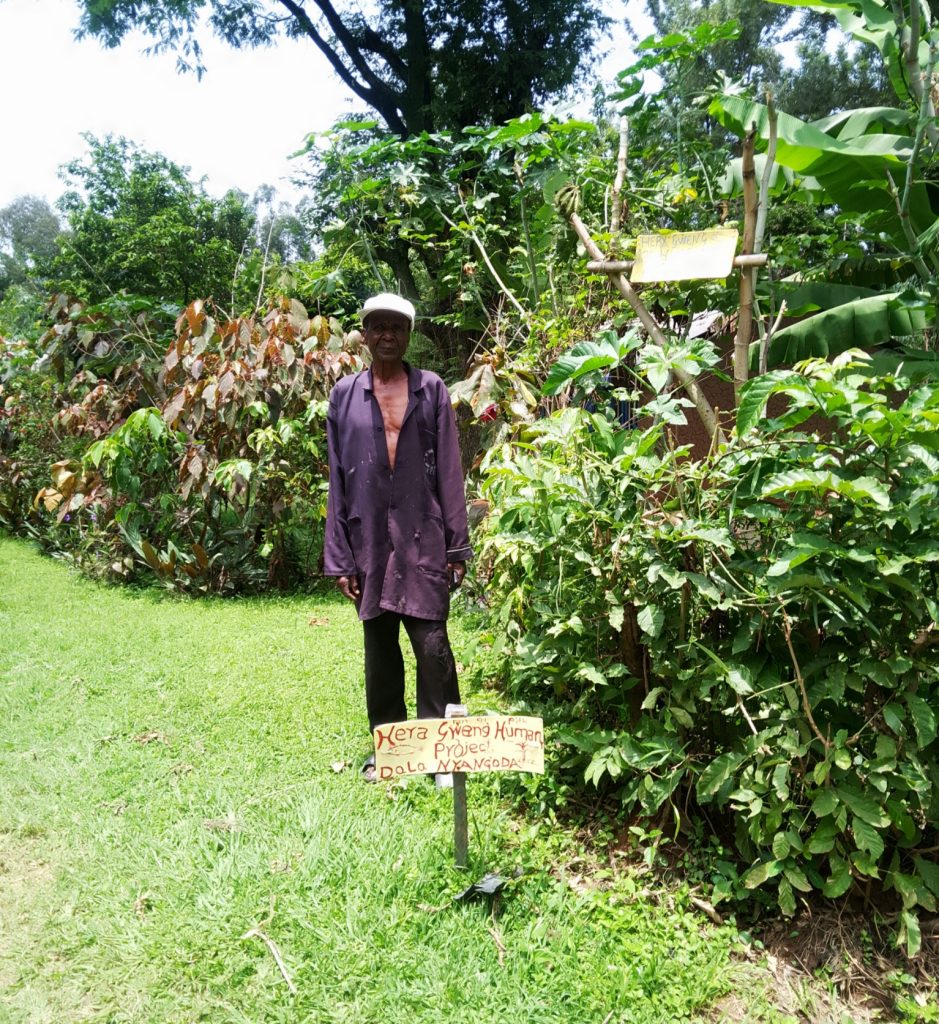
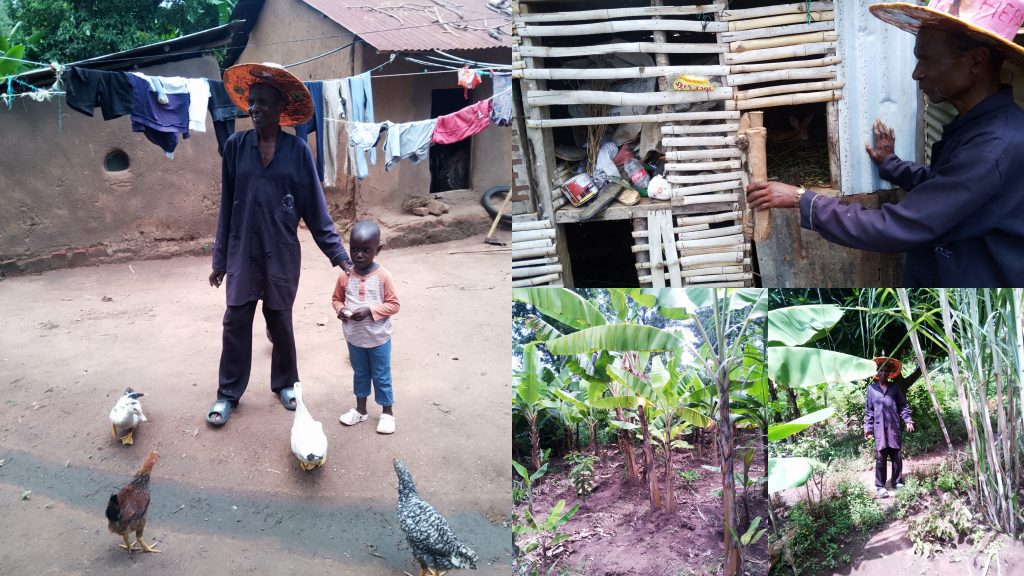
The homestead is nestled beside an impressive plantation of 1,000 lush banana stalks, their vibrant green foliage swaying gently in the breeze.
With a promising bountiful harvest, each stalk stands tall, laden with clusters of ripening bananas.
The three houses of his sons are constructed according to Chik (Luo Cultural tradition), each painted in cheerful hues that reflect the warmth of the residents within.
To one side of the homestead lies a flourishing sugarcane farm, with rows of tall, swaying canes glistening under the scorching sun of the lakeside city.
Mzee Nyawara’s home setting is not only a testament to hard work and dedication but also a harmonious blend of agriculture and comfort, offering a perfect retreat for family and friends alike.
““My father was a cobbler, and he had nine siblings, three of whom died. I began my education at Obuolo Primary School from 1960 to 1966 after we relocated from Kitale town,” said Nyakwar Nyang’ola, his chickens and ducks wandering around his compound.
He said the immediate former Kisumu East MP, Hon Gor Sungu, was his classmate, but, he had to discontinue his studies due to financial constraints.
After resuming classes and earning 26 points, the young Nyawara joined Ngere High School, and later was admitted to Rotary Centre Kisumu (1974-1976) to pursue Electrical Engineering.
After graduating with a Grade Three Certificate, he hustled for some time before landing a job at Paner Electrical Works in Kisii, owned by the former Nyanza Safari Rally Chairman.
“Unfortunately in 1985, our company collapsed when he died in the Kapsabet corner. He was the map navigator, and Jagjit Singh was the driver. I have been hustling ever since,” he recounted.
Mzee Nyawara was blessed with seven children, but lost three (2 girls and 1 boy), and remained with four (3 boys and 1 girl).
His children are currently involved in construction and electrical engineering work.
Game Changer
In July 2023, he threw in the towel and quit electrical work due to his advanced age.
“I couldn’t climb the ladder and see properly. But, I still possess a lot of knowledge and skills which I have imparted appropriately to my children and trained some people who have shown interest,” he said.
Like a fish in water, Mzee Nyawara ventured into Climate Change Advocacy and Agricultural Production for healthy living.
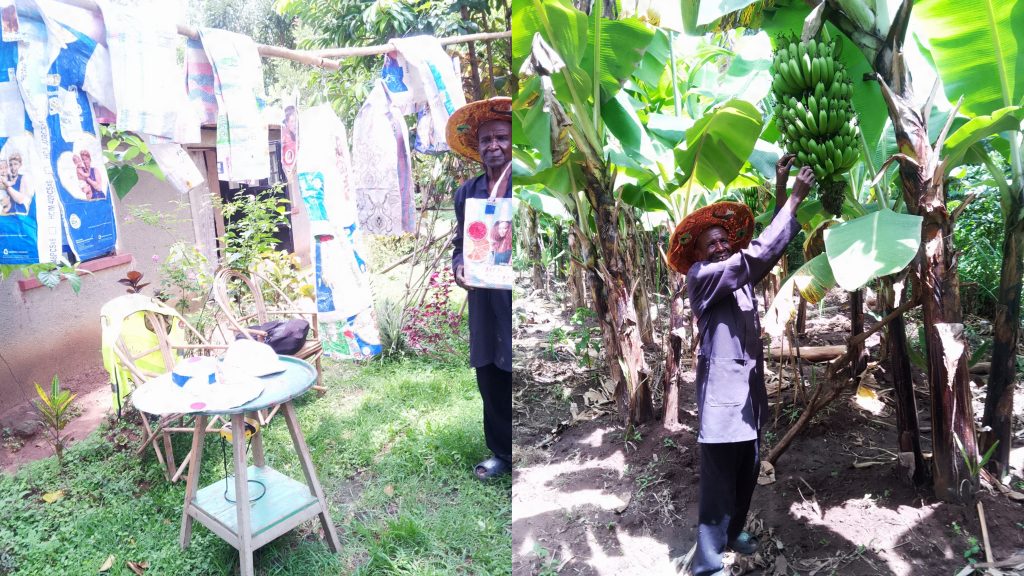
“I once came across a pile of sack waste dumped in front of my gate. I felt disappointed, picked and made them sparkling clean. After careful thoughts, I later took them to the tailor at the nearby Obuolo centre who sewn them into desired clothes,” he explained while adding that the tailor was surprised by the idea.
He recalls the tailor asking him, “Why sack clothes?” He paused before replying, “These are clothes worn by the less fortunate in society. I can’t afford to buy a coat worth Sh 4,000.”
Mzee Nyawara’s face lit up as he explained how the tailor made his first coat from a Uhuru Bag (Plastic), with some sewn from Pampers!
He regrets burning waste like polythene bags without knowing their benefits. Now, he passionately moves around his village to clear the waste from the garbage.
With a sense of satisfaction, Mzee Nyawara states that when it rains during funerals or public functions, he remains standing in his raincoat while mourners scramble for safety.
“Villagers and people always look at me, bewildered and concerned about my actions and why I always wear sackcloth.”
“To spruce up our homes,” Mzee Nyawara continued, he encourages his people to embrace the idea, instead some of them labelled me saying: “Wuon Grace wiye obiro marach (People say that Grace’s father has become a madman, crazy or someone with a mental health problem.”
He intones that his simple mantra to the great people of Ramogi and other communities is: “Pur Gi Pith kod Aluora Maler Jokanyanam (Agriculture, Livestock rearing, and a clear environment are essential to our daily lives).”
Mzee Nyawara emphasised that without concentrating on the three, we will be doomed, as he referenced the biblical quote: “Adam, you will only reap what you sow from the soil, and go back to it.”
Some of the challenges he is facing are a lack of adequate gum to stick clothes, which he has to buy at Sh100.
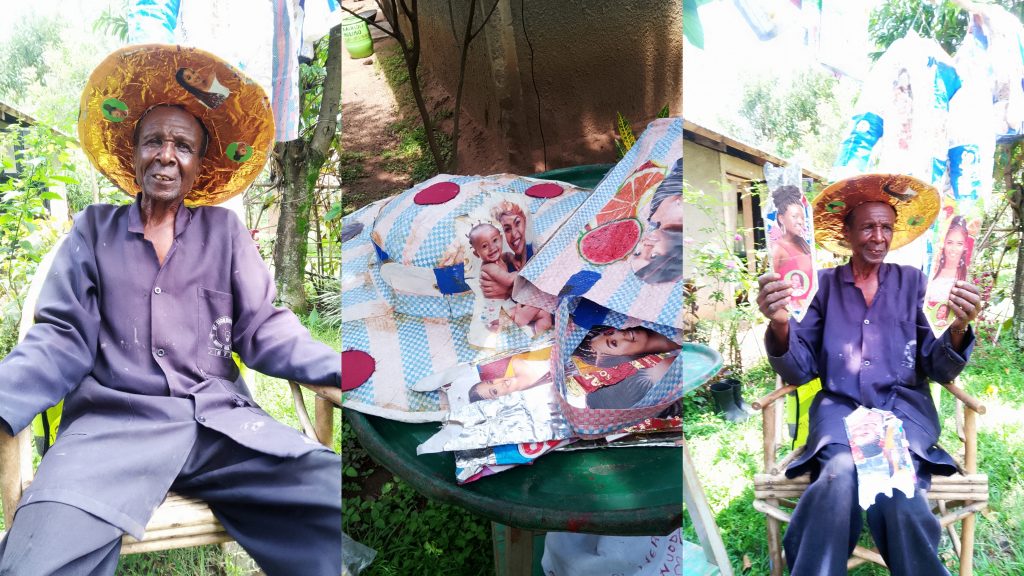
“Once I have produced many of them, I intend to charge neckties between Sh50 and Sh100,” he remarked with hope.
For food security, Mzee Nyawara decided to become a farmer number one by tending to it from 3am to 8am.
The initiative, christened Hera Gweng Pur Gi Pith, also involves rearing of hares, hens, ducks and …rats!
“The meat of domesticated rats is surprisingly sweet. I used to eat them every Saturday,” he grinned as his grandson played nearby.
During a good harvest, he always gives people bananas to eat freely…” and nowadays, they agree with me that my idea was good.”
Zero Waste
In 2022, the United Nations declared March 30th the International Day of Zero Waste, making it one of the newest officially recognised global observances.
Significantly, it’s geared towards driving action and partnerships to promote waste management and the circular economy.
It strongly aligns with the United Nations Sustainable Development Goals (SDGs), specifically SDG 12: Ensure responsible Consumption and Production patterns.
It further relates to SDG 13 (Climate Action), SDG 15 (Life on Land), and SDG 17 (Partnerships for the Goals).
It was during the marking of this year’s International Day of Zero Waste held in Kisumu city, that Mzee Nyawara drew lots of attention from an audience comprised mainly of the youth and women.
“My sons and daughters, I urge you to stay committed to environmental conservation efforts. We must work together to ensure this initiative succeeds,” he urged them in his ten-minute speech drawing rounds of cheers
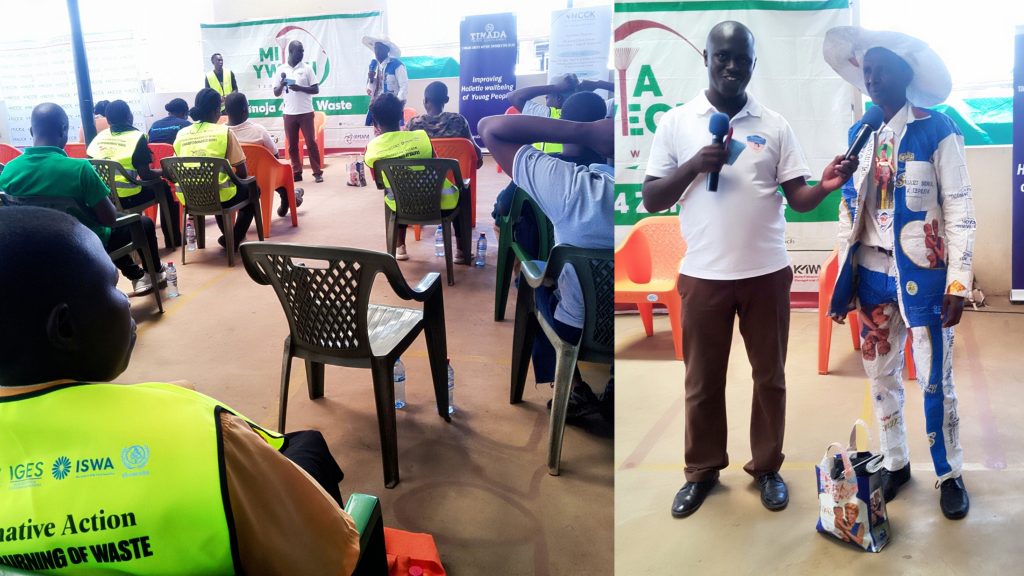
To robustly champion this call, Miya Ywech- a consortium of environmental organisations- is robustly implementing the zero waste actions on the ground.
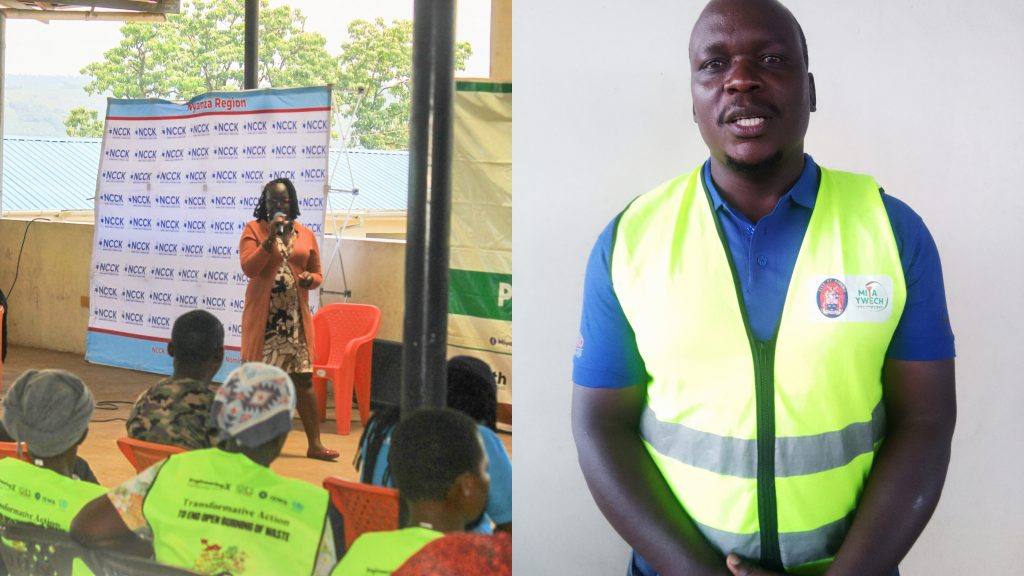
“We collaborate closely with stakeholders who are committed to achieving the zero waste model objectives in the area,” said Meso.
Mr Meso emphasised that by creating awareness, they help in building connections and ideation ownership to reach the wider community.
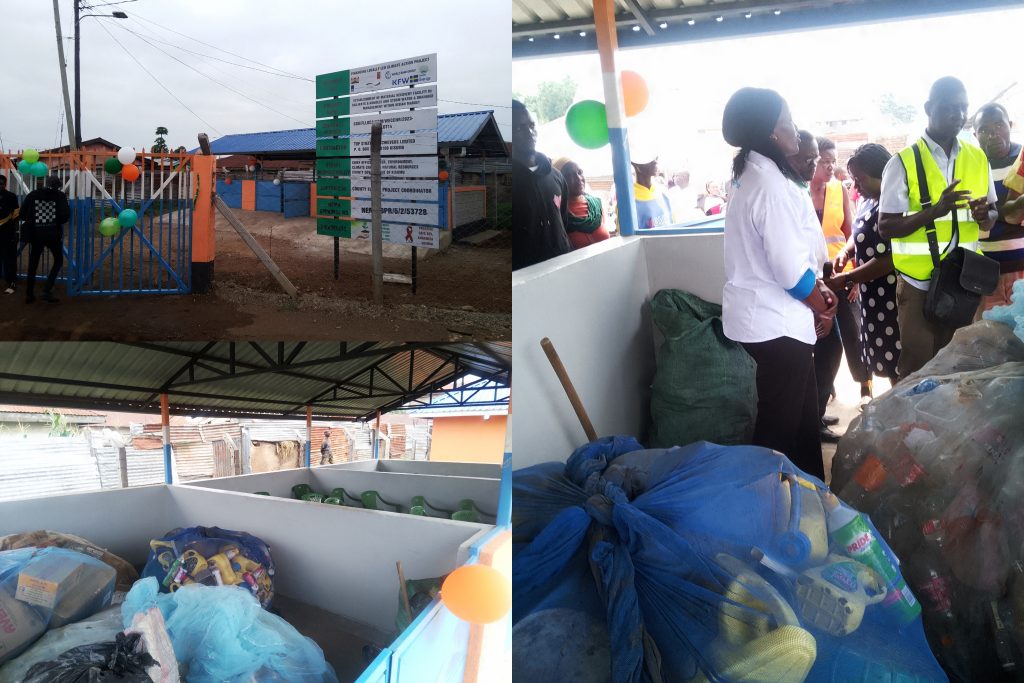
In light of the foregoing, Miya Ywech established EcoClubs activation at their Material Recovery Facility (MRF) in Mamboleo, Kisumu.
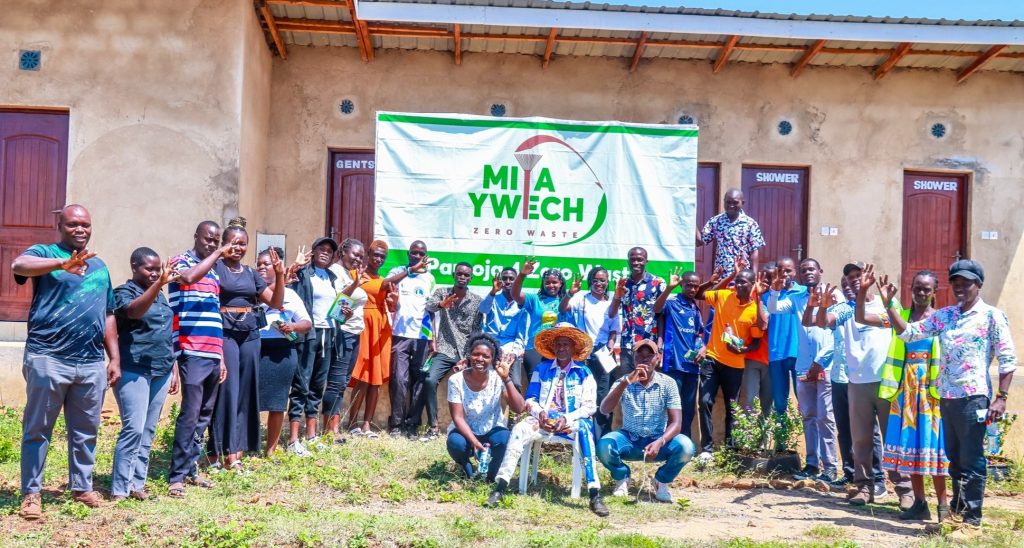
With nostalgia, Mzee Nyawara remember how he was appointed one of the organisation’s zero waste champions.
“I am pleased with Miya Ywech’s acknowledgement of my advocacy efforts. At the plant’s opening ceremony, I attended in a suit and have been collaborating closely with the local Assistant County Commissioners to lead the Zero Waste initiatives,” he said.
Sustainable Waste Management
In response to ecosystem conservation, Kisumu County has launched comprehensive plans to reduce the approximately 300 tons of waste generated daily in the city and 200 tons from the other sub-counties.
According to the County’s Environment Department Director, Bernard Ojwang’, they prepared a document titled “Status and Plans for Sustainable Waste Management and Inclusion of Waste Pickers in the City.”
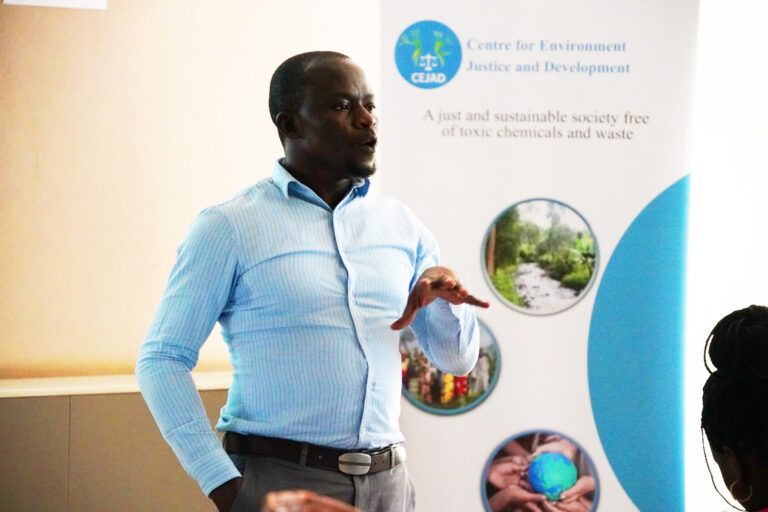
Mr Ojwang further said that the department collects about 25 percent of the total waste generated, while informal waste pickers, cooperatives, and small businesses manage another 15 to 20 percent.
“Organic waste constitutes 65 percent of the waste collected, primarily from households and markets, posing significant threats to the residents of Kisumu.“
The Prof Anyang Nyong’o-led administration has also allocated Sh30 million for equipment and modern waste vehicles to enhance Material Recovery Centres (MRCs).
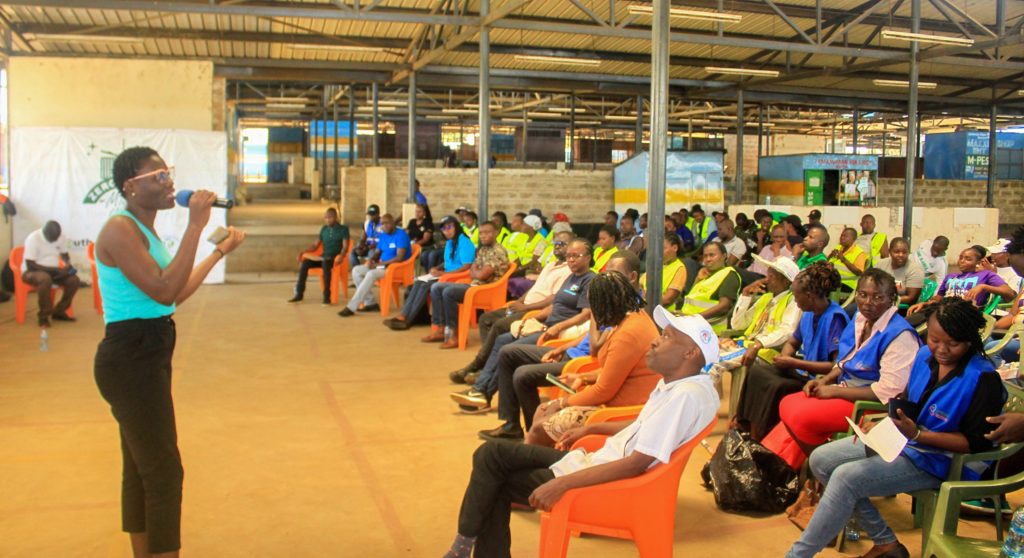
“Similarly, in 2023, the Ward Waste Management Committees (WWMC) were established with the responsibility of promoting community-led programs to educate residents about sustainable waste practices,” Ojwang stated.
Moreover, the department collaborates with various stakeholders for sensitisation and cleanup activities on County Environment Day marked on the 10th of every month.
Consequently, 27 skips have been procured to be strategically placed throughout the city to support consistent Skip Waste Management (SWM) services.
Mr. Ojwang emphasized that plastic waste constitutes 15 percent, while paper and cardboard account for 7 percent, metal waste for 3 percent, glass waste for 2 percent, and non-residual waste for 8 percent.
“The upgrades to the landfill involved relocating the Kachok dumpsite to Kasese, which is 36 kilometres away from the city. Plans are also in advanced stages to convert Kasese into a Sanitary Landfill equipped with Leachate Treatment Systems.”
According to Waste 360, leachates are categorised by their water chemistry, heavy metals, and volatile and semi-volatile compounds.
Leachates undergo biological treatment through a process called Activated Sludge, which uses aerobic microorganisms to biodegrade organic contaminants. The leachate is aerated in an open tank with diffusers.
To divert valuable materials from the landfills, the department has established and operationalised five MRCs located in areas such as Otonglo and Obunga.
Mr Ojwang stated that the department will continue to offer training and capacity-building programs for waste pickers.
““This will improve their skills in sorting, recycling, and implementing best practices in waste management.”
He emphasised that the Sustainable Waste Management Act of 2022 recognises waste pickers as integral members of the formal waste management workforce.
In addition, the department assured stakeholders that they are working towards establishing legal recognition for waste pickers as essential contributors to the waste management process.
The Draft Solid Waste Management Policy, the Draft Solid Waste Management Bill, the Kisumu Solid Waste Management Plan (KISWAMP) 2015-2025, the Climate Change Policy, the Climate Change Act, and the Climate Change Action Plan are some of the existing legal frameworks.
The department also plans to facilitate the formation of cooperatives or associations for waste pickers.
It will enable groups to negotiate better prices for recyclables, thus providing a collective voice in discussions with the county government.
Financial Support
After rigorous community-led sensitisation, Mzee Nyawara says that lately his environmental activism is gaining traction among the villagers. and the Kisumu County residents at large.
“I am still working on sensitising the community on upholding (usafi) cleanliness. They also began believing in me when I appeared in a local television show articulating the need to safeguard our environment,” he happily said.
He has also been visiting several schools, learning institutions, and public forums creating awareness on tree planting and growing.
The school he works with includes his former Obuolo Primary, Rae, Kihancha, St Peter’s Kindu, Bugna Primary and Secondary, Ukweli College, among others.
I am delighted that the students are participating in waste picking, tree planting, and growing initiatives. I collaborate with the school principal, headteachers, and teachers of environmental clubs.
“I also approached the Mama Grace Onyango Social Centre Management to allocate me a space where I can showcase my products for sale after they are made,” he happily remarked.
Mzee Nyawara calls on both tiers of government (national and county) to upscale their concerted effort towards achieving a cleaner environment.
“I need financial support to enable me to travel across the country and beyond to achieve this noble course of making the world a better place,” Mzee Nyawara concluded.
A wonderful piece of work. Well researched and properly executed. The writer is set and ready to reach greater heights.
Well done my friend.
We value your feedback and continued support 🙏