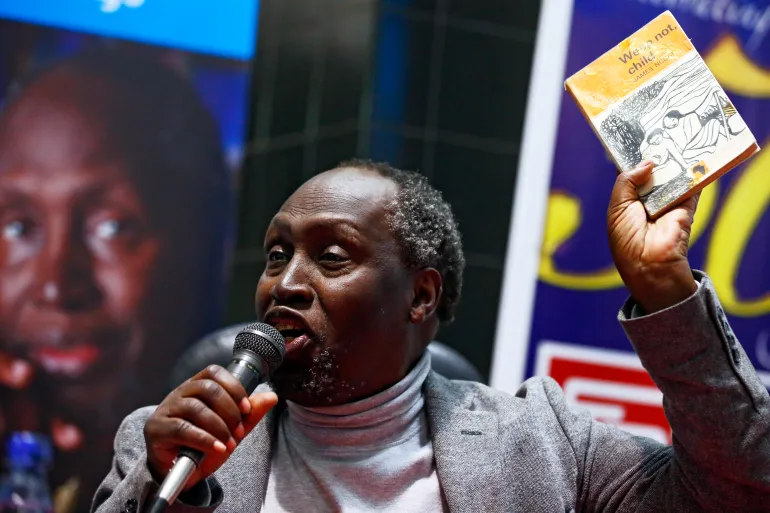
Ngugi wa Thiong’o, one of Africa’s revered literary kings, passed away aged 87 on Wednesday, May 28th.
He leaves behind an indelible towering mark as a novelist, scholar and a no-holds-barred advocate for African languages and liberation.
Ngugi whose works incisively pierced colonialism, neo-colonial betrayal, and the resilience of the oppressed, breathed his last, his daughter Wanjiku Wa Ngugi confirmed.
“He lived his full life. He fought the good fight,” she eulogised on her official Facebook account.
The Mighty Pen That Shook the Authorities
In 1964, as an undergraduate at Makerere University, Ngugi came into the literary limelight by writing a classic debut, Weep Not, Child.
In a career spanning six decades, he churned out masterpieces like A Grain of Wheat, Petals of Blood, and The Wizards of the Crow, a highly satirical epic.
He joined the creme de la creme of Africa’s literary greats like Chinua Achebe and Wole Soyinka, among others.

As an act of resistance, Ngugi, an indefatigable anti-imperialist, controversially abandoned English and chose to write in her local Gikuyu dialect in 1977.
He makes a rallying cry for linguistic and cultural emancipation across the Third World Countries through his Decolonising the Mind.
A Long Walk to Freedom
Ngugi’s defiance unto death stance came at a pricey cost.
His Gikuyu-language play, Ngaahika Ndeenda (I Will Marry When I Want), infuriated the authorities and he was subsequently jailed without trial in 1977.
Incarcerated in prison, he famously wrote Devil on the Cross on toilet paper—a testament to his unbreakable spirit.
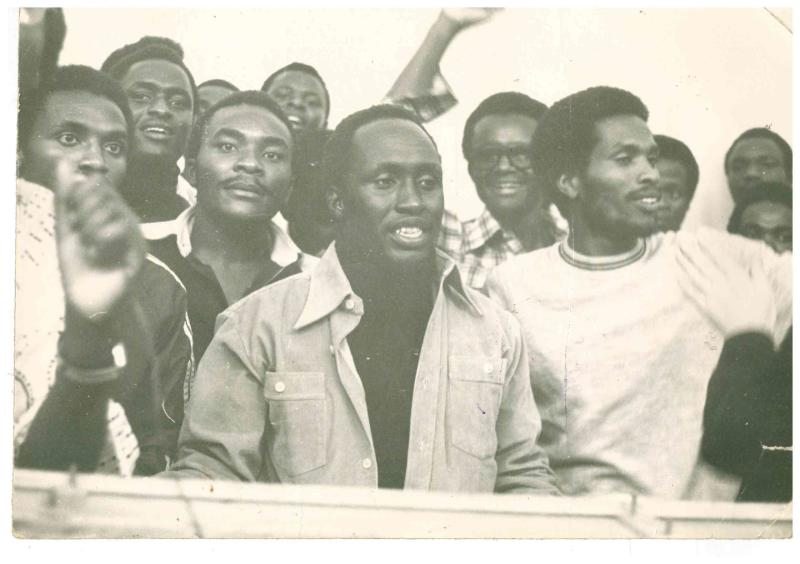
His stance never softened even while in exile.
He is remembered for agitating for the abolition of the University of Nairobi’s English Department, demanding that African literature take centre stage.
Ngugi argued that; “Language is the archive of memory.”
To date, this philosophy is shaping generations of post-colonial thinkers.
Missed The Nobel Prize by Whiskers
He strode the literary world like a colossus, but he never won the coveted Nobel laureate prize despite numerous nominations.
Now, he has rested: “Can the committee consider rewarding the Literary Titan Posthumously?
He wrote his final novel, The Perfect Nine, a creative feminist Gikuyu epic in 2021.
Tributes flowed freely across the globe, with son Mukoma wa Ngugi tweeting: “I am me because of him. I don’t know what tomorrow looks like without him.”
The continent has not lost just a ‘Son of the Soil,’ but a writer who wielded a mightier pen than a sword.
Like the defiant songs in his Petals of Blood, Ngugi’s written words will echo for ages.