Significant New Policy Updates Announced at the Kigali Conference in Rwanda.
KIGALI, Rwanda, July 2025- The World Health Organisation (WHO) has issued groundbreaking guidelines recommending the use of injectable lenacapavir (LEN) as a pre-exposure prophylaxis (PrEP) option for HIV prevention.
Administered twice a year, LEN represents a significant advancement in the global HIV response. These guidelines were revealed at the 13th International AIDS Society Conference, recently held in Kigali, Rwanda.
LEN is the first long-acting injectable PrEP option available, providing a highly effective alternative to daily oral pills and shorter-acting treatments.
With just two doses needed annually, LEN addresses the challenges many individuals face with daily adherence, stigma, and access to healthcare.
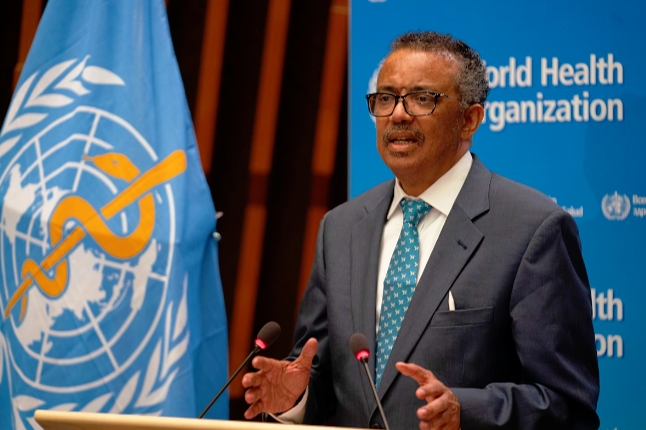
“While an HIV vaccine remains elusive, lenacapavir is the next best thing-a long-acting antiretroviral proven in trials to prevent nearly all HIV infections among at-risk populations,” stated Dr. Tedros Adhanom Ghebreyesus, WHO Director-General.
“The launch of WHO’s new guidelines, along with the FDA’s recent approval, marks a pivotal advancement in expanding access to this vital tool. WHO is dedicated to collaborating with countries and partners to ensure the swift and safe delivery of this innovation to communities.”
The timely release of these guidelines comes as HIV prevention efforts stagnate, with 1.3 million new HIV infections expected in 2024.
These infections disproportionately affect key populations, including sex workers, men who have sex with men, transgender individuals, people who inject drugs, incarcerated populations, and children and adolescents.
WHO’s recommendation of LEN signifies a decisive move to diversify HIV prevention strategies, providing individuals with more options to take control of their health according to their personal circumstances.
As part of the guidelines, WHO has also endorsed a public health approach to HIV testing using rapid tests.
This initiative simplifies access to long-acting injectable PrEP options, including LEN and cabotegravir (CAB-LA), by removing complex testing requirements and facilitating community-based delivery through pharmacies, clinics, and telehealth.
LEN joins the ranks of other WHO-recommended PrEP methods, such as daily oral PrEP, injectable cabotegravir, and the dapivirine vaginal ring, expanding the arsenal of tools available to combat the HIV epidemic.
While access to LEN outside clinical trials remains limited, WHO urges governments, donors, and global health partners to begin immediate integration of LEN into national combination HIV prevention programs, while also collecting essential data on usage, adherence, and real-world impacts.
Additional Recommendations
For the first time, WHO’s treatment guidelines clearly recommend long-acting injectable cabotegravir and rilpivirine (CAB/RPV) as an alternative for patients on antiretroviral therapy (ART) who have achieved viral suppression with oral ART and do not have an active hepatitis B infection.
This approach aims to support individuals living with HIV who face challenges adhering to oral regimens.
The updated guidelines on service delivery also emphasise integrating HIV services with treatments for noncommunicable diseases (NCDs) such as hypertension and diabetes, as well as mental health care for conditions like depression, anxiety, and alcohol use disorders, all to bolster ART adherence.
Moreover, new guidelines now recommend screening for gonorrhea and chlamydia among key and priority populations to effectively manage asymptomatic sexually transmitted infections (STIs).
For people living with HIV who also have mpox and are either ART-naive or have experienced lengthy interruptions in their regimen, rapid initiation of ART is strongly recommended. Early HIV testing is advised for individuals presenting with suspected or confirmed mpox.
WHO’s standard operating procedures underscore the importance of HIV and syphilis testing for anyone with suspected or confirmed mpox.
In light of the broader challenges facing HIV programs, WHO has released new operational guidance to sustain priority HIV services amid changing funding landscapes.
This framework guides countries in prioritising services, assessing risks, monitoring disruptions, and adapting systems to safeguard health outcomes.
“We have the tools and knowledge to end AIDS as a public health problem,” declared Dr Meg Doherty, Director of WHO’s Department of Global HIV, Hepatitis and STI Programmes.
“What we need now is bold implementation of these recommendations, rooted in equity and community empowerment.”
HIV continues to be a pressing global public health challenge. By the end of 2024, an estimated 40.8 million individuals are projected to be living with HIV.