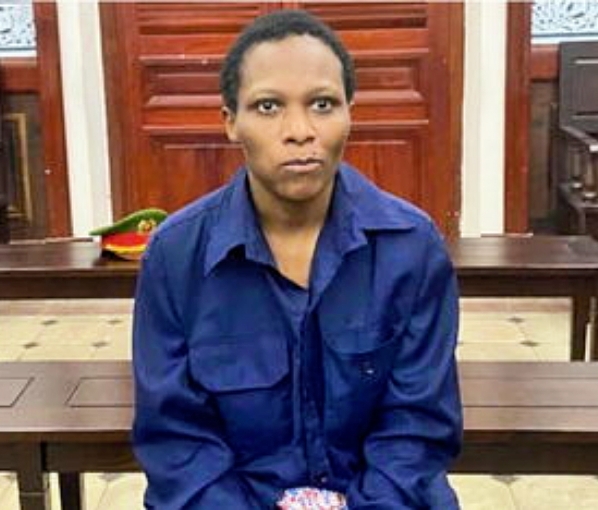
VIETNAM SUPREME COURT July 30 –Margret Macharia Nduta, a Kenyan woman who had been staring at the death penalty in Vietnam, has received a glimmer of hope after her sentence was officially reduced to life imprisonment.
The significant legal development was confirmed on Thursday, July 31, offering her a possible pathway toward eventual freedom.
The announcement was made by Kenya’s Foreign Affairs Principal Secretary, Korir Sing’oei, who shared the update while noting that negotiations were still underway to explore further options for securing her release.
While Nduta remains behind bars, the commutation marks an important step away from the harshest punishment.
“This is a positive milestone and we are continuing to engage in diplomatic discussions. The focus now shifts to seeking clemency or other forms of leniency that could lead to her release,” said Sing’oei
Nduta was initially sentenced to death in early March 2025 after she was found guilty of attempting to smuggle narcotics into Vietnam. Authorities at Tân Sơn Nhất International Airport in Ho Chi Minh City arrested her after reportedly finding more than two kilograms of illicit drugs in her possession.
The court in Ho Chi Minh City later ruled against her, handing her the death penalty under Vietnam’s stringent anti-drug laws.
The court’s decision underscored Vietnam’s uncompromising stance on drug-related offenses, with capital punishment being the standard sentence for anyone found guilty of trafficking substantial quantities of narcotics.
Nduta’s case quickly gained attention both in Kenya and abroad, reigniting debate about the risks faced by foreign nationals in countries with severe drug laws.
Though her sentence has now been reduced to life in prison, her legal troubles are far from over.
According to Vietnamese law, prisoners serving life sentences can request clemency under exceptional circumstances. However, the final decision rests solely with Vietnamese President, who exercises absolute discretion in such matters.
Legal experts familiar with Vietnamese criminal justice say that while the path to clemency exists, it is rarely straightforward.
A successful petition must demonstrate remorse, good behavior, and extraordinary humanitarian grounds. Even then, approval is never guaranteed.
For now, Nduta’s legal team, together with Kenyan authorities, are working behind the scenes to prepare an appeal for leniency.
Diplomatic channels are also being explored, although chances of full release remain uncertain, especially given Vietnam’s hardline policies on drug enforcement.
“It is encouraging that the court reconsidered the original verdict,” said an official from the Ministry of Foreign Affairs, who spoke on condition of anonymity.
“However, we are aware that this does not erase her conviction. We still have a long way to go.”
Back home, the Kenyan government has recently made repatriation of citizens imprisoned abroad a key priority.
Prime Cabinet Secretary Musalia Mudavadi, speaking during an address on July 30, said efforts were being made to bring home more than 1,000 Kenyans serving time overseas.
He made the remarks while commenting on the successful release of Stephen Munyakho, another Kenyan who was previously on death row in Saudi Arabia.
Nduta’s case has once again highlighted the growing number of Kenyan nationals being held in foreign jails, often on serious charges such as drug trafficking, fraud, and immigration violations.
With this new development, her family and supporters are hopeful that the tide may be turning in her favor.Still, observers warn against over-optimism.
Vietnam’s legal and political systems place national interests above foreign diplomatic pressures, especially in cases involving drugs. The government has long maintained that its harsh penalties are essential in protecting society from the devastating impact of narcotics.
While life imprisonment spares Nduta from the death chamber, it remains a severe punishment with limited prospects for parole.
Her only real hope now lies in a successful clemency plea—a process that could take months, or even years, with no guaranteed outcome.
In the meantime, the Kenyan government has pledged continued support. Whether that support will translate into eventual freedom for Margret Nduta remains to be seen.