MOMBASA, Kenya, September,2025 – In a landmark moment for East African maritime trade, the Port of Mombasa recently welcomed the MV Grande Shanghai, a state-of-the-art ammonia-ready pure car and truck carrier (PCTC), on her historic maiden call.
The 220-meter vessel, owned by the Grimaldi Group, is a pioneer of the seas. As the first of a new generation of ten PCTCs, it was specifically designed to meet the International Maritime Organisation’s ambitious decarbonization targets.
With a massive beam of 38 meters and a capacity for 9,000 vehicles, the Grande Shanghai was expertly guided into the Ro-Ro Multipurpose Berth 1 by KPA Marine Pilot Capt. Joshua Musee Nguku, utilising the ship’s own advanced bow thrusters.
More than just a carrier, the Grande Shanghai is a floating testament to green technology. Designated a first-generation zero-emission vessel, it is built with advanced features including ammonia-readiness for future clean fuel, solar panels, high-capacity batteries, and innovative drag-reducing hull coatings.
These technologies allow it to sail efficiently at 19 knots while drastically cutting emissions of sulfur oxides, nitrogen oxides, and particulates.
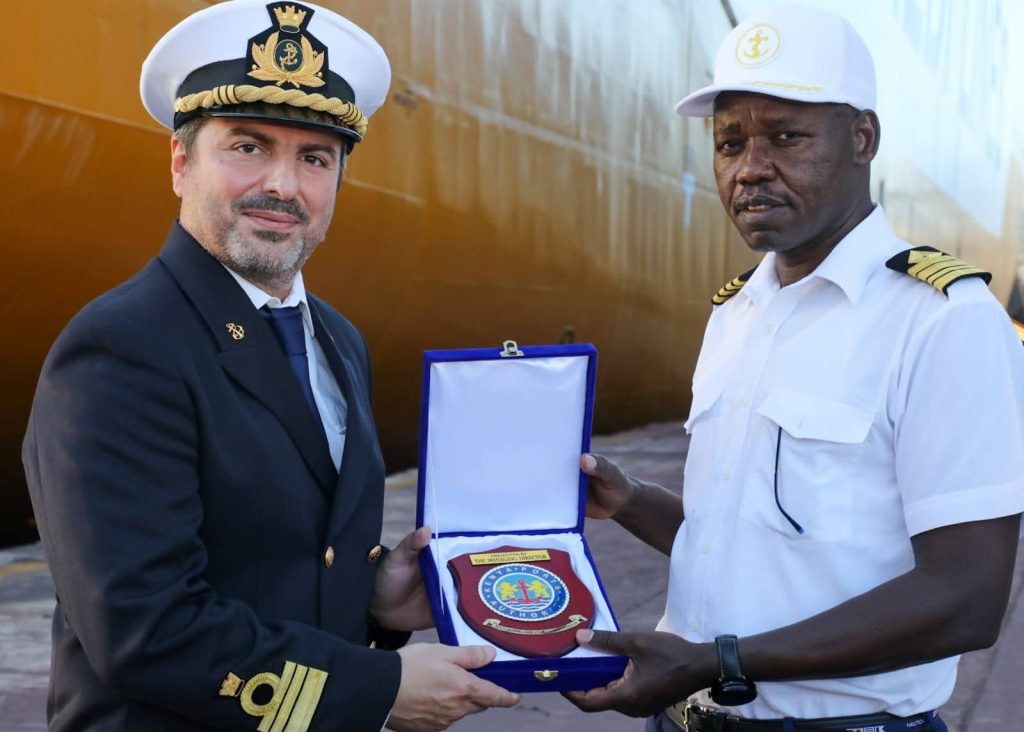
The meeting of the two career Master Mariners went beyond formalities, sparking discussions on how the ship’s groundbreaking designs symbolise alignment between global greener vessel innovation and Kenya’s own ambitious efforts to transform its ports into sustainable maritime hubs.
Capt. Ruto elaborated on the Authority’s initiatives under its 2024–2028 Green Port Policy, which mirrors the ship’s sustainable ethos.
He highlighted ongoing projects such as the installation of shore power infrastructure—which would allow vessels to plug into the grid and turn off their engines—renewable energy integration, and the deployment of low-emission cargo handling equipment.