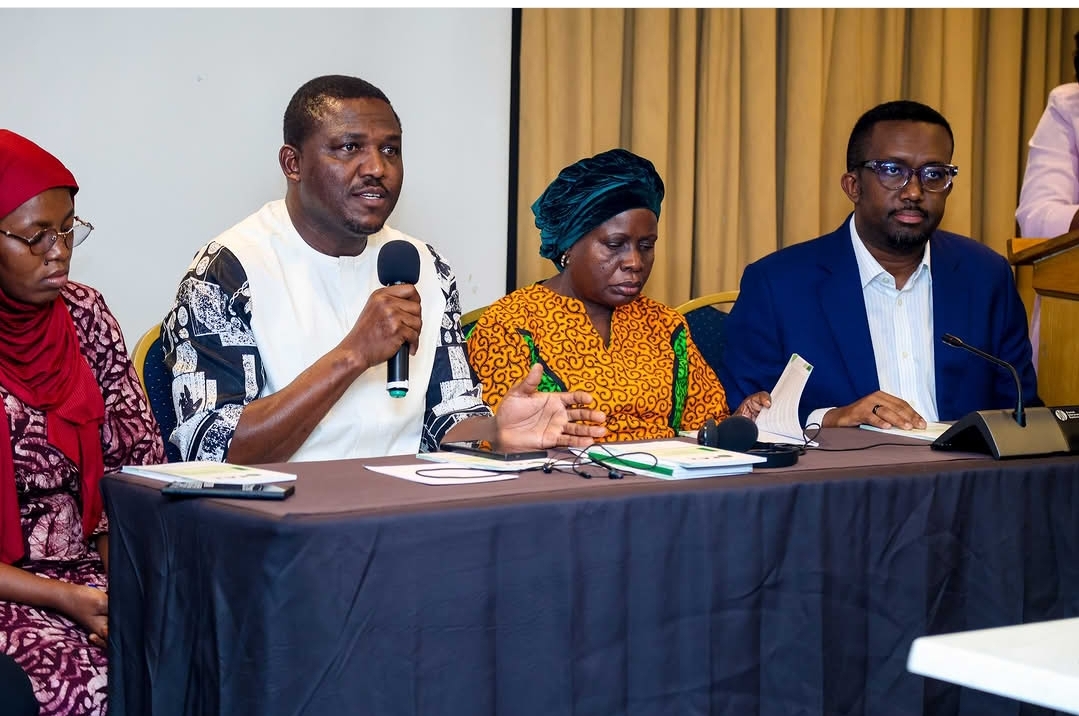
“As we consolidate our efforts, let’s turn our growing political commitments into investments,” Rashid Abdallah,AFREC Executive Director
KISUMU, Kenya -The air in millions of African households carries more than smoke. It carries a $791 billion annual economic drain.
Ahead of the Second Summit on Clean Cooking in Africa, set for July 9–10, 2026, in Nairobi, the African Energy Commission (AFREC) is pushing to turn political momentum into “cold, hard cash.”
The 2024 Paris summit sparked the effort with $2.2 billion in pledges. Yet a $4 billion annual funding gap still separates current reality from universal access to clean cooking.
A dialogue held on May 12, 2026, signaled a shift in approach.
Africa is no longer asking for aid alone. The focus is now on bankable infrastructure that can attract private capital at scale.
AFREC’s four-fold strategy aims to do exactly that. Firstly, it prioritizes localizing the value chain by moving from importing stoves to manufacturing them in Africa, cutting costs and creating jobs.
Secondly, it moves past a “one-size-fits-all” model to leverage locally available solutions: biofuels, LPG, and electric cooking, or eCooking, depending on the context.
Thirdly, carbon market integration is central. By using Article 6 of the Paris Agreement, emission reductions can be converted into Internationally Transferred Mitigation Outcomes (ITMOs). In practice, carbon credits can de-risk private investments and unlock financing.
Fourthly, the strategy calls for stronger policy alignment and institutional coordination to make markets less risky and more predictable for investors.
Unified Voice
The upcoming Nairobi Summit is positioned as more than another meeting. Organizers describe it as a “unified African voice” taking shape.
With nearly 1 billion people on the continent still relying on polluting fuels, the stakes extend beyond energy. The burden falls heaviest on women and girls, who bear the health and productivity costs of what AFREC calls “cooking poverty.”
“Today marks our second session as we consolidate our efforts, let’s turn our growing political commitments into investments,” said Rashid Ali Abdallah, AFREC Executive Director, in a speech read on his behalf by Samson Nougbodohoue, Head of Energy Information Systems and Statistics at AFREC
Funding Gap
The scale of the challenge is clear. Africa needs $4 billion in annual funding to achieve universal clean cooking access. The economic loss from polluting fuels stands at $791 billion per year.
One billion people in Africa lack access, accounting for about 50% of the global total. Private sector contributions accounted for 80% of the $2.2 billion pledged at the 2024 summit.
AFREC attributes the shortfall to fragmented regulatory regimes, inadequate fiscal incentives, absent coordinated national strategies, and weak institutional mandates. Together, these factors make markets appear too risky and uncertain for large-scale investment.
Clean Cooking Centre
Kenya’s establishment of a dedicated clean cooking centre and the push for “Outcome Bonds” are shaping the lead-up to the summit. Outcome Bonds tie investor returns to verified climate and health gains, offering a new financing model for the sector.
Ambassador Ali Mohammed, Special Envoy for Climate Change for the Government of Kenya, emphasized clean cooking as both a national and continental priority.
He also highlighted Kenya’s work to establish a clean cooking center as part of that commitment.
Delegates from African Union Member States, Regional Economic Communities, and partners joined the May 12 dialogue. The discussion centered on scaling up financing, shifting clean cooking from a peripheral issue to a core policy priority, and deploying innovative mechanisms to close the $4 billion gap.
As the July summit approaches, the focus remains on turning commitments into capital. The event is being organized by the United Nations Environment Programme (UNEP), INEA, AFREC, the Climate and Clean Air Coalition(CCAC), and other partners, with the goal of raising new commitments and aligning policies for sustainable clean cooking solutions across the continent.