...as President Ruto Promises Sh10 Diesel Cut Price
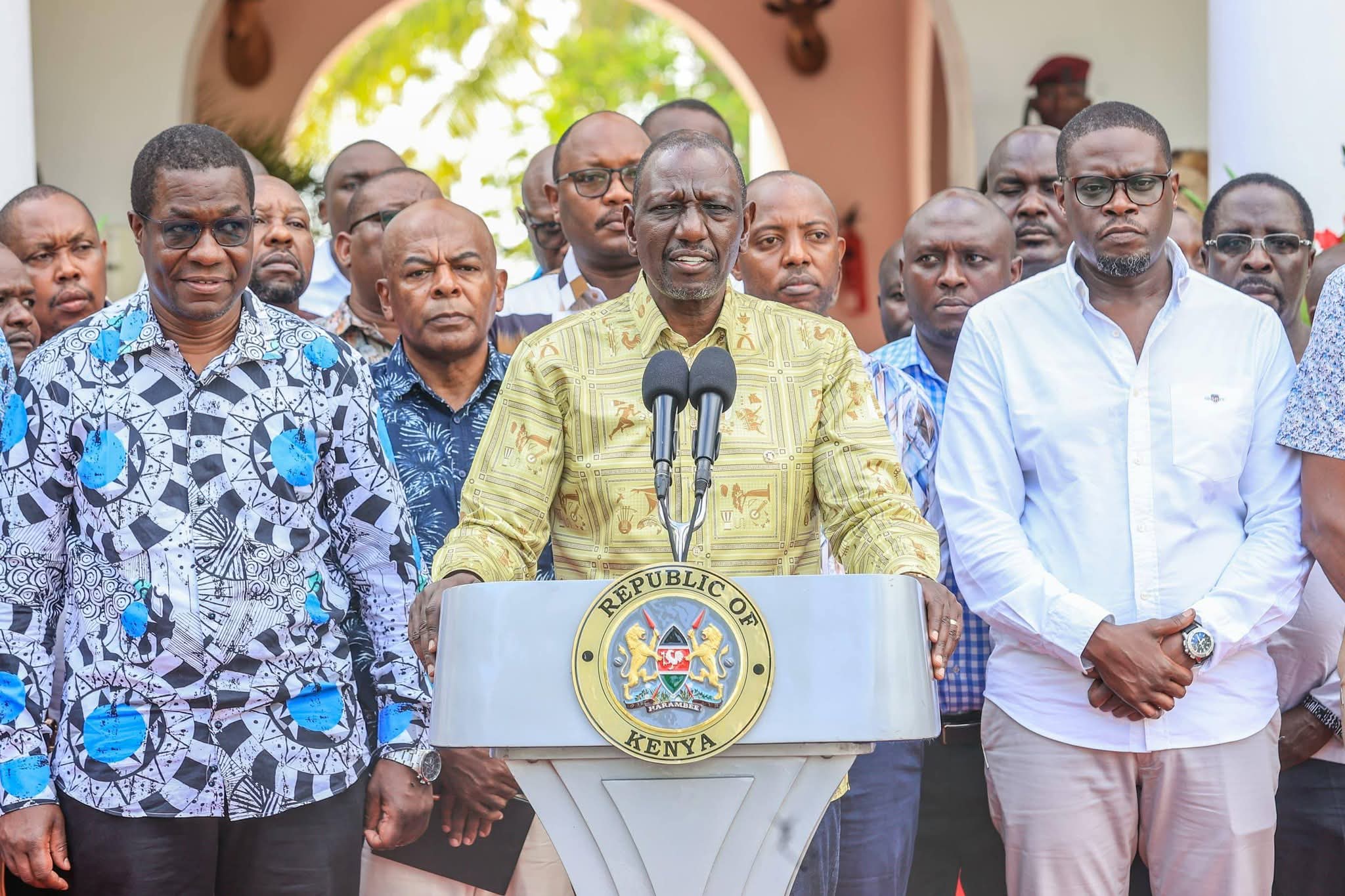
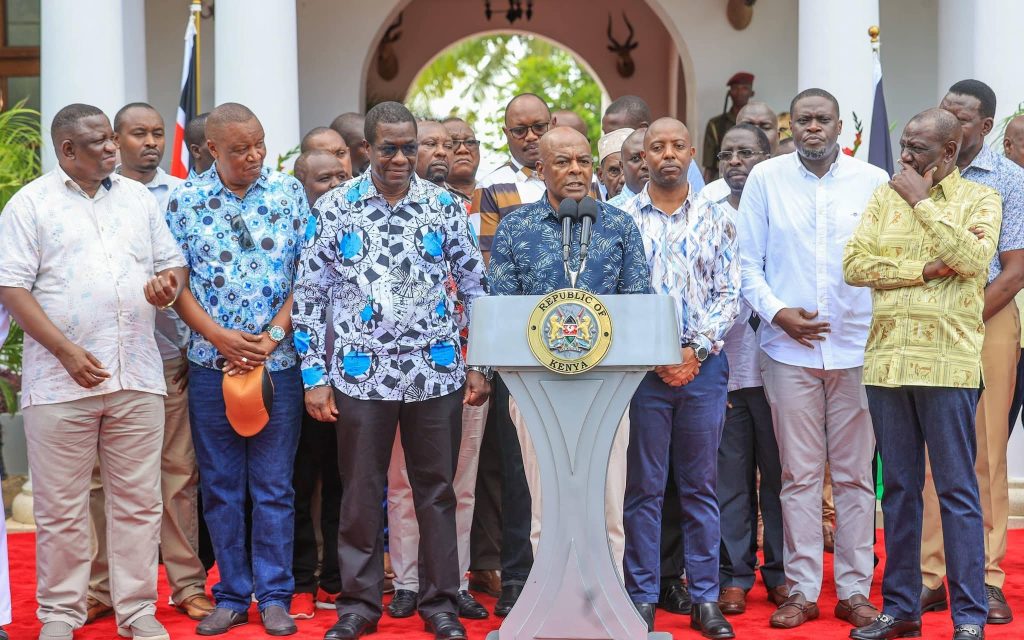
MOMBASA, 22nd May 2026 -The Matatu Owners Association (MOA) has officially called off its nationwide strike scheduled for Tuesday, following high-level breakthrough negotiations with President William Ruto at State House Mombasa.
The breakthrough comes after days of tense protests and intense discussions between transport stakeholders and senior government officials over the soaring cost of fuel.
Led by Chairman Albert Karakacha, transport operators agreed to cancel the planned industrial action to give the government room to implement newly promised adjustments. MOA had previously threatened a total withdrawal of services across the country to protest the sharp increase in fuel prices, particularly diesel, which they argued had driven operating costs and the general cost of living to unsustainable levels.
Before the truce, preliminary transport disruptions in major towns had already left thousands of commuters stranded, while escalating street protests led to clashes between demonstrators and police, resulting in tragic deaths and injuries.
Transport representatives expressed confidence in the new dialogue but issued a stern warning: they will not hesitate to resume the strike if the government fails to deliver on its pledges within the agreed timelines.
During the press address, President Ruto acknowledged the severe economic strain facing Kenyan citizens, noting that his administration is fully aware of the “frustration, pain, and burden” families, businesses, farmers, and transporters have endured over the past few weeks.
To offer immediate relief, the President announced a direct intervention for the upcoming fuel pricing review.
“In the next pricing cycle, we are going to further reduce the price of diesel by a further 10 shillings for the June-July cycle to help stabilise pump prices and provide additional relief to consumers,” Dr Ruto remarked.
The President strongly defended the Government-to-Government (G-to-G) fuel supply framework. Introduced to replace the old spot market system where prices fluctuated wildly every month, the framework has successfully insulated the local economy from severe external shocks.
Previously, oil importers faced intense pressure to secure US dollars within short, rigid timelines, driving a rapid depreciation of the Kenyan Shilling and threatening fuel supply stability. By easing foreign exchange demand and ensuring predictable supply terms, the G-to-G framework guarantees that fuel remains available nationwide despite ongoing global supply chain disruptions.
Addressing growing public pressure to completely scrap fuel taxes and levies, the Head of State stated firmly that a complete removal is unrealistic. The revenue collected from these specific taxes directly funds critical public operations, including road construction and maintenance, public schools and hospitals, national security operations, and agricultural fertiliser subsidy programs.
The government warned that removing these levies immediately would create an unmanageable funding deficit.
“There are those asking the government to remove all levies and taxes on fuel immediately; but we must ask ourselves, what public services should we stop funding?” said Ruto.
The state maintained that Kenya’s domestic fuel challenges are being driven by a global fuel crisis sparked by the ongoing conflict in the Middle East.
Dr Ruto urged critics to stop turning a global market disruption into domestic political mileage, labelling such moves as “irresponsible political opportunism.”
To demonstrate the scale of state intervention, the President revealed that the government has already spent Sh 28.19 billion on fuel price support through direct stabilisation measures and an 8% Value Added Tax (VAT) relief during the April-May and May-June cycles.
Without these massive state subsidies, fuel prices at the pump would look drastically different with current pricing of Super Petrol (Sh214), Diesel (Sh232) and Kerosene (Sh191), would have cost Sh230, Sh277, and Sh270 respectively.
Beyond fuel prices, the State House Mombasa deliberations yielded a broader agreement on long-standing issues affecting the transport sector.
The government has pledged to work with stakeholders on a series of structural reforms, such as evaluating temporary relief on lending and credit terms for transport operators and streamlining and accelerating insurance claims processing.
“In digital taxis, we will introduce strict regulations on minimum fares to protect gig-economy drivers, and ensure that the iconic use of creative artwork and graffiti on matatus will continue to be allowed.”
President Ruto called on Kenyans to remain patient as the country navigates the global headwinds, reassuring the public that through these united efforts, the nation will overcome the economic crisis.