“The key strength of the research is its focus on earth-abundant, non-noble metal electrocatalysts, which addresses cost, supply security, and technological independence, which are critical factors for African economies,” Eng. Eric Apunda
ADDIS ABABA, 2nd February -In the quest to meet soaring global energy demands while confronting climate change, a Nigerian scientist is focusing on a process that turns water into clean fuel.
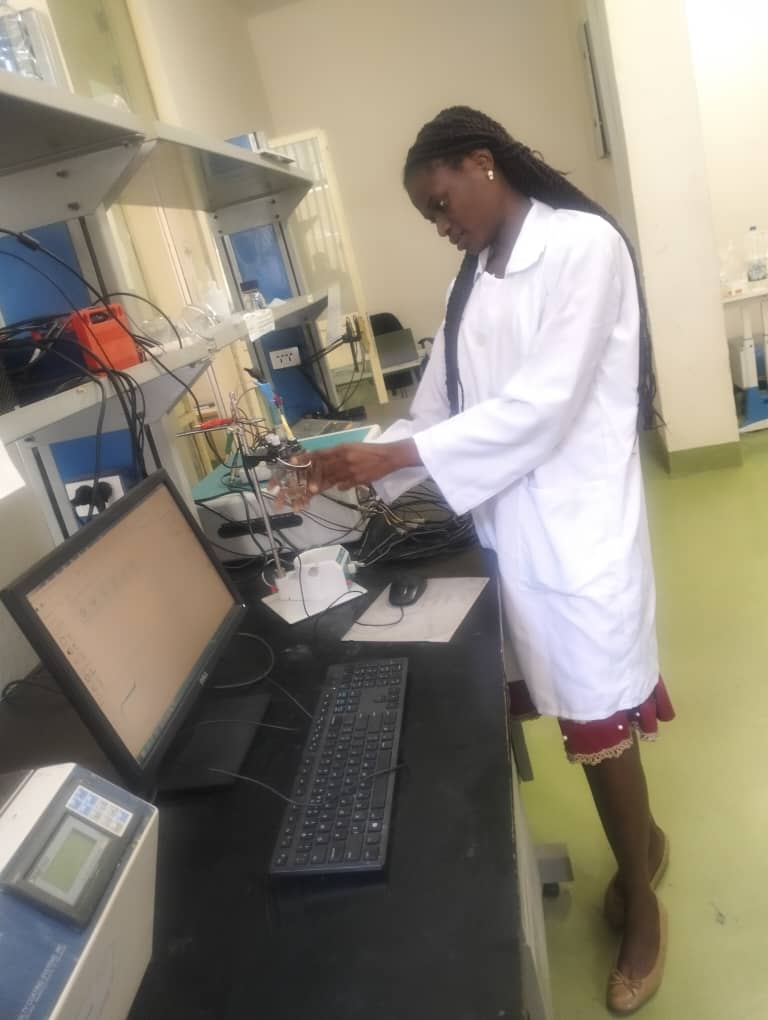
Pamela Favour Egwuonwu, a PhD candidate and Principal Research Investigator at Addis Ababa Science and Technology University (AASTU), under the supervision of Dr. Getachew Adam Workneh. Her research focuses on advancing the field of Electrochemical Water Splitting (ECWS) and is funded by the Electrochemical Science and Innovation Materials for Sustainable Africa Development (ESIMSAD) initiative.
Through this work, she aims to contribute to the development of sustainable hydrogen production technologies, positioning ECWS as a pivotal pathway for low-cost energy security in Africa and beyond.
Driven by the stark realities of fossil fuel depletion, environmental degradation, and energy poverty, Pamela’s research is more than academic; it’s a mission.
“The urgency for sustainable alternatives has never been greater,” she emphasised during an exclusive interview with The Eyes Watch at the sidelines of the inaugural African Energy Efficiency Conference (AfEEC) in Addis Ababa recently.
How does ECWS work?
According to Pamela, her solution lies in using renewable energy to electrochemically split water (H₂O) into hydrogen (H₂) and oxygen (O₂). This process produces clean hydrogen with high energy density and no direct carbon emissions, offering a sustainable pathway to what many describe as the fuel of the future.
Electrochemical water splitting operates by passing an electric current through water using two electrodes and relies on two fundamental half-reactions: Hydrogen Evolution Reaction (HER) at the cathode, where hydrogen gas is generated, and Oxygen Evolution Reaction (OER) at the anode, where oxygen gas is produced.

Historically, achieving high efficiency in these reactions has depended on scarce and expensive noble-metal catalysts, such as platinum for HER and iridium- or ruthenium-based oxides for OER. While these materials exhibit excellent catalytic activity, their high cost, limited availability, and long-term durability challenges, particularly for OER, have significantly hindered large-scale commercialization of ECWS technologies.
The materials under investigation include conductive polymers, carbon-based materials, perovskites, metal–organic frameworks (MOFs), and transition-metal-based electrocatalysts—notably those containing iron, nickel, cobalt, and molybdenum—engineered into nanostructured sulfides, oxides, phosphides, and related compounds. This materials shift is critical for enabling technologically feasible and economically viable green hydrogen production.
Pamela’s work, together with the broader research community, centers on the design and fabrication of next-generation electrocatalysts that are highly active, durable, and affordable, positioning earth-abundant materials as practical alternatives to noble metals for sustainable electrochemical water splitting.
Pamela sees ECWS as perfectly aligned with the continent’s strategic energy goals. This vision was underscored at the AfEEC, where the African Union launched a $12.35 million Energy Transition Strategy and Action Plan (ETSAP).
“The plan targets universal access, industrialisation, and a just transition by 2063, focusing on pillars like renewable generation, energy efficiency, and innovation.”
Although ECWS wasn’t a primary session topic, Pamela noted the conference’s focus on “clean energy innovation and scalable solutions” created a relevant backdrop. “The broader innovation agenda provides fertile ground for advancing electrochemical water splitting as a complementary clean energy solution,” she explained.
Developing and locally manufacturing these sustainable electrocatalysts, she notes, could stimulate domestic value chains, enhance scientific capacity, and boost Africa’s role in the global green economy.
From an energy expert’s perspective, Engineer Erick Onyango Apunda says that Pamela’s research presents a timely and relevant contribution to Africa’s clean and green energy transition by highlighting electrochemical water splitting (ECWS) as a sustainable pathway for green hydrogen production.
“It effectively aligns the technology with Africa’s abundant renewable energy resources and growing need for low-carbon, reliable, and scalable energy solutions,” said Eng. Apunda who also graced the AfEEC conference.
He further states that ECWS is correctly positioned as a strategic enabler for energy storage, grid stability, clean transport, and industrial decarbonization.

Eng Apunda who works at the Kenyan Ministry of Energy and Petroleum adds that a key strength of the research is its focus on earth-abundant, non-noble metal electrocatalysts, which address cost, supply security, and technological independence, which are critical factors for African economies.
“The potential for local manufacturing and innovation supports broader goals of industrial development, job creation, and inclusive growth within the green energy transition.”
The study, he explains also underscores the importance of supportive policy frameworks, research collaboration, pilot projects, and financing mechanisms to move ECWS from research to large-scale deployment.
Eng Apunda sums up the research, which provides a strong scientific and strategic foundation for integrating green hydrogen technologies into Africa’s energy systems, reinforcing climate action, energy security, and sustainable economic development objectives.
Towards this end, the African Union (AU), through its African Energy Commission (AFREC) in partnership with CEP-Europe and the RCREEE network, held a high-level forum under the theme “Advancing Africa’s Energy Productivity Through Access to Clean Energy.”
At this forum, it launched a $12.35 million continental strategy called The African Energy Transition Strategy and Action Plan (ETSAP). This strategy is a pivotal, coordinated plan to achieve a Just and Inclusive Energy Transition aligned with Agenda 2063 goals.
It aims to tackle Africa’s severe energy paradox, despite vast natural resources, the continent has 83% of the global electricity access deficit, with nearly 1 billion people relying on traditional biomass and kerosene for cooking and 550 million lacking electricity.
“This crisis harms public health, gender equity, and the environment.”
Lerato Mataboge, AU High Commissioner for Energy and Infrastructure, emphasised that while the initial strategy itself costs $12.35 million, actual project investments will require billions of dollars. The ETSAP is designed as the essential vehicle to leverage Africa’s resources for energy access and equality.

Rooted in data-driven approaches like smart grids and renewable microgrids, the strategy seeks socioeconomic transformation through industrialisation and knowledge economies.
It is structured around six pillars such as Advancing clean cooking solutions, Enabling cross-border energy trade, and Improving energy efficiency.
Others include supporting innovation and human capacity development, expanding renewable energy generation, and promoting productive energy use.
The launch is a call to action for African leaders to provide political leadership and create supportive policies. This is crucial given that Africa contributes less than 4% of global emissions yet faces disproportionate climate impacts.
Collaborative Action
For Pamela, the path forward is clear but requires concerted effort. Integrating ECWS into Africa’s energy matrix will demand pilot projects, robust research collaborations between institutions, enabling policy frameworks, and targeted financing mechanisms.
Holding a BSc Pure and Industrial Chemistry, and an MSc in Analytical Chemistry degrees both from the University of Nigeria, Nsukka, Pamela embodies the homegrown expertise needed to drive this change.
Her concluding message is one of both conviction and call to action: advancing this technology is not just about scientific progress.
“It’s about building a resilient, equitable, and clean energy future for Africa, in line with the strategic objectives championed at forums like AfEEC.”
romondi99@theeyeswatchmedia.co.ke