BELEM, Brazil, November, 2025-In a powerful push for inclusivity, climate activists at COP30 are demanding governments formally integrate agriculture into just transition negotiations.
This, they say, will ensure the voices of farmers, traditional communities, indigenous people, and agricultural workers are central to all climate decisions that impact their lives and livelihoods.
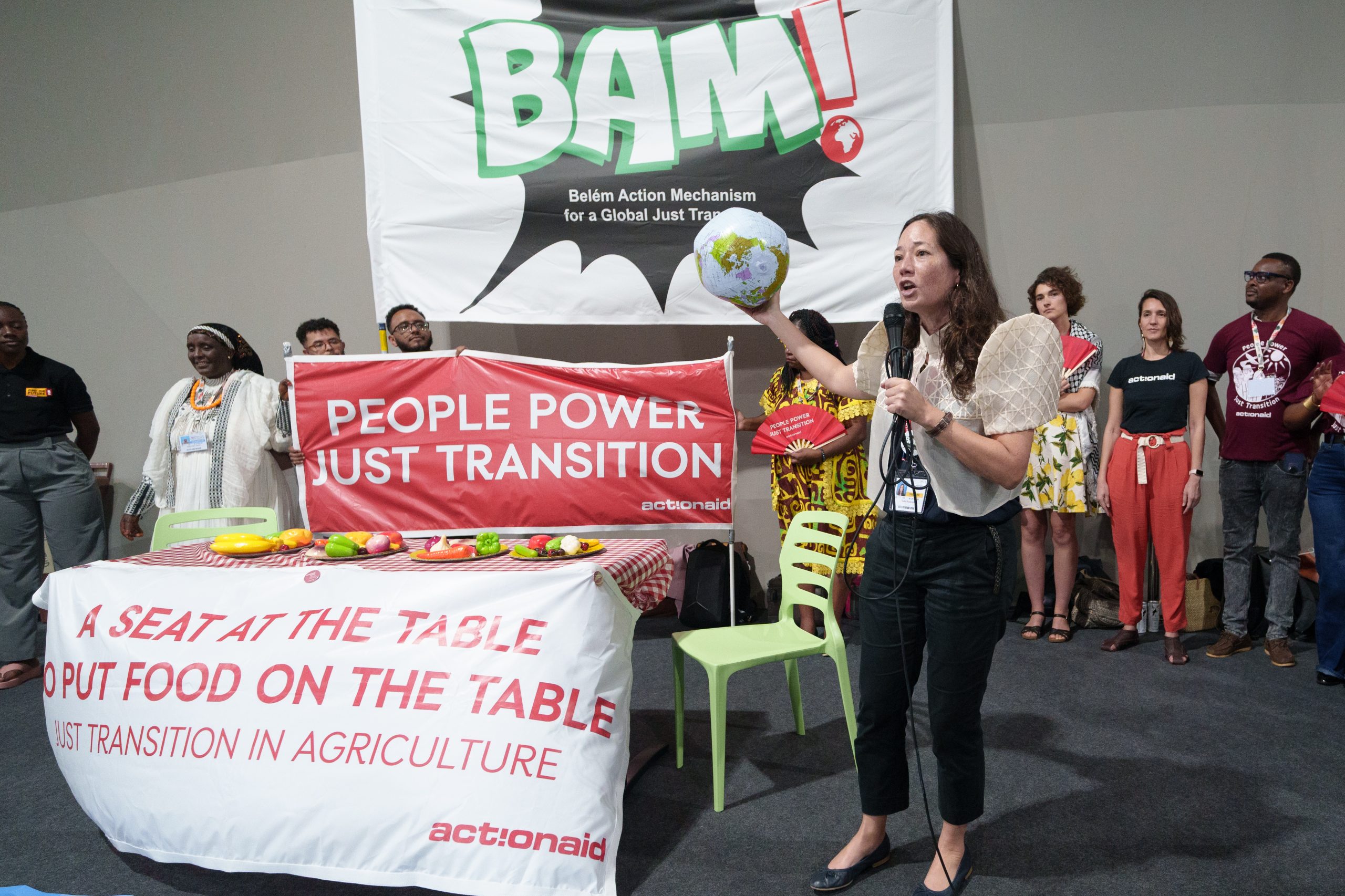
The calls were made at a photo op action organised by ActionAid on 14 November, where activists held banners that read “A seat at the table to put food on the table” and “People Power, Just Transition.”
Teresa Anderson, the Global Climate Lead at ActionAid, who spoke at the action, delivered a stark critique: “It is absurd that agriculture, the livelihood for one quarter of the world, the second biggest emitter, and source of all our food, is not in the proposal for a just transition mechanism.”
“As we head into week two,” Anderson emphasised that: “Agriculture must be included in the just transition discussions so that farmers and communities can have a seat at the table when decisions about their futures are made.”
“We want farmers at the table as contributors and not on the menu and on the plates of greedy corporations,” she stressed.
Anderson added: “COP30 needs to deliver a global mechanism on just transition to ensure that climate action listens to people and involves communities in shaping the climate plans that will affect their lives.”
The action underscored a critical message: as the world moves away from harmful industrial agriculture practices, the jobs, food security, and land rights of indigenous farmers must be safeguarded, and their expertise must be heard about the decisions that affect them.
Affirming this position, Valepi Banda, a youth climate activist from Zambia, echoed this sentiment with forceful clarity: “Let’s be brutally honest, this COP is happening without the inclusion of the people who actually feed the world, including the negotiators here.”
Banda Farmers and Indigenous communities aren’t some cute footnotes; they are experts who need a seat at the table in decision-making that affects them.
“If governments truly want solutions, they need to stop this patronising approach and start centring the people who know what the hell they’re talking about.”
On his part, Farah Kabir, the Country Director of ActionAid Bangladesh, highlighted the risks of exclusion by emphasising that a just transition mechanism should recognise and include farmers.
“Decisions made for them without them may destroy, disrupt and displace them as we see happening with fossil fuel and industrial agriculture companies all over the world,” he stated.
In this way, Kabir noted that farmers ‘ knowledge and experience must be valued as he stressed that: “We cannot continue with business as usual; we need farmers, especially women and youth, to be at the centre of negotiations that affect their lives and livelihoods.”
Meko Adem Dawud, an Ethiopian who spoke on behalf of women farmers, brought a specific and urgent perspective: “We are facing multiple crises that affect our livelihood as women farmers. At COP30, we are demanding a place at the negotiating table so we can speak for ourselves about our interests.”
According to Dawud, farmers want climate finance in the form of grants from those responsible for causing the climate crisis, which has increased the frequency of droughts and flooding, causing crop failure and food insecurity in our countries.
She added that the demand for inclusion must be intersectional: “Women’s leadership must be prioritised in conversations about climate finance and renewable energy technologies in agriculture.”