ADDIS ABABA, Ethiopia 11th December – The African Union (AU) has launched a comprehensive continental strategy to chart a unified path towards a Just and Inclusive Energy Transition by 2063.
The African Energy Transition Strategy and Action Plan (ETSAP) was unveiled at the AU headquarters in Addis Ababa earlier today, marking a pivotal step in coordinating the continent’s response to energy poverty and climate action.
The launch, on the final day of the premier African Energy Efficiency Conference (AfEEC), framed the ETSAP as the essential “vehicle that will reinforce the continent’s call for a just energy transition that leverages the continent’s resources to advance energy access and equality across facets of our society.”
In a speech delivered on her behalf by AFREC Executive Director Rashid Abdallah, AU Infrastructure and Energy Commissioner Lerato Mataboge highlighted the stark energy paradox Africa faces.
Despite being endowed with immense natural resources, the continent accounts for roughly 83 percent of the global electricity access deficit, with close to one billion people reliant on traditional biomass and kerosene for cooking, a situation with profound consequences for public health, gender equity, and the environment.
“We need more than $12.35 million at the continental level to support the implementation of the strategy with the real investment in projects running into billions of dollars,” Mataboge stated, underscoring the scale of financing required.
The strategy, deeply entrenched in the continent’s Agenda 2063 development blueprint, aims to close this gap through integrated, data-driven approaches. These include deploying smart grids, geospatial analytics, and distributed renewable microgrids.

Mataboge emphasised that the energy transition in Africa transcends cost and emissions reduction; it is a “profound opportunity for the much-needed socioeconomic transformation.”
Central to this vision is leveraging electrification and the beneficiation of critical minerals to catalyse industrialisation, foster knowledge economies, and enhance socio-economic inclusion.
“By fostering local manufacturing of renewable energy components, we can generate employment, build resilient supply chains, and retain value within African economies,” she urged.
Developed through extensive consultations with AU Member States, Regional Economic Communities (RECs), the private sector, civil society, and development partners, the ETSAP is built on six key priority pillars such as Advancing Clean Cooking solutions, Enabling Cross-Border Trade of Energy through standardised and harmonised policies, and Improving Energy Efficiency across sectors.
Others include Supporting Innovations and Human Capacity Development, particularly for youth, Expanding renewable energy generation and infrastructure, and Promoting productive uses of energy to spur economic activity.
While celebrating the strategy’s launch, Mataboge noted that “the real work begins” to domesticate the continental framework into national plans and invest in priority projects.
She commended Gambia, Madagascar, and Botswana for pioneering National Deep Decarbonization Pathways (NDDP), alongside Kenya, South Africa, Nigeria, Uganda, Ghana, and Morocco.
She, however, stressed that resources are urgently required to support the more than fifteen other Member States that have expressed interest in following suit.
“ETSAP is more than a document, it is a call to action. It challenges us to show political leadership through energy sector reforms and budgetary allocations, create enabling policy environments, foster public-private partnerships, and invest in research and capacity building,” Mataboge asserted.
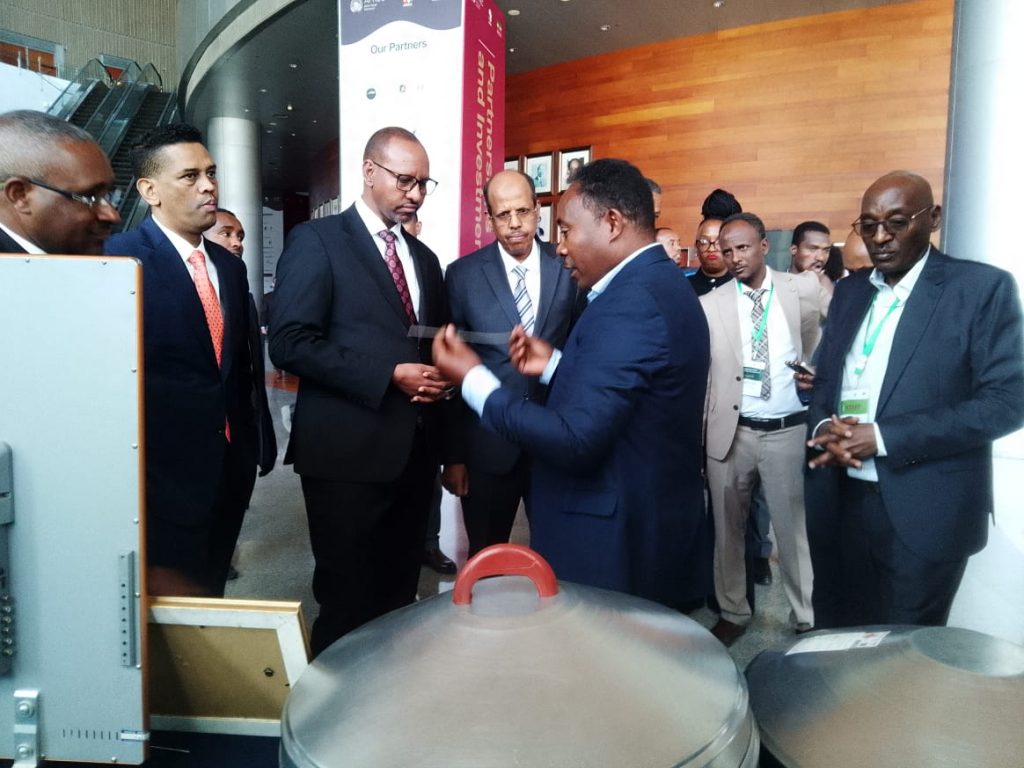
The African Development Bank (AfDB) was acknowledged for its pivotal role in supporting the strategy’s development.
AfDB Divisional Manager Callixte Kambanda affirmed the project’s timeliness, stating it would showcase major milestones towards decarbonization in line with the Paris Agreement objectives.
In her concluding remarks, Mataboge called for unified action: “These will greatly transform Africa’s unparalleled abundance of critical green minerals into equitable, sustainable growth while contributing to the attainment of the global aspiration.”
She urged all member states to join forces in mobilising the resources and investments necessary to turn the strategic plan into tangible reality.