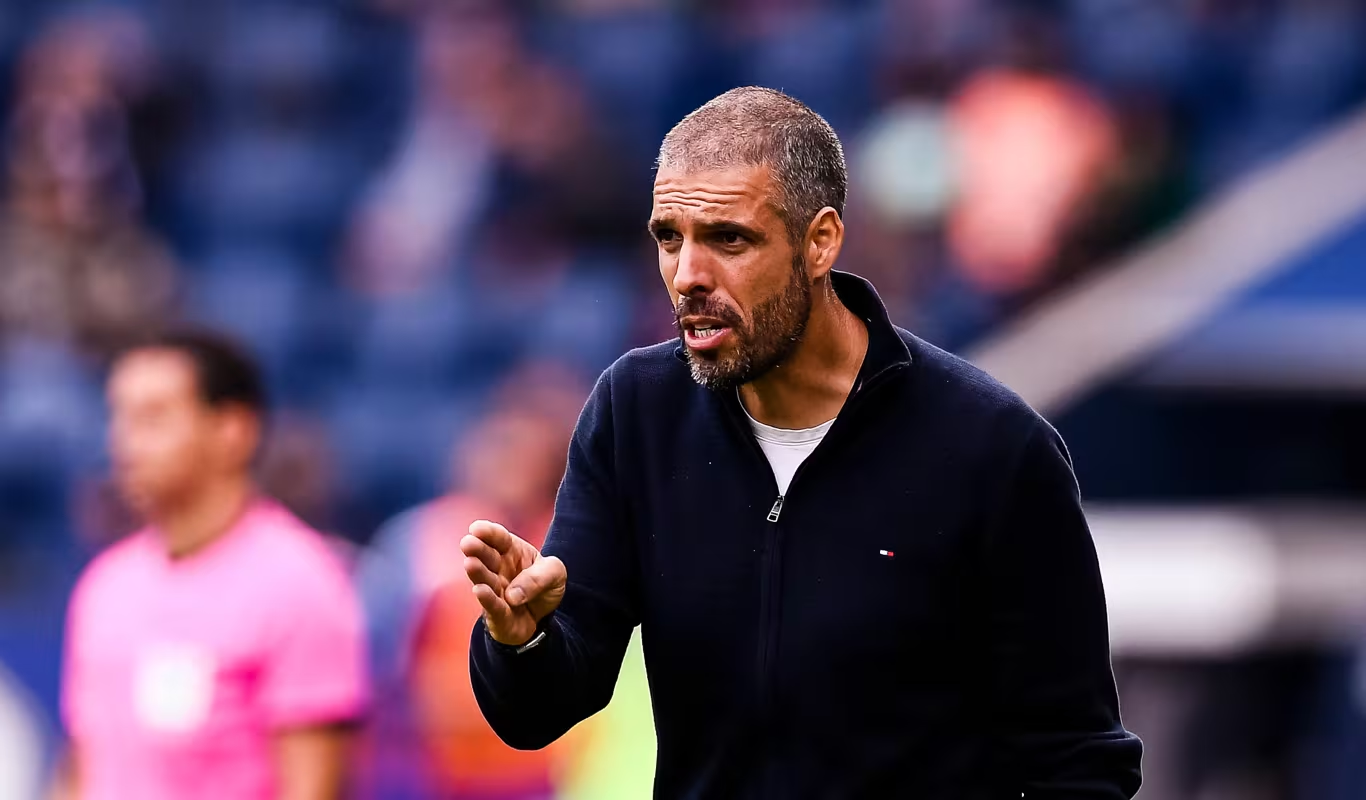
Former Swiss star Fabio Celestini on the Nati’s run to the last eight and what they must do stop Lionel Messi and his Argentina teammates.
Few are better placed than Fabio Celestini to explain the forces that drive Switzerland from within. A former international midfielder and UEFA EURO 2004 squad member, he belonged to a generation that helped turn the Nati into a consistent, respected presence on the global stage. His view is rooted in first-hand experience of a side shaped by discipline, multiculturalism and collective belief.
His understanding has since been sharpened in the dugout. Celestini has carved out a distinguished career on the touchline, overseeing several Swiss clubs and making a notable impact at Basel, where he turned a challenging spell into a title-winning campaign.
Bringing together his experiences as player and coach, he spoke to FIFA about Switzerland’s quarter-final against Argentina, the task of subduing Messi and the conviction of a side approaching another global challenge with genuine belief.
Having represented Switzerland 35 times and seen Swiss football from the inside, what would you identify as the defining strength of this national side?
Our greatest strength is multiculturalism. Switzerland is a country where different languages and cultures coexist naturally, and for Swiss people that is completely normal. You see it in other national teams now as well, but we have been shaped by it since the 1990s, for over 30 years.
We combine the best of Swiss organisation and discipline: attention to detail, precision, respect and a strong sense of structure. But at times we also need a touch more courage, creativity and unpredictability, which comes from backgrounds that are not exclusively Swiss. Mine is Italian; others have Spanish, Albanian or other heritage. For me, our greatest asset is that blend of cultures and the way we make it work.
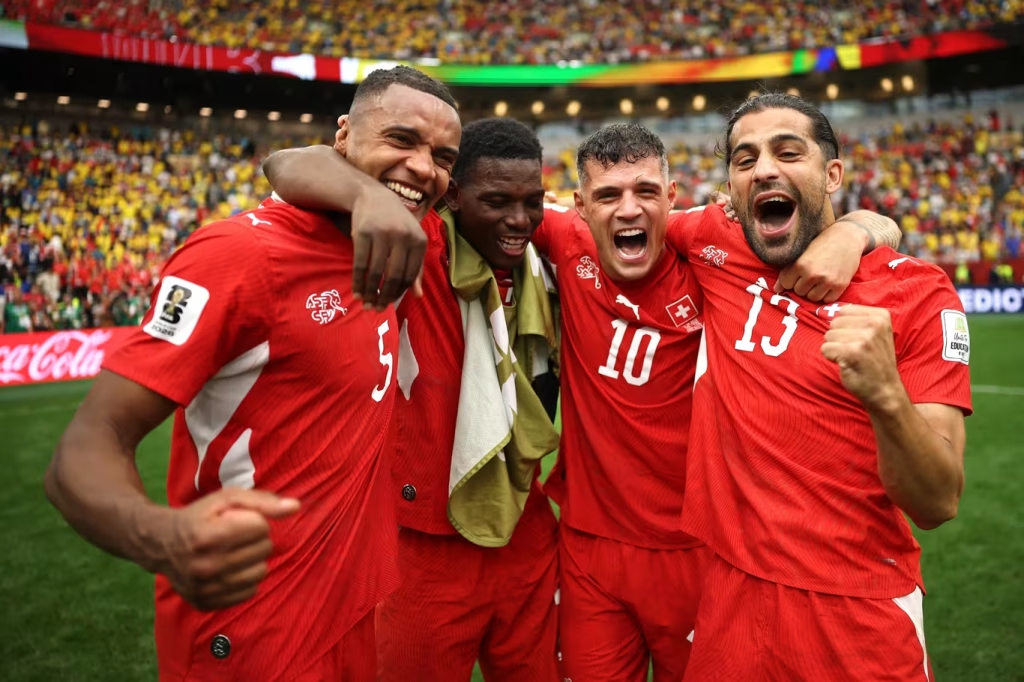
Switzerland have been a fixture at major tournaments for many years and have consistently competed, which is far from easy.
For a small nation, Switzerland have created an extraordinary footballing reality. Since 1994, they have been absent from very few major tournaments, which is something that should never be taken for granted.
I sometimes hear commentators in Italy or Spain speak about Switzerland’s presence at this level as though it were routine, but what this team has built should be properly appreciated. They are forever a bogey team because they combine structure, discipline and the richness of their multicultural identity.
From the outside, Switzerland can sometimes be perceived as a more restrained, less emotional side than others. Is that an accurate?
The national team means a great deal to us. It matters because Switzerland has given so much to our families and to our lives. When we are with the squad, we recognise what a privilege it is to compete at tournaments such as the World Cup. That was true when I played, and I think it is still true today. Nobody goes there thinking of another country; if we wear the Swiss shirt, it is because we feel Swiss.
How do you rate Switzerland’s performance at this World Cup?
They are doing an incredible job, as always. This is a solid side that appears to have reached a new level of maturity. You can see a team intent on achieving something significant. When they face difficult spells, they do not fall apart; they stay in the contest and fight. Victories at this level are not about luck, but rather about finding small margins over your opponent.
Beyond the individual names, this Swiss side seem to have a clearly defined identity. What defining traits stand out to you in this side?
There has been a recognisable idea behind Switzerland’s football for years. They want to build from the back and play rather than simply react. That philosophy dates back to Vladimir Petkovic’s time, when he spent so long working within the Swiss camp. The national team have carried the same principles, the same approach and the same DNA for a long time.
Switzerland have such a strong foundation because their footballing DNA does not depend on individuals, despite the importance of players like Akanji and Xhaka. They have a clearly recognisable identity, shaped by principles they have followed for many years.
Against Argentina in a World Cup quarter-final, what must Switzerland do to give themselves the best chance?
Switzerland have nothing to lose. Usually, when Argentina are on the other side, the weight of expectation sits more heavily on them than on Switzerland. The Swiss need to be themselves, play with courage and make full use of their strengths. Cabo Verde and Egypt found a way to score against Argentina, so Switzerland should believe they can, too. Of course, they must also find a way to deal with their No10, which is never straightforward.
How do you defend against a player like Messi, and what must Switzerland do to keep him quiet?
It’s hard work. The moment the ball reaches Messi, the problem has already begun. Against other top players, you try to double up and prevent the one-v-one. However, Messi is so hard to pin down because he drifts across the pitch. That makes it much harder to set the trap. If he gets the ball under control in the final third, you should expect damage. More often than not, he will produce something extraordinary.
As a coach yourself, how do you assess Lionel Scaloni and Murat Yakin?
Scaloni faced an enormous challenge. Many in Argentina doubted whether he was the right man for the job, but the results speak for themselves. He managed to win over the squad and, crucially, Messi. His communication style is clear and honest. Recently, he explained that he does not decide everything on his own, but talks things through with Messi. Some coaches might be wary of saying that publicly, yet I think it shows honesty. Players appreciate that kind of clarity and openness.
Murat faced a similarly demanding situation because Petkovic had left such a strong legacy. There were doubts when he arrived, and some issues needed to be resolved with Xhaka and a few of the experienced players. Yet Murat is a quiet force: composed, measured, but with real strength of character. In the end, he earned the trust of the squad, of Xhaka and of the dressing-room leaders and that unity is visible in the way Switzerland play. FIFA