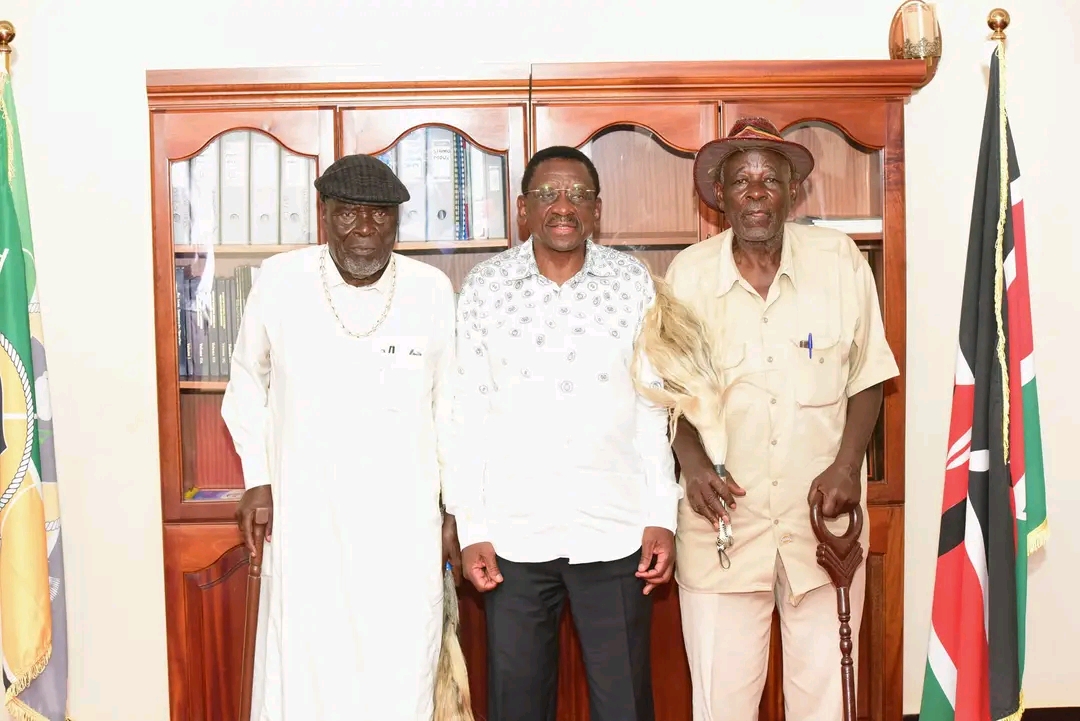
KISUMU,13th June 2026 -When Kisumu Central MP Dr Joshua Oron stood before a public engagement forum in West Nyakach ward on Saturday, he was flanked by more than just a handful of local leaders.
Behind him was something arguably more valuable in Kenya’s political calculus: a growing coalition of current and former ward representatives and the unmistakable weight of clan endorsement.
The scene in West Nyakach hosted by area MCA James Ojemo, who proudly noted that Oron already sponsors over 100 vulnerable students in the ward clearly demonstrating his deep commitment to education.
It followed similar public endorsements in Nyando and Muhoroni, with Seme slated for a similar show of force in two weeks.
The coordinated nature of these forums suggests a deliberate, bottom-up strategy to anchor Oron’s gubernatorial bid in the most basic unit of political mobilization in the wards.
For political analysts, the support of sitting and former Members of the County Assembly (MCAs) is not merely ceremonial. Ward representatives are the primary link between county government and the village. They know polling station dynamics, manage voter turnout at the grassroots and often determine which campaigns gain traction in remote areas.
Led by Onjiko Awasi ward MCA Maurice Ngeta, the group endorsing Oron vowed to conduct door-to-door campaigns a labour-intensive but proven method of securing votes in Kisumu’s competitive landscape.
“We are here today to declare our unwavering support to Dr Oron, a man who has demonstrated pure intentions,” Ngeta said, describing the MP as a community mobilizer prioritising health, education and social development.

Former MCAs under the stewardship of Aggrey Ogosi of East Seme further strengthened the coalition.
Their collective experience in past election cycles offers Oron not just numbers but institutional memory of what works and what fails in voter outreach.
Ojemo’s testimony that Oron’s contributions to health, education and water preceded his election to Parliament added a critical layer; the argument that Oron is not seeking office to build a resume but to scale up a record.
Beyond the ward network, Oron has also secured the blessing of Kano clan elders, an endorsement that carries distinct political weight in Kisumu’s ethnically nuanced landscape.
The Kano clan forms a significant voting bloc and clan endorsements often translate into block voting particularly in rural and peri-urban areas where lineage and kinship still guide political allegiance.
Positioning Oron as the “chosen candidate” of the clan effectively neutralises intra-community attacks on his suitability and frames his candidacy as a collective aspiration rather than personal ambition.
Yet clan dynamics may also present Oron’s greatest complication. Former Governor Jack Ranguma who recently tore into Oron’s candidacy at a funeral in Muhoroni, suggesting the MP seek another term in Parliament to “bolster his leadership experience” hails from the same Kano clan.
Ranguma’s entry, though not yet as visibly mobilised as Oron’s grassroots machine, introduces a classic Kenyan political dilemma: two credible candidates from the same clan splitting the ancestral vote. In a crowded race, even a modest fracture could prove decisive.
If clan elders are forced to choose between two of their own, or if they opt for neutrality, Oron’s early endorsement could lose its value as a unifying force. Conversely, if the clan solidifies behind him and Ranguma’s campaign fails to gain comparable grassroots traction, Oron may neutralise the threat before polling day.
With barely 14 months to the next general election, Oron is far from alone. Declared or likely contenders include Deputy Governor Dr Mathews Owili, Senator Prof Tom Ojienda, Nyakach MP Aduma Owuor, Kisumu County MP Ruth Odinga and Kisumu West MP Roza Buyu; the latter two reportedly set to declare imminently.
Each brings unique strengths; Owili has incumbency proximity, Ojienda has a legal and legislative network, Odinga commands a family name with national reach and Buyu has a following among women and youth.

Where Oron differentiates himself is in the granularity of his campaign. The MCAs are not merely names on a list; they are mobilisers who will knock on doors, hold village barazas and track polling station-level metrics.
The clan endorsement is not just a cultural nod; it is a potential shortcut to thousands of votes that require minimal persuasion.
Oron’s strategy suggests a bet on organic, replicable, hyper-local organising over mass media blitzes.
If successful, he could enter the homestretch of the race with a turnout machine that rivals any competitor. If the coalition fractures particularly along clan lines or due to defections from the MCAs, the same structure could collapse inward.
For now, the forums continue. Nyakach has spoken. Nyando and Muhoroni have followed. Seme is next. Whether these grassroots groundswell translates into Kisumu’s third governor will depend on how Oron manages the competing forces of clan loyalty, rival campaigns and the unforgiving arithmetic of a multi-horse race.