KISUMU, 6th March 2026-On Nov 6, 2024, just after Donald Trump won, for the second time, against the American Establishment, against the Democratic-Woke Establishment and it’s Fundamentalist Libertarian Instruments, I wrote that his presidency would likely become one of the most consequential in the history of American presidentialism, particularly for world peace and deal against the illicit Buffalo politics unfolding in the developing worlds, especially Africa that live downstream of great-power turbulence.
That argument was perceived by my academic peers and some of my seniors as about personality. But I defended that it was not, and with time, it would be clear that it was about posture. The big picture.
I did assert that Trump represented not merely a partisan shift, but a recalibration of how the United States understands coercion, alliance management, and the limits of diplomacy.
Today, amid escalating tensions with Iran and intensifying rhetoric surrounding its late supreme leader, Ayatollah Ali Khamenei, the deeper question is not whether confrontation is occurring, but why this confrontation feels structurally different from previous cycles of hostility between Washington and Tehran.
Below, I present three arguments to unpack US actions under Trump 2.0, especially in the Middle East, within the context of Washington-Tehran relations.
1. Accounting for the Durability of Ayatollahism
To understand the gravity of the moment, one must first appreciate how the Islamic Republic has endured for over four decades despite sanctions, isolation, internal protest, and Western predictions of imminent collapse.
The durability of Ayatollahism is not accidental at least for three main reasons.
First, it is rooted in a powerful civilizational narrative of resistance. According to a leading Iranian scholar, Mehran Kamrava in his “How Islam Rules in Iran”, the modern Iranian nationalism is inseparable from memories of foreign intervention—from British and Russian imperial interference to the 1953 coup—and the 1979 revolution transformed that historical grievance into a governing ideology.
Anti-imperialism became not just rhetoric but state identity. When a regime fuses patriotism with theological legitimacy, opposition becomes framed as betrayal not merely of government, but of nation and faith. That framing has repeatedly allowed the leadership to convert external pressure into internal consolidation.
Second, the Islamic Republic institutionalised its revolution rather than merely celebrating it. According to the principle of velāyat-e faqīh, cemented intellectually by Ayatollah Ruhollah Khomeini, in his “Islamic Government: Governance of the Jurist”, the doctrine of guardianship of the jurist created an architecture in which religious authority overlaps with constitutional power.
This intellectual-ideological grounding was then used to rationalise the creation of parallel institutions such as the Islamic Revolutionary Guard Corps not only as military organs but also as economic and political actors, embedded in infrastructure, energy, construction, and security.
The greatest consequence of this arrangement was that the fusion produced a layered sovereignty: electoral institutions exist, but ultimate authority rests in a clerical-security nexus capable of arbitrating crises.
Many authoritarian systems fall because power is centralised in a personality. But Iran survived because power was diffused across loyal revolutionary institutions.
Lastly, and by no means least, Tehran’s Ayatollahism survived because it constructed strategic depth beyond its borders. Through relationships with actors such as Hezbollah and aligned networks in Iraq, Syria, and Yemen, Iran ensured that any direct attack on it would reverberate regionally.
This was not ideological charity; it was deterrence by dispersion. By embedding itself in the security architecture of the Levant and the Gulf, Iran complicated the cost calculus for its adversaries. In classical realist terms, it converted vulnerability into asymmetric leverage.
Does Trump 2.0 Represent a Break in the Pursuit of US Grand Strategy?
Against this backdrop, what distinguishes Trump 2.0? Why does this phase of U.S.–Iran confrontation feel less restrained than previous eras under presidents who were ‘actually’ equally critical of Tehran?
The first distinction lies in strategic doctrine. Whereas prior administrations oscillated between containment and engagement—most visibly in the nuclear diplomacy that culminated in the JCPOA—Trump’s worldview rejects incremental accommodation.
His approach, especially during his 2.0 phase, has consistently reframed Iran not as a problematic regional actor to be moderated, but as a structural antagonist whose capacity must be decisively degraded.
This is less Kissingerian balance-of-power management and more coercive rollback.
Second, Trump’s regional realignment deepened operational synergy with Iran’s principal rivals, most notably Israel and Gulf monarchies such as Saudi Arabia. The consolidation of these alignments—accelerated through frameworks like the Abraham Accords—shifted the regional geometry.
Iran increasingly confronted not a cautious superpower hedging its bets, but a coalition architecture in which Washington’s diplomatic and security capital was explicitly invested in countering Tehran’s influence. In strategic terms, Iran moved from being one file among many to being the organising threat around which alliances cohered.
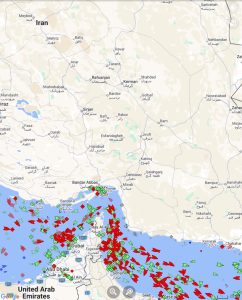
Finally, there is the political economy dimension. Control of maritime chokepoints, oil transit routes, and energy pricing remains central to global stability. Any actor capable of threatening the Strait of Hormuz or destabilising Gulf production exerts disproportionate leverage over international markets.
Trump’s economic nationalism, particularly during his 2.0 has expressly centred on energy dominance and domestic growth.
This underlying drive has naturally cast Iran’s disruptive potential as intolerable. From this perspective, and unlike, for example, Biden’s administration, maximum pressure is not merely ideological hostility; it is an attempt to neutralise systemic risk to the global energy order in which the United States, according to Trump of 2.0, should remain the pivotal guarantor.
When we situate all this within the broader grand strategy of the United States, a pattern emerges. Official strategy documents across administrations consistently emphasise three pillars in the Middle East: preventing hostile hegemons, securing energy flows, and countering transnational extremism. The methods differ, but the objectives endure.
Trump’s contribution is stylistic and tactical intensification; less patience for multilateral bargaining, greater reliance on sanctions, overt alignment with regional partners, and a readiness to signal that no target is beyond reach. In that context, heightened pressure on Iran’s supreme leadership is not an anomaly but an extension of a doctrine that equates deterrence credibility with visible resolve.
End of Ayatollahism?
The crucial question, however, is whether the weakening—or even removal—of a supreme leader would signify the end of Ayatollahism itself. Respected political historians like Ervand Abrahamian and Nikki R. Kedie, caution us against linear assumptions and invite us to base our predictions on scenarios.
One plausible scenario is fragmentation where elite competition between clerical authorities, security commanders, and political factions could produce instability rather than reform, in the intermediate period.
A second one could be something we can harden. A successor more rigid than his predecessor could emerge, invoking martyrdom and resistance to intensify ideological cohesion, albeit more unlikely owing to the fear, actual and perceived/mediatised created by the US. tools against Iranian hopefuls.
A third, more gradual trajectory might involve negotiated recalibration, where elements within the system seek strategic de-escalation to preserve the core of the Islamic Republic while moderating its posture, under the guidance of Trumpian instruments, mainly political and economic, but also cultural (especially for cultural renewal through attempts to rewrite the history of Iran).
The point, I am driving home, is that regimes anchored in identity and institutionalised revolution rarely collapse simply because of external force. They either adapt, fracture, or radicalise. Trump 2.0 has undoubtedly sharpened the confrontation, but whether this moment marks the twilight of Ayatollahism or merely its next evolutionary phase depends less on a single event and more on how Iran’s internal coalitions interpret survival.
Great powers can strike; they cannot easily script the political aftermath. Again, order or disorder is a function of their interpretation of how best their interests in the country receiving intervention can, be achieved, whether through endless chaos (like in Afghanistan, Syria?) or a semblance of peace.
For Africa and other regions observing from the margins of great-power rivalry, the implications should be sobering. When superpowers recalibrate their grand strategies, peripheral states absorb the economic, diplomatic, and security spillovers.
That is why I insisted that Trump 2.0 would be consequential beyond American borders.
Okombo Odhiambo Kasera is a Political Scientist and Adjunct Lecturer, Maseno, Rongo and University of Kabianga.