
MOMBASA, 19th February-At 5 p.m., as the coastal heat begins to settle over Kilifi County, 15-year-old Magdaline Baya begins her second shift. She has just returned from school in Kaloleni, her black rubber shoes powdered with the fine red dust of a thirsty landscape. There is no time for rest. She drops her books, picks up two yellow jerrycans, and begins a three-kilometre trek to fetch water.
By the time Magdaline returns, G night has fallen. There is cassava to peel, younger siblings to bathe, and goats to tether. Her school homework remains untouched under the dim glow of a kerosene lamp.
“I want to become a veterinary doctor,” Magdaline says softly, her voice heavy with a fatigue no child should know. “But sometimes I am too tired to even read. While I’m at school, I am always thinking about home. I don’t get enough time to concentrate, and this scares me.”
In drought-prone regions like Kaloleni, climate change is doing more than shrinking water sources it is shrinking girls’ futures.
The Data of Despair
The crisis is not just anecdotal; it is etched into Kenya’s national statistics. Following a 2025 rainy season that delivered only 30% – 60% of the long-term average rainfall, over 2 million people are currently facing acute food insecurity. Children and pregnant women are the first to fall through the cracks of a failing ecosystem.
The educational toll is equally staggering. In 2024, drought and flood damage disrupted schooling for more than 2 million learners. When a family’s survival depends on migrating for pasture or spending six hours a day fetching water, the classroom becomes a luxury that many can no longer affoYet, a stark imbalance exists in how the world responds.

Currently, nearly 80% of tracked climate funding in Kenya is directed toward mitigation—large-scale renewable energy projects and carbon markets. Only 11.7% is allocated to adaptation efforts like water security and social safety nets. This funding gap is the heart of the “COP30 Betrayal”: it leaves gender-responsive health and community resilience dangerously underfunded while the world focuses on offsetting emissions.
A Silent Epidemic of the Mind
In the agrarian communities of Magarini and Ganze, the burden of dry taps and withering crops has birthed a public health crisis that no summit delegate has yet addressed: a mental health emergency.
Research conducted by the Brain and Mind Institute among 15,000 women in Kilifi found a chilling link between extreme weather and psychological distress. The data revealed that climate shocks droughts and erratic heatwaves—were tied to a 10.8% increase in suicidal thoughts and depressive symptoms among the most vulnerable women.
“Climate shocks don’t just affect agriculture; they disrupt the emotional stability of the household,” explains Dr Zul Merali of Aga Khan University. “Women carry the invisible burden of caregiving and economic anxiety. They are the ones who must decide which child eats when grain runs low.”
Resilience is Not Justice
In the absence of government intervention, women are forced to become their own saviours. Audrey Masitsa, a Senior Leader in Climate Advocacy, has been working to turn this despair into action. Through community dialogues, she equips women with skills in beekeeping and kitchen gardening—livelihoods that don’t depend on the failing rains.
“The coastal region is seeing temperatures rise at an alarming rate,” Masitsa says. “By empowering women with leadership skills and hygiene education, we enable them to lead adaptation efforts. But they shouldn’t have to do it alone.”

In Northern Kenya, the story is even grimmer. Nuria Gollo, a rights advocate from Marsabit, describes how the worst drought in decades has “robbed female pastoralists of their prized possessions.” As cows and heat-resilient camels succumb to the heat, women are reduced to penury, walking up to 15 kilometres daily for a single bucket of water.
The Carbon Market Paradox
The most biting irony lies in Kenya’s shifting economic priorities. While women in Kilifi struggle to find water, the government is building a sophisticated National Carbon Registry to track carbon credits and emissions. With €2.4 million in backing from Germany’s GIZ, Kenya is positioning itself as a leader in global carbon trading.
However, there is no equivalent national tracking system to monitor climate finance for maternal health or girls’ education. We have built the infrastructure to trade air, but not the infrastructure to protect the bodies of the women who feed the nation.
“We hear about climate on the radio, but every year the same problems repeat,” says Magdaline’s mother. “We are planting, we are harvesting honey, and we are supporting each other. We cannot wait for the government anymore.”
A Call for a Truly “Just Transition”
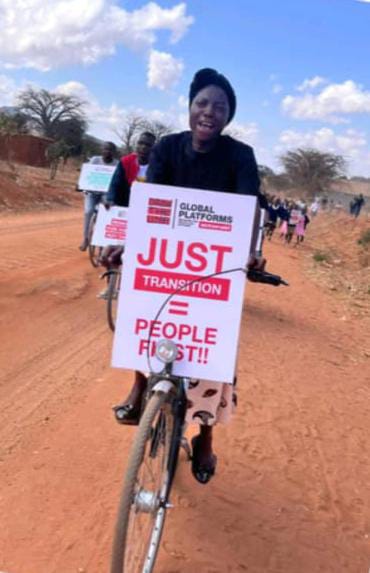
At COP30, world leaders championed the “Just Transition” framework. But as Imali Ngusale of the Africa Centre for Health and Climate Gender Advocacy warns, a transition that ignores the health and dignity of women is not “just”—it is a governance failure.
“Climate change disproportionately impacts marginalised genders by intensifying care burdens and health risks,” Ngusale argues. Under Article 8 of the Paris Agreement, these “non-economic losses” the loss of a girl’s education, the fracture of a mother’s mental health—must be recognised and financed.
Until climate finance protects the bodies that carry the water and hold the families together, the promise of a “Just Transition” will remain an elegant phrase for a lived injustice.
As darkness settles over Kaloleni, Magdaline finally opens her notebook. Tomorrow, the sun will rise, and she will walk the three kilometres again. The world’s leaders are counting carbon; Magdaline is just trying to count the hours until she can finally sleep.

