KISUMU, 7th Nov. 2026 – President William Ruto is systematically dismantling his 2022 divisive populist “Hustler versus Dynasties” narrative. Very good. Why?
Because in its place stands a new, high-stakes ideological framework: “Usawa ni Sawa, Mbele Pamoja” (Equality is Fair, Forward Together).
Some critics dismiss the slogan as tactical electoral rebranding. Yet, the administration is aggressively leveraging this egalitarian language to push through radical economic restructuring.
The ultimate test of this rhetoric is the newly proposed Tax Laws Amendment Bill.
This legislative shift aims to lift the Pay-As-You-Earn (PAYE) tax exemption floor from Sh24,000 to Sh32,333. It is a calculated move to cushion the working poor from punitive taxation. Very good.
In a highly unequal economy, taxing low-income earners are not revenue generation.
It is the taxation of survival. A Kenyan earning below the new Sh32,333 threshold spends their entire income on basic survival.
Non-negotiable costs like food, housing, school fees, and statutory healthcare contributions leave no room for disposable income.
Levying income tax on this bracket is deeply regressive. A 10 percent deduction damages a low-wage worker infinitely more than a high-income earner. True economic equity recognizes this imbalance.
So, arguably by creating an untaxable floor, the state leaves vital purchasing power at the grassroots level.
This cash injection is spent immediately in local ecosystems. It directly boosts small traders, agricultural markets, and transport operators, driving a bottom-up economic stimulus.
The government defends this tax relief as part of its broader Bottom-Up Economic Transformation Agenda (BETA). And this is the reason why top State Officials like National Treasury CS John Mbadi and Interior and National Administration PS Dr Raymond Omollo consistently point to concrete policy implementation as proof that “Usawa” is functional.
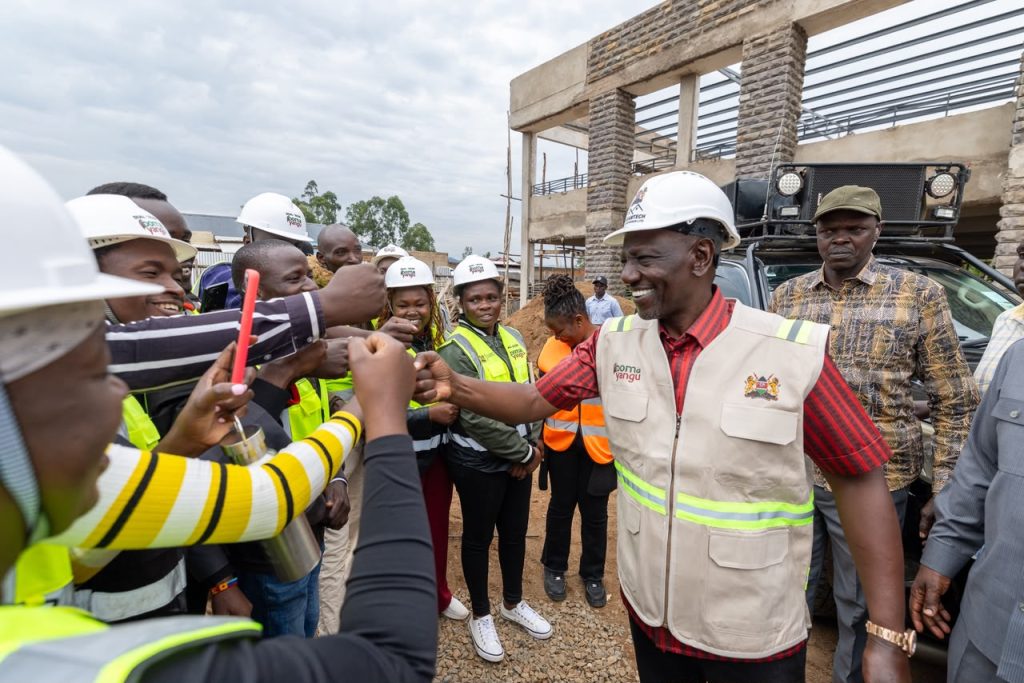
According to PS Omollo, the Affordable Housing Programme, for instance, has already bypassed traditional corporate contractors to channel daily wages directly to over 103,000 local youth and artisans.
Concurrently, the construction of Constituency Digital Hubs across all 1,450 wards aims to provide global digital job access to over 400,000 citizens. This aggressively bridges the rural-urban technology gap.
In agriculture, direct interventions like the fertilizer subsidy, has improved farmers income per Capita and guaranteed minimum milk prices of Sh50 per litre aim to eliminate middle-men.
The state insists these pillars have created a level playing field where ordinary citizens can achieve upward mobility based on effort rather than privilege.
However, this egalitarian pivot has triggered a ‘ferocious ‘political and institutional backlash.
Former Deputy President Rigathi Gachagua and his regional allies fiercely contest the narrative. They frame “Usawa” as a thinly veiled mechanism for political exclusion.
They argue that the language of national resource “equalization” is designed to strip resources away from historically productive economic strongholds like the Mount Kenya region.
Competing political factions are already countering localized resistance slogans such as “Wantam.”
But those pro the equity philosophy are robustly echoing resoundingly ‘two term”. This signals a deep and diverse regional resistance to the administration’s centralized vision of unity.
The standard of living still remains highly strained under contentious Finance Acts. Consequently, some political analysts and critics view the administration’s new tax-free floor with skepticism, though it’s good.
Some economists on record have also warned that raising the PAYE exemption floor creates an immediate Sh40 billion revenue gap for the National Treasury. This complicates an already severe fiscal deficit.
Furthermore, some opposition lawmakers argue that true fairness cannot coexist with unprocedural governance under the law and claims the exemption could be a lot, in their view.
But President Ruto and Deputy President Prof. Kithure Kindiki are conscious and keen to help low-income earners traversing the Republic to defend the policy as good. This is well done. I, too, posit so.
This informs why the top State Executive Officials frame the opposition’s resistance as regressive ethnic mobilization. Now as things stand, the Ruto administration is betting its political survival on this legislative overhaul.
If the Tax Laws Amendment Bill fails to ease the cost of living, “Usawa ni Sawa” will join the long historical shelves of empty Kenyan political slogans.
But if it succeeds in leaving money in empty pockets, as is most likely to, then it will provide definitive proof for the new mantra Usawa ni sawa.
I believe like the proposers for the idea, that it is only by protecting its lowest earners can the Nation realistically move forward together.
Arguably, Low-income earners do not hoard cash in offshore accounts or complex investment instruments; they spend it immediately within their local ecosystems.
Every shilling left untaxed goes directly back to the mama mboga, the local transport operator, and the neighborhood kiosks and shops owned by citizens.
This stimulates demand from the absolute roots of the economy.
If the administration truly wishes to bridge the vast divide between the rich and the poor, it must acknowledge that the state cannot tax a population out of poverty. Glad the President has seen this.
The tax relief signal to the country that under the current administration, fairness is not merely a political promise—it is the law of the land. Then, and only then, can we truly move “Mbele pamoja . God bless our Nation and our People.
The writer is a senior journalist,Media consultant and a regular advocate for democracy and good governance in Africa. kepher43@gmail.com