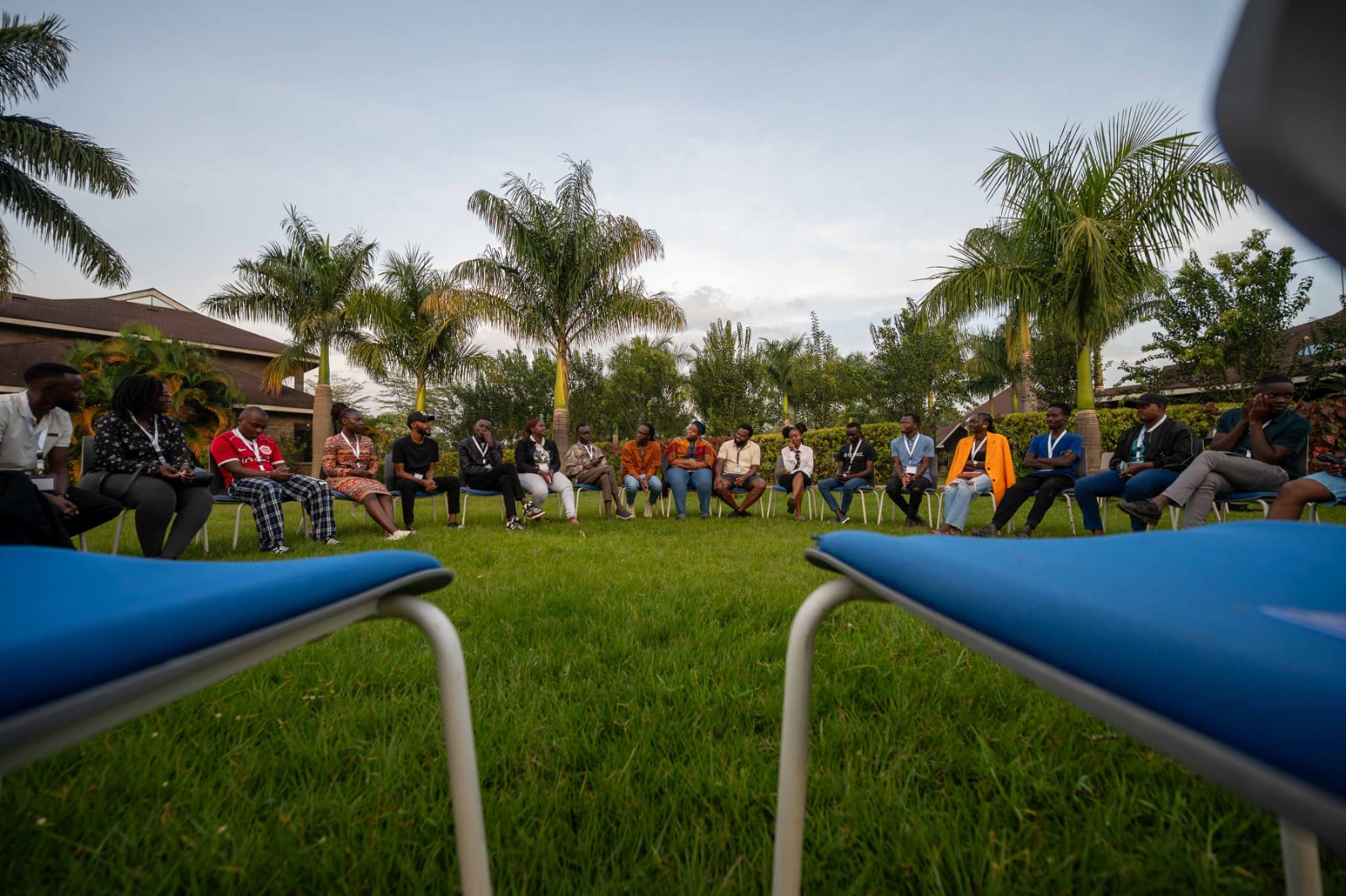
KISUMU, 31st July 2026-Forgiveness they say is hard. But not forgiving is harder.
That was the message at a recent seminar by Aspen Initiative Africa-SAFIRI Fellowship in Kisumu, where “Forgiveness Walkthrough-Natural Reset” was taught alongside the four B’s of Inner Algorithms-(Baggages, Biases, Buttons and Battles), Mental Resilience Exercises and My Manifesto.
The question cuts across home, market, church and nation: Do we hold on, or do we let go?
‘Betrayal Broke Us’
Amina* and Joseph Otieno*, residents of Kisumu, got married 12 years with 3 children, almost divorced in 2024 after Joseph admitted to a 6-month affair with a colleague.
“I felt my world had collapsed. My friends said ‘leave him,’” Amina, 38, a teacher, says. Joseph moved out for 2 months.
During that time, both went for counseling at their church. “God convicted me. I had destroyed my home,” Joseph, 40, says. “I begged her to forgive me, not to come back to me, but to heal.”
Amina says forgiveness was a process, not a single day. “I decided I wouldn’t let one mistake define 12 years. I forgave him for me, so I could be free.”
One year later, they run a joint counseling group for couples at their church.
“Betrayal broke us, but forgiveness rebuilt us stronger. We talk more now. We pray more now,” Amina says.
For 3 years, Jane Wanjiku*, 41, a mitumba (second hand clothes) trader at Kaptembwa Market in Nakuru, chased her cousin Peter* for Sh80,000 she had lent him for hospital bills.
“He kept promising ‘next month’. I threatened him with police. We stopped talking,” Jane says.
In 2025, Peter’s mother fell sick again. He came back, broke, and asked for forgiveness instead of money.
“I was angry. But my pastor asked me: do you want the money or your cousin back? I realized the grudge was hurting me more than him,” Jane says.
She forgave the debt. Two months later, Peter got a bodaboda job (motorbike taxi) and started paying her back in Sh2,000 installments. “Forgiving him opened doors for both of us. Now he’s like a son to me again.”
Jane says the money later helped her restock, but the biggest relief was “letting go.”
‘Dust and Ashes’
According to Archbishop Desmond Tutu’s lens in No Future Without Forgiveness, forgiveness sounds soft. It is not.
“In South Africa’s history, it was the hardest, most political decision we ever made,” he wrote.
In 1990 the world expected blood, but instead came the Truth and Reconciliation Commission, where perpetrators got amnesty for truth, and victims chose magnanimity over vengeance.
“No future without forgiveness… this was no namby-pamby thing for religious people, but that it did belong in the realm of real politik,” Tutu recalls.
Look at Nelson Mandela, Archbishop Tutu points out, that after 27 years in prison and hard labour that damaged his eyesight, he could have come out bitter. Instead, his white jailer sat as a VIP at his inauguration and he had lunch with Dr Percy Yutar, the prosecutor who sought the death penalty. Madiba flew 400 miles to have tea with the widow of Dr Verwoerd, architect of apartheid.
Had he chosen revenge, Tutu says the country (South Africa), would be “dust and ashes.”
When Chris Hani was assassinated in 1993, Mandela went on national radio and TV pleading for calm. The feared bloodbath never came. And in a small township, Peter and Linda Biehl forgave the young men who stoned their daughter Amy to death. They started the Amy Biehl Foundation, creating jobs in the very community that killed her.
“Forgiveness is letting go of your right to retaliation. It is like opening a window to let the fresh air rush into a dark closed room.”
For Tutu, this is ubuntu: “I am human only through other people.” Anger corrodes us, raises blood pressure, and shuts the door to the forgiveness we ourselves need from God.
In “An African Elegy,” Ben Okri transforms suffering into a promise. He does not deny pain -“the bitter fruit of time.” But he insists it is not final. “One day our suffering, will turn into the wonders of the earth.”
What “burns me now” becomes “golden when I am happy.” Time, for Okri, is an alchemist.
He encourages that hope lives in gratitude: “We bless things even in our pain. We bless them in silence. That is why our music is so sweet.”
The ancestors urge: “live it gently, with fire, and always with hope.” “The sky is not an enemy.Destiny is our friend.”
Tutu and Okri speak with one voice: to forgive is to bless the present, and to believe the future can be golden.
Improved Health
Healthwise, a July 2026 –Johns Hopkins Medicine article titled “Forgiveness: Your Health Depends on It” by expert Karen Swartz lays it bare.
Forgiving, Swartz notes, lowers risk of heart attack, improves cholesterol, boosts sleep.
“It also reduces pain, lower blood pressure, reduces anxiety, depression and stress,” she notes while adding that the benefit grows as we age.
The cost of not forgiving is steep: “Chronic anger puts you into a fight-or-flight mode, which results in changes in heart rate, blood pressure and immune response. Those changes increase the risk of depression, heart disease and diabetes.”
“Forgiveness, however, calms stress levels, leading to improved health,” Swartz explains.
From Amina and Joseph’s marriage, to Jane and Peter’s debt, to Mandela and a nation-the pattern is the same. Forgiveness didn’t mean forgetting. It meant confronting the truth, and then choosing healing, restoration, and a new beginning.
From the spiritual to the mental, physical and emotional: To forgive or not?
The evidence from home, from history, from poetry, and from medicine points to one answer. There really is no future without forgiveness.