
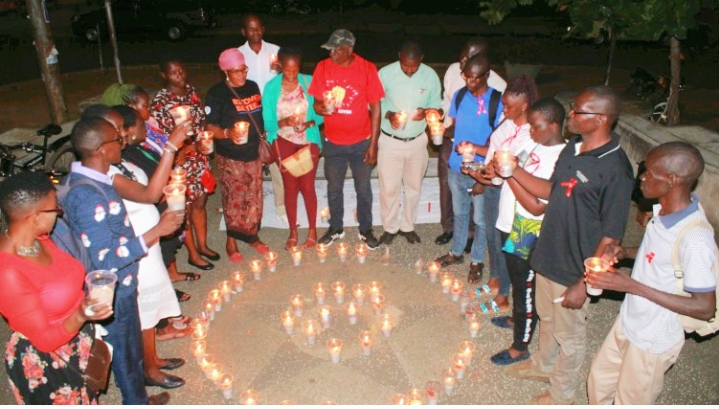
In Kenya, across twenty-five counties, a quiet revolution is taking place. Its name is Community Led Monitoring (CLM), and its promise is bold: to hand back power to the very people most affected by HIV, TB, and malaria.
It is meant to be a tool for transformation, a bridge between systems and lived realities. But somewhere along the way, the promise has been bent and purpose misunderstood, its spirit threatened.
According to the Global Fund, CLM is not a top down approach. It is not a project to be managed from afar or a checklist to be ticked off.
It is a movement grounded in trust, driven by the people who carry the burden of illness, stigma, and silence. It is about voice and visibility. It is about restoring dignity. It is about shifting who holds the pen when the story of healthcare is written.
In Kenya, this vision has begun to take shape. Training for trainers is complete. The selection and training of peer monitors is nearing its conclusion.
Funded by the Global Fund through the Principal Recipient and locally implemented by Sub Recipients, CLM is operational in twenty five counties. On paper, the momentum is clear. But in reality, cracks are showing.
Instead of uplifting voices, some counties are silencing them.
Instead of providing space, young people are being watched, questioned, and even humiliated. At some CLM meetings, youth are asked to name their villages, disclose where they collect their medication, and explain their presence in the room.
If a health worker does not recognise them, they are dismissed. If their clothes do not meet someone’s standards, they are judged. If they refuse to expose deeply personal information, they are told they do not belong.
This is not community ownership. It is surveillance. And it is dangerous.
Recent national data paints a dire picture. According to the National Syndemic Disease Control Council and NASCOP, more than 57 per cent of new HIV infections in Kenya are among people aged 15 to 34.
Girls and young women aged 15 to 24 make up nearly one-third of all adult infections.
While over 76 percent of youth are on anti-retroviral therapy, treatment interruptions are frequent.
For adolescents, non adherence is as high as 40 percent, driven by stigma, relocation, poor support systems, and lack of information.
These are not just statistics. They are lived struggles. And they deserve understanding and not interrogation.
At the same forums where youth are scrutinised, representatives from NGOs and the private sector walk in unchallenged.
Many have never lived with HIV. Many are far removed from the day to day reality of stigma and care. Yet they are welcomed without question. This double standard sends a message loud and clear: lived experience is not enough unless it is approved by someone else.
And yet, young people are not waiting for permission.
They are organising. They are innovating. They are showing us what real community led monitoring looks like.
Across WhatsApp groups, mobile apps, and online spaces, young people are building networks of care.
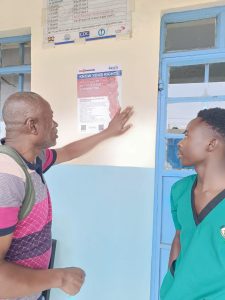
These are not just survival strategies. These are acts of leadership.
Peer-led approaches are powerful because they speak the language of the community.
They work because they create trust. They address mental health, reduce harm, and restore the broken link between service and survivor. But instead of being nurtured, these efforts are often dismissed.
To every service provider, this is a moment of reckoning.
It is time to stop managing young people. It is time to start walking with them. Every time a youth is silenced or sidelined, a chance to improve care is lost. Every time a peer leader is doubted or disrespected, we push healing further away.
Let us return to the original intention behind community-led monitoring. The community-led training.
The peer monitors were selected. Not to police their own but to amplify voices. To challenge stigma. To connect data with dignity.
They were never meant to be foot soldiers of a system. They are the soul of the movement.
“Young people are no longer asking for space. They are taking it. With phones in their hands, courage in their hearts, and truth on their lips, they are documenting their realities and demanding better.”
Because when you try to erase them, they speak louder.
When you shame them, they rise stronger.
When you try to control them, they come together.
They are not just the future of this movement.
They are the movement.
And they are here to stay.
The writer is a grassroots TB and HIV campaigner, the team leader at the Nelson Mandela TB and HIV Information Community Based Organization (CBO) in Kisumu County, and the Vice Chairperson of the Network of TB Champions Kenya.


True we’re struggling to get rid of silence and stigmatization. Let the youth be accepted and be empowered