KABUL,Afghanistan,August 2026-For millions of menstruators (those born with a uterus and ovaries) around the world, menstruation is a natural part of life. Yet in many communities, it remains surrounded by silence, shame, stigma, misinformation, and social restrictions that affect education, health, participation, and violate human rights.
Menstrual discrimination does not come from menstruation itself. It comes from menstrual discrimination, the social and institutional barriers created around it, including stigma, lack of accurate information, restrictive practices, and unequal systems. When people are unable to discuss menstruation openly, denied support, excluded from opportunities, or forced to hide a natural biological process, the issue becomes more than a health concern. It becomes a question of dignity, equality, and human rights.
For years, menstruation has often been discussed mainly through the lens of health and menstrual management, including products, WASH facilities, and hygiene management. These resources are important, but they cannot end discrimination alone. A person may have access to menstrual products and still experience shame, exclusion, restrictions on movement, or unequal treatment because of harmful social attitudes and institutional gaps.
The Global South Coalition for Dignified Menstruation (GSCDM) promotes a broader understanding through the concept of Dignified Menstruation, which places dignity, equality, freedom, and non-discrimination at the center. This approach recognizes that menstrual experiences are shaped not only by physical needs but also by social conditions, human rights, and the ability to participate equally in society.
The difference between menstrual hygiene management and menstrual dignity is the focus on the root causes of inequality linked to deeply rooted patriarchy and the unequal power relations it creates. Providing products, clean facilities, and health information can address practical challenges, but dignity cannot be achieved if people continue to face stigma, humiliation, exclusion, or any form of menstruation just because they menstruate.
This is why menstrual discrimination is increasingly recognized as a human rights issue. When girls miss school because they fear embarrassment or lack adequate support, their right to education is affected. When individuals avoid healthcare services because of shame or misinformation, their right to health and access to information is affected. When social restrictions prevent participation in public, family, or professional life, the principles of equality and non-discrimination are undermined.
Experts, educators, activists, and community leaders working on gender equality and human rights emphasize that menstrual discrimination is created by social systems, not by biology. The challenge lies in changing the beliefs, policies, and practices that allow exclusion to continue.
High school teacher Asia Nabizada highlights the importance of providing young people with accurate information before they experience menstruation. Supportive education, she explains, helps students understand menstruation as a natural process and reduces fear and embarrassment.
The experiences of educators, health professionals, and human rights advocates show that achieving menstrual dignity requires more than managing a biological process. It requires creating environments where every person who menstruates can access knowledge, support, respect, and equal opportunities without shame or discrimination.
When Silence Becomes Discrimination
In many communities, menstruation remains a subject surrounded by silence. Many girls reach puberty without accurate information about their bodies, leaving them unprepared and often dependent on myths, fear, or unreliable sources of information. This silence is not simply a lack of communication; it can become a form of exclusion that affects health, education, confidence, and participation.
When families, schools, and communities avoid open conversations about menstruation, young people may learn that it is something to hide rather than a natural part of life. Without age-appropriate and scientifically accurate education, many girls experience their first menstruation with confusion and anxiety instead of knowledge and support.
Educators emphasize that preparation and safe learning environments are essential. High school teacher Asia Nabizada says that many students still experience menstruation without sufficient information and guidance. Providing respectful menstrual education before puberty can help young people develop confidence and reduce harmful beliefs.
The effects of menstrual silence are particularly visible in education. When schools lack supportive policies, private facilities, or trained teachers, menstruation can become a barrier to attendance and participation. Fear of teasing, embarrassment, or lack of necessary support may cause some students to miss classes or withdraw from activities. These repeated barriers can contribute to unequal educational opportunities for girls.
Silence also creates challenges in healthcare. When menstruation is treated as a private issue surrounded by shame, individuals may hesitate to seek medical advice about pain, irregularities, infections, or other concerns. As a result, important health information and services may remain inaccessible.
The burden of stigma is often greater for people who already face social barriers, including persons with disabilities. Many menstrual programs do not adequately consider accessibility needs, communication barriers, or the specific experiences of people with disabilities. Without inclusive information and facilities, menstruators with disabilities may experience additional exclusion and dependence.
Menstrual silence also allows harmful social beliefs to continue. Myths, negative language, and restrictions reinforce the idea that menstruation is something shameful or unacceptable. These attitudes do not only affect individual confidence; they influence how families, institutions, and communities treat menstruating people.
Women’s rights and human rights advocates argue that breaking this silence is an important step toward equality. However, creating change requires more than encouraging discussion. It requires transforming the systems that maintain stigma, including education structures, healthcare services, community attitudes, and institutional policies.
How Menstrual Discrimination Becomes a Human Rights Issue
Menstrual discrimination becomes a human rights issue when stigma, restrictions, and unequal systems prevent people from enjoying rights and opportunities available to others. Menstruation itself does not create inequality; discrimination surrounding it does.
The right to education is directly affected when girls face barriers caused by menstrual stigma. Lack of information, inadequate facilities, fear of harassment, and absence of support can reduce school attendance and participation. When these challenges continue, menstruation becomes connected with wider patterns of educational inequality.
The right to health is also closely linked to menstrual dignity. Health includes access to accurate information, respectful healthcare services, privacy, and the ability to make informed decisions about one’s body. When shame prevents people from discussing menstrual concerns or seeking support, their health needs may remain ignored.
Menstrual discrimination also violates the principles of equality and non-discrimination. Social beliefs that associate menstruation with impurity, weakness, or exclusion reinforce gender stereotypes and create unequal expectations for women and girls. These attitudes can affect opportunities in education, employment, decision-making, and public life.
Human rights advocate Hoda Khamosh highlights that menstruation is not the cause of inequality; rather, the discrimination and social barriers surrounding it create exclusion. Addressing the issue therefore requires changing the systems that limit dignity and equal participation.
Freedom of movement and participation can also be restricted by menstrual stigma. In some communities, individuals may face limitations on where they can go, what activities they can join, or how they interact with others during menstruation. Such restrictions reduce their ability to participate fully in social, cultural, educational, and economic life.
Legal expert Mohammad Zuhoor Sharifi notes that although international human rights frameworks recognize dignity, equality, health, education, and non-discrimination, menstrual challenges are often overlooked because they are treated as private or cultural matters rather than rights issues.
A human rights approach must also include persons with disabilities. Without accessible facilities, inclusive information, and appropriate support, menstrual programs may fail to reach those facing the greatest barriers.
The Dignified Menstruation framework promoted by GSCDM emphasizes that menstrual support must go beyond hygiene management. Products and facilities are necessary, but dignity requires addressing stigma, discrimination, accessibility barriers, and unequal treatment.
Recognizing menstrual discrimination as a human rights issue means ensuring that every person who menstruates can learn, work, access healthcare, move freely, and participate in society without shame or exclusion.
Beyond Pads: What Needs to Change
Addressing menstrual discrimination requires more than improving access to menstrual products. While safe products, sanitation facilities, and healthcare services are important, they cannot fully achieve menstrual dignity if stigma, exclusion, misinformation, and unequal treatment continue to shape people’s experiences.
A dignity-centered approach requires societies to address the deeper social and institutional factors that influence how menstruation is understood and supported. This means creating environments where menstruation can be discussed openly, guided by accurate information, and recognized within policies that protect equality and human rights.
Education is one of the most important areas for change. Schools should provide age-appropriate and scientifically accurate menstrual education before puberty, helping students understand menstruation as a natural biological process rather than something associated with shame. Teachers need proper training, and schools should create safe environments where students can ask questions without fear of embarrassment or discrimination.
Inclusive education must also recognize the needs of students with disabilities. Accessible learning materials, supportive communication methods, and appropriate facilities are necessary to ensure that all students receive menstrual information and support equally.
Community engagement is equally important. Families, community leaders, and religious leaders can contribute to changing harmful misconceptions and encouraging respectful conversations about menstruation. Social and cultural dialogue should help distinguish between values that protect dignity and practices that create unnecessary restrictions or exclusion.
Media has a powerful role in shaping public understanding. Journalists and communication professionals can move beyond presenting menstruation only as a health or hygiene issue and highlight its links with human rights, equality, and social justice. Responsible storytelling can bring attention to experiences that are often ignored and encourage broader public discussion.
Policies and institutions must also recognize menstrual dignity as part of wider commitments to equality and inclusion. Governments, educational institutions, healthcare providers, workplaces, and civil society organizations should address menstrual discrimination through policies that consider access to resources, stigma, accessibility, and equal participation.
Healthcare systems should provide respectful, confidential, and inclusive services. Individuals should be able to seek information and care without fear of judgment. Greater attention is needed for marginalized groups, including persons with disabilities and communities facing social and economic barriers.
Women’s rights activist Khatima Afzali explains that menstrual discrimination is connected with wider gender inequality because restrictions, stigma, and lack of support can limit women’s and girls’ opportunities. When menstruation affects education, employment, decision-making, and participation in public life, it reflects broader patterns of unequal treatment.
The path from silence to dignity requires collective action from governments, schools, healthcare institutions, civil society organizations, media, families, and communities. Sustainable change depends on transforming the systems and attitudes that allow menstrual discrimination to continue.
Menstrual dignity is ultimately about ensuring that every person who menstruates can experience this natural process with freedom, confidence, respect, and equal opportunities. Moving beyond pads means addressing the social barriers that prevent dignity from becoming a reality.
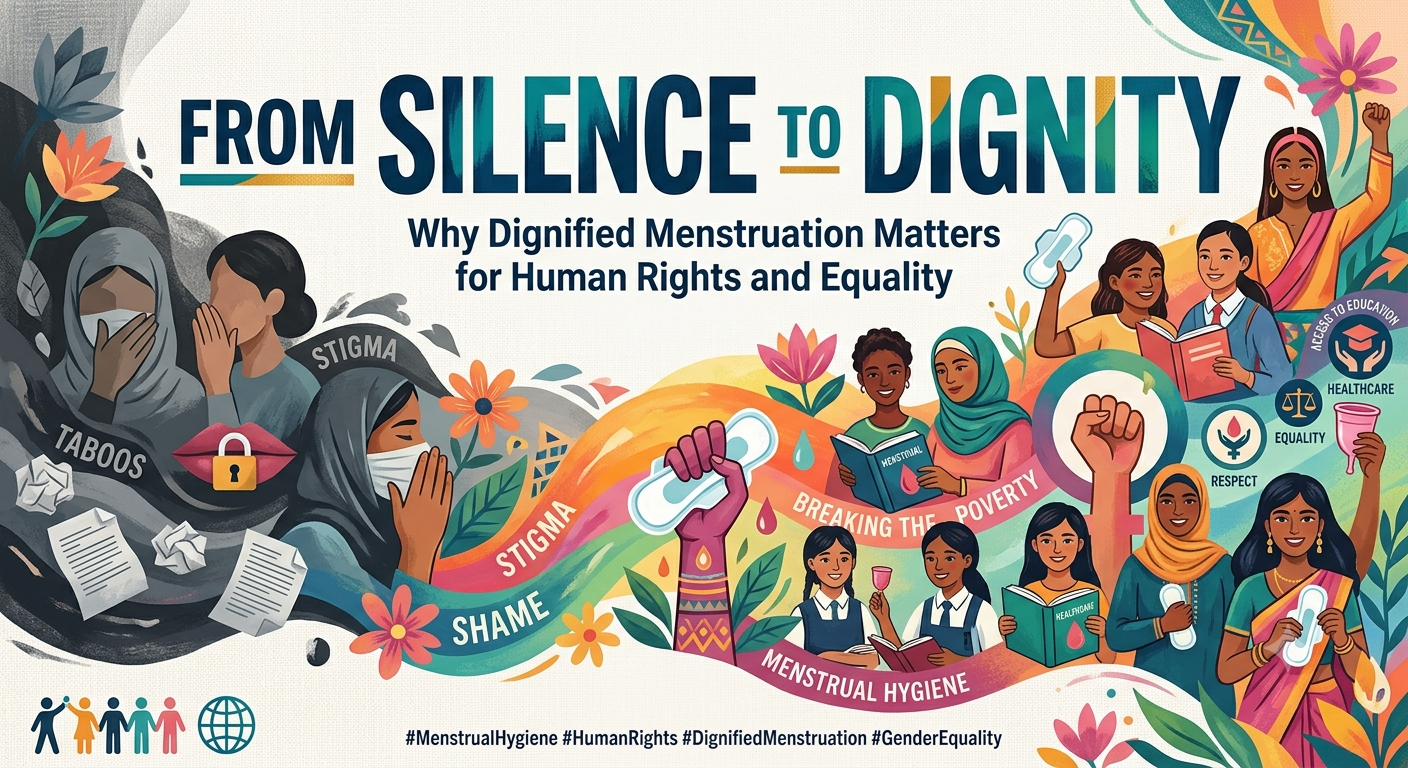
For millions of women and girls, the challenge is not menstruation itself, but the silence, stigma, and discrimination surrounding it. Recognizing menstruation as a matter of human rights and equality is a necessary step toward building more inclusive societies where everyone can participate fully without shame or exclusion. (Image: AI Generated)
From Silence to Dignity: Why Menstrual Discrimination Is a Human Rights Issue