The Anti-Counterfeit Authority (ACA) has seized goods valued at Sh 4,296,000,000.62 to stem the huge threat posed by the illicit trade at the source to safeguard the economy.
During the 15-year-old combat, the enforcement agency further destroyed goods valued at Sh1.5 billion.
This, however, was born out of the realization that Kenya loses an estimated Sh100 billion annually to counterfeiting and illicit trade.
Statistics indicate that the government revenue loss was estimated at Sh129.72 billion and Sh153.1 billion in 2017 and 2018, respectively.
According to the National Baseline Survey on Counterfeit and Other Forms of Illicit Trade in Kenya (2019), the total value of illicit trade was about Sh826 billion in 2018, indicating a sharp rise of 14 percent compared to Sh726 billion in 2017.
This represented an upward trajectory from 8.9 percent in 2017 to 9.3 percent in 2018, slightly above the manufacturing sector’s share in the GDP.
“The study provides indicators that are used to monitor illicit trade, and gains made in the war against it. It offers tangible information that acts as a point of reference in designing strategies to fight illicit trade and the expectant results.”
Notably, 90 percent of total goods of 16 manufacturing sectors GDP accounted for 71 percent of the total illicit trade.
A related study on illicit trade undertaken by the Kenya Association of Manufacturers (KAM 2012), reveals that manufacturers lost about 40 percent of their market share to counterfeiters.
Similarly, based on ACA’s 2019-2022 survey report, the Kenya Publishers Association reported sales losses estimated at more than Sh2 billion annually through book piracy.
The role of the media
Speaking during a sensitization forum on counterfeiting and protection of Intellectual Property Rights (IPR) organized in collaboration with the Media Council of Kenya, ACA’s Deputy Director-Research and Policy, Henry Maina, said that illicitly traded products pose a significant threat to manufacturers and consumers.
“These losses in firms’ sales, investment opportunities and jobs continue to immensely contribute to the downward performance of industries, which runs into billions of shillings,” he said to a battery of journalists and stakeholders drawn from across the Western Region.

The authority, he stated has stepped up a raft of measures aimed at safeguarding our manufacturers and consumers from fake products that can endanger their lives.
While presenting a topic titled; “The Place of Media Anti-Counterfeiting War,” Maina remarked that they need a pool of journalists who can well understand Anti-Counterfeit Reporting.
He stated that: “The media is the first line of defence for the public. Journalists need to investigate stories and influence policy at a higher level.”
Mr Maina outlined some of the key functions of ACA, such as Combating counterfeiting and Conducting Public Education and Awareness.
Others include conducting research on counterfeiting, prepare and submit policies advisories to the CS on matters anti-counterfeiting.
On his part, the Media Council of Kenya (MCK)Western Region Coordinator, Teddy Evans, said that 13 media houses broadcast in English, Kiswahili, and local dialects from Kisumu.
“We have more than 100 journalists in Kisumu who can benefit from this initiative he said while lauding the move.
ACA’s Head of Public Communication, Tom Muteti, further noted that the seizures achievement has been realized through the concerted efforts of the Inter-Agency Anti-Illicit Trade Executive Forum and Technical Working Group (Multi Agency Team) formed on 10th July 2018.

Another game changer was the unveiling of the National Action Plan and Implementation Framework to Combat Illicit Trade in Kenya.
“These are aimed at strengthening interventions towards curbing illicit trade and facilitating the rapid exchange of information between Enforcement Agencies and enhance speedy responses.”
Categories of lllicit Goods
Some of the notable ones are Counterfeit, Substandard, Uncustomed, Unexcised, Smuggled and Restricted Goods.
“They are handled by the following agencies: ACA, Kenya Bureau of Standards (KEBS & Weights and Measures, Kenya Revenue Authority (KRA), and National Police Service respectively.”
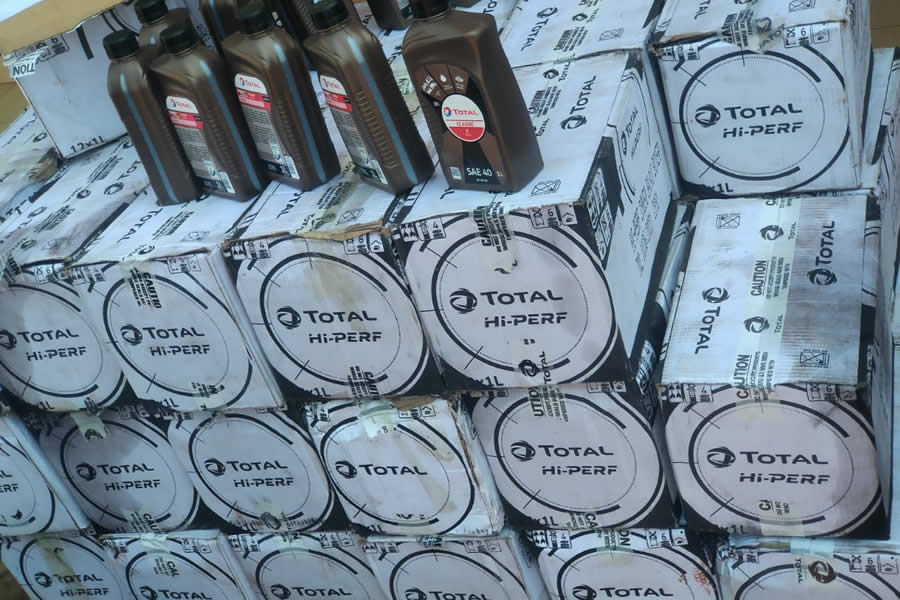
Others are Pharmaceuticals, Alcohol / Beverages, Fertilizers, Seeds, Perfumes and Detergents.
Mr Maina said that the most counterfeited goods in Kenya are Electronics and Electrical goods, Footwear and Apparels, Cosmetics and Hardware materials.
Court Registered Cases
The agency further reported registering 449 Court Cases, and 6,487 complaints lodged by IPR-Owners, Consumers and Anonymous callers since 2010.
During the period, the total complaints reported were 2,450 and 4,037 for IPR, and Consumer respectively.
Of the 449 cases filed, 52 resulted in (Convictions), 62 were acquittals, and 292 were settled out of court under Section 85(1) of the Criminal Procedure Code.
This reflects a 76 percent conviction rate with 43 cases still ongoing.
Enforcement Strategies
Firstly, ACA has created special units tasked with collecting and collating actionable intelligence to undertake targeted enforcement.
Secondly, they have introduced Recordation Implementation- an import risk profiling module, and mandatory permits.
“This will ensure proper declaration and 98 percent traceability of branded goods at the Points of Entry.”
A third milestone is the establishment of the ACA Forensic Laboratory: “To
authenticate suspected counterfeits, and support prosecutions, in partnership with brand owners to strengthen evidence credibility.”
Deployment of Mobile Destruction Units for immediate destruction of seized goods, expedition of case closure, and ease of pressure on storage
facilities.
For robust operation and efficient transparency, an Anti-Counterfeit Integrated Management system (AIMS) was established for end-to-end digital tracking of enforcement cases and streamlined inventory management.
Consumers Awareness of Illicit Trade
The overall consumer awareness of illicit trade public awareness index stood at 64 percent in 2019.
“Piracy led at the pack at 67 percent, followed by counterfeit, and substandard at 66 percent each. Contraband was at 64 percent, while Uncustomed and restricted goods were at 61 percent and 60 percent respectively.”

Of great significance, over 50 percent of the 47 counties had a level of awareness above the national average for forms of illicit trade like counterfeit, piracy and substandard.
Way forward
ACA suggests that the net should be widened to include more brand owners and industry associations to fight against counterfeiting.
There’s need to adopt regional and international best practices to improve enforcement strategies.
“Strengthen consumer education and promote accessible reporting channels, and update legal frameworks to address emerging challenges such as digital counterfeiting and online trade in counterfeit goods.”