KISUMU, Kenya, August 8 – The lakeside city of Kisumu is setting the pace in rewriting the story of trash — transforming it from a public nuisance into a source of life, opportunity, and hope.
It’s choosing a different path — one paved with innovation, environmental consciousness, and community-driven change.
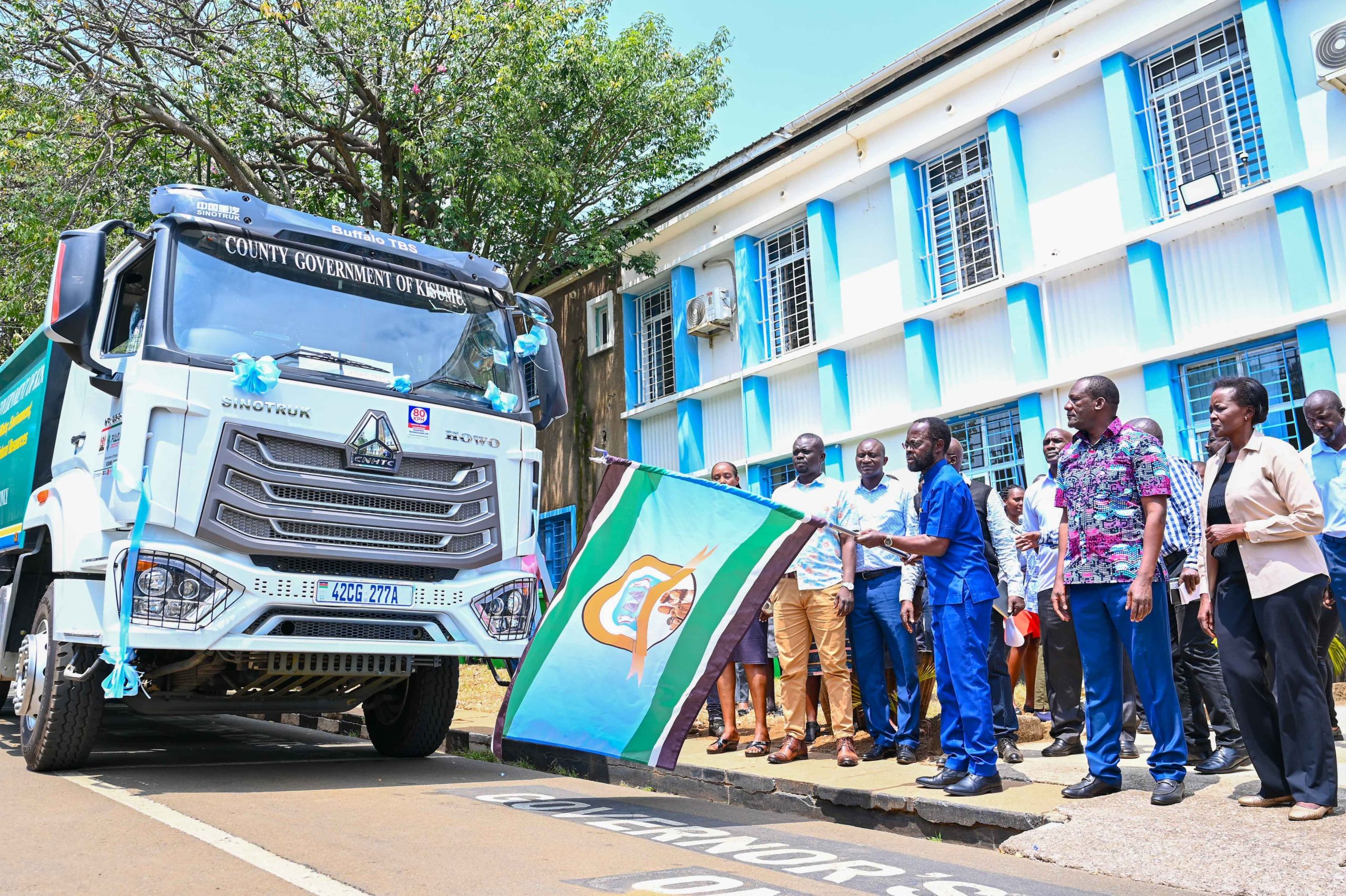
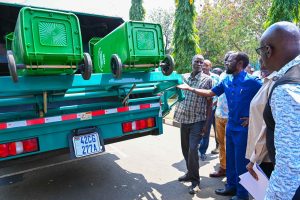
This week, Kisumu Governor Prof. Anyang’ Nyong’o stood beside a newly launched, high-capacity waste collection truck — not just any truck, he insisted, but a symbol of a vision.
“This is not just about cleaning up our streets,” Nyong’o said asserting
“It’s about creating jobs, feeding our soils, and securing a future where our waste works for us—not against us.”
The 15-tonne compactor truck, capable of collecting and transporting compacted waste with minimal spillage and lower fuel costs, is just one piece of Kisumu’s broader push toward a circular economy—an approach where nothing is truly discarded, and everything has potential for reuse or regeneration.
From Trash to Treasure
In the heart of Kisumu’s Kachok neighbourhood, 29-year-old Ruth Achieng used to dread the sight and smell of nearby illegal dumpsites.
Now, she works part-time at one of the city’s new waste recovery centres, sorting organic waste to be turned into compost.
“I never thought garbage could pay my rent,” she says with a laugh.
Achieng asserted “Now I see it differently—it’s not garbage. It’s business. It’s change.”
Kisumu’s circular model is anchored on several key pillars: 14 waste separation and recovery centres, hundreds of strategically placed public bins, new composting sites, and a growing number of small-scale recycling enterprises.
The county plans to turn organic waste into affordable fertiliser, reduce pressure on landfills, and boost urban agriculture—all while creating employment, especially for young people like Ruth.
The ecological or environmental experts warn that Kenya’s waste crisis is reaching dangerous levels. Rapid urbanisation, poor waste infrastructure, and minimal public education have led to a surge in uncollected garbage, often burned or dumped illegally.
“Our cities are growing faster than our systems can handle,” said environmental scientist Grace Onyango while urging that: “If we don’t act now, we’ll see rising disease, pollution, and social unrest.”
But where others see a crisis, Kisumu sees an opportunity.
“We’re closing the loop between urban waste and rural farming,” said Mathews Okello, a local sustainability advocate.
“We’re turning city trash into farm treasure—cutting costs for farmers while keeping our environment clean.”
And Kisumu isn’t alone. In Nairobi, Governor Johnson Sakaja is boosting cleanup efforts.
Similarly, Nakuru’s Governor Susan Kihika has launched public waste campaigns, and cities like Mombasa and Eldoret are exploring new partnerships for recycling and sanitation.
Yet environmental analysts say piecemeal efforts won’t be enough unless countries adopt more holistic, circular approaches like Kisumu’s—and prepare for the influx of rural migrants straining city services.
“You can’t manage waste in a vacuum,” Onyango said. “We need housing, education, and economic planning—all linked with environmental strategy.
So, what can other countries invest in community-based waste centres?
Small, decentralised centres empower locals to separate, sort, and profit from waste, while reducing the load on municipal systems.
Ecological expert Mathews Okello explained that awareness campaigns about proper waste handling, recycling, and composting can shift mindsets—especially among youth.
Onyango vouched for and encourages private sector partnerships: Green startups, tech companies, and local cooperatives can bring in innovation and funding.
“We need to promote ‘waste-to-resource’ entrepreneurship. Training young people to turn plastics into tiles, or food waste into biogas, creates jobs and reduces pollution,” she says.
“This isn’t just a Kisumu story,” Onyango added. “It’s a Kenyan story waiting to be written—if more countries choose courage over convenience.”
Kisumu’s journey isn’t perfect. Challenges remain in funding, enforcement, and citizen buy-in.
But for many residents, the difference is already visible—in cleaner streets, new job opportunities, and renewed pride in their city.
Standing next to a compost pile ready for distribution to nearby farms, Achieng reflects on her role in this transformation
“It may not seem like much,” she says, wiping her brow, “but I’m part of something bigger. We all are. We’re building the future—one banana peel at a time.”
What is a Circular Economy
A circular economy keeps resources in use for as long as possible.
Instead of the traditional “take, make, dispose” model, it promotes reuse, recycling, and regeneration—turning waste into resources and reducing environmental harm.