KISUMU, Kenya, August 25th –Thirty years ago, when Geno Kitam* was tasked by his father to manage their booming bar and restaurant business located at the brisk Otonglo market centre, he was brimming with high hopes and steely determination to succeed.
Armed with some basic skills and knowledge in a Bachelor of Commerce (though he didn’t graduate) from Dr Babasaheb Ambedkar Marathwada University in India (1992-94), he envisioned himself as the cog in the wheel of his father’s vast business empire.
The must-go-to entertainment joint was frequented by truck drivers, night nurses and different shades of revellers along the busy Kisumu-Busia road.
Its live music artists’ performances, booze and traditional food offered the perfect nightlife scene every party-goer would crave.
But alas, it wasn’t meant to be for Geno, who was born in 1972, in these uncharted waters of entertainment management.
HIV Diagnosis Denials
On an uncharacteristically early rain-drenched Friday afternoon, pounding the lakeside city, this writer visited him at his home nestled along the banks of River Kisian in Kisumu West Sub-County recently.
In his 0.08 ha compound sat an aluminium-roofed house, an outside toilet, some crop vegetation, and a symbolic banana plantation.
“In the late 90s, I started experiencing symptoms like headache, flu, fever, rash, and sore throat and was taking over-the-counter medication. In June 2000, after persistent illness, I was determined to know my real status,” Geno recalled as he continued that he was later taken to Uganda Cares-Owino Clinic in Kampala after being encouraged by family and friends.
“It’s where I was diagnosed with the dreaded HIV disease. It was a bitter pill to swallow,” he said as we sat inside his house alongside his friend Ogot Japuonj (name withheld).
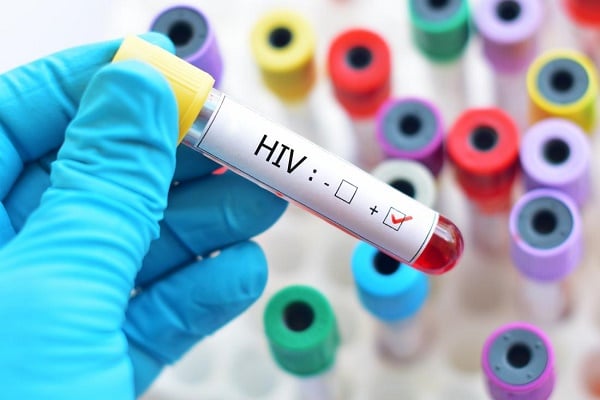
The 1991 St Teresa’s Boys Secondary School, Eastleigh-Nairobi graduate was surprised by the results and fell into denial. He was transferred to Kisumu District Hospital due to the proximity of his birthplace.
Geno began taking his Anti-Retroviral (ARV) medication of Stocrin and Combivir in June 2000 at the Workers Treatment Centre in Kampala.
“I was well counselled by a Taita-Kenyan doctor to faithfully adhere to taking my drugs.”
“As an encouragement, she told me to watch the movie, ‘The Passion of Christ,’ and I owe my life to the Almighty God and her,” he said as his chicken cackled around with the sound of river water gushing down in the background.
Geno shared a medical document from Uganda Clinics showing he was placed on Second Line ARV Treatment (Baseline ART Regimen D4T/3TC/NVP), indicating a start date in 2000.
Another regimen that he was given is (TDF/3TC/LPV/), which was to last until 2013.
New HIV Infections
According to the latest report by the National Syndemic Diseases Control Council (NSDCC) 2024, Kenya has an estimated 1,378,457 People Living with HIV (PLHIV), with a prevalence rate of 3.3 percent.
The prevalence rate is higher among females (4.5 percent) compared to males (2.2 percent).
Among key populations HIV prevalence is notably higher with rise of 29.3 percent among sex workers, 18.2 percent among men who have sex with men and 18.3 percent among people who inject drugs.

The counties of Kisumu, Homabay, Migori, Siaya, Nairobi, Mombasa, Nakuru and Kiambu together account for 51 percent of all PLHIV in Kenya as of 2023.
In 2023, Kenya had an estimated 16,752 New HIV Infections, with children accounting for 3,743 cases, and adults (13,009): Women aged 15 and above had 8,937, while men had 4,072.
Notably, 57 percent of all new infections are domiciled among adolescents and young people aged 15-34 years.
HIV Biomedical Research
But, as the world grapples with the elusive HIV vaccine, all is not lost for those who are living with the disease as Francis Angira, Clinical Research Scientist at KEMRI-Centre for Global Health Research, explains.
He has some glimmer of hope that scientists are continuing to make great strides towards research work.
“Currently, there are no vaccines available to prevent HIV infections. It is constantly evolving into new strains, and this makes it hard to develop a vaccine. However, with each study, scientists and manufacturers are making a step closer to its full realisation,” Angira assured.
He spoke during a media science café organised by Media for Environment, Science, Health and Agriculture (MESHA) for its Western Kenya region-affiliated journalists and university students.

The research process involves using some scientific methods to produce knowledge about human diseases, the prevention and treatment of some diseases, and the promotion of health.
“In HIV Prevention we have Vaccines and Long-Acting Prevention like Vaginal Rings, Oral Pills (PrEP), Implants, Injection and Monoclonal antibodies,” Angira explained while adding that HIV Treatment is done through once monthly and twice-yearly therapies.

30 percent of women aged between 18, and 45 years who took part in two large clinical trials lowered their chances of contracting HIV when they used a Vaginal Ring.
This flexible silicone ring, which is placed intravaginally every month, steadily releases the anti-HIV drug dapivirine.
The long-acting injectable Cabotegravir (Apretude), which is administered with one shot in the arm once every eight weeks, was approved by the Food and Drug Administration (FDA) in the US to protect against HIV for one to six months.
The HPTN 084 and HPTN 083 studies show that it is safe and works better than the oral daily drug emtricitabine /tenofovir.
In the PURPOSE 1 Trials conducted in South Africa and Uganda among Adolescent Boys and Young Men (AGYM), HIV incidence twice yearly with Lenacapavir (LEN) showed a significant reduction in background HIV incidence and HIV incidence in F/TDF.
Still, in its early stages of development, the match-stick-sized Implants are inserted in the arms to slowly release anti-HIV drugs, which offer protection against HIV for one year and longer.
Research shows that many people are afraid they would be ashamed of taking or aren’t aware of the existence of HIV Prevention Pills (Truvada and Descovy), which lowers the chances of HIV infections between 79-99 percent.
Angira explained that Monoclonal antibodies are lab-created immune protein systems which work to prevent HIV. Scientists are looking at how an assorted mix of antibodies could be a tool in long-term HIV Prevention and Treatment.
According to an Eastern Africa Consortium for Clinical Research (EACCR) member, the US National Institutes of Health (NIH) is also researching two HIV vaccines, which are being tested globally.
The main goal of these vaccines is to turn on an immune response to a wide range of HIV strains.
Another vaccine candidate, which has shown 97 percent efficacy levels in early research findings by IAVI and Scripps Research, works by prompting the immune system to turn on responses in different versions and mutations of HIV.
HIV Advocacy
After being referred back to Kisumu District Hospital from Uganda due to the proximity of his birthplace, Geno admits that on several occasions he failed to adhere to his medication and continued to drink heavily to drown his sorrows.
In early 2004, he was taken to Tanzania to treat ‘madness’ and HIV through administering traditional medication for four months.
Upon his return to Kisumu, he continued to defy taking his traditional herbs and he fell sick.

Down but not out, Geno was rushed to Nairobi, where his aunt, a former laboratory technician at Kenyatta National Hospital, later referred him to a doctor in Mbagathi Hospital for further health actions.
At the health facility, he hugely benefited from services such as Intensive HIV Testing, Screening, and Counselling.
Buoyed by the new insights and positive recovery process, Geno fell into Drug Adherence like a fish in Lake Victoria.
In a move to adequately respond to the scourge, Geno decided to wear a new hat, that of an HIV-AIDS Advocate (2005).
This positioned him as a beacon of hope and resilience to those living with the disease when he joined Médecins Sans Frontières (MSF Belgium) at Mbagathi.
“We undertook a lot of community-led sensitization activities in Kibera-Nairobi, to address the Myths and Misconceptions associated with HIV/AIDS Epidemiology, Basic Facts on HIV/AIDS and The Immune System, and Introduction to Alternative Medicine vs. Conventional Medicine,” he recounted as he happily showed the certificate awarded for his gallant efforts and participation on the Treatment Literacy Advocacy Training organized by MSF in 2006.
Other topics centred on Introduction to ARVs, Side Effects and Other Interactions, Management and Prevention of Opportunistic Infection (OIs) and Sexually Transmitted Diseases (STDs) among others.
In 2012, after developing complications, he was admitted to the Haven Rehabilitation Centre, domiciled in Namasuba, Kampala, for three months.

With his commitment to champion against the spread of the disease, he became the chairman of all clients at the facility drawn from Kenya, Uganda, Rwanda, Ethiopia, Sudan and Tanzania. Geno later joined Victory Post Test Group under Liverpool Voluntary Counselling and Treatment (LVCT) in Kisumu.
Inspired by his regional advocacy roles in Kenya and Uganda, he teamed up with six like-minded peers and a pastor-patron to form the Kisian Red Ribbons Post Test Community-Based Organisation (CBO) in 2012.

The group, which was registered at the Social Department, later grew to about 80 people, undertook activities like sensitisation of the youth and married couples on HIV Treatment, Psychosocial Support, Human Rights and Advocacy.
Significantly, they also offered services like HIV and Adherence Counselling, and maintaining Good Nutrition devoid of alcohol consumption, and smoking.
“Most of our founder members have since died due to HIV/AIDS-related complications and our group activities have since scaled down. But, we are in the process of reviving them,” Geno, who got married in 2017 to an HIV- positive spouse, assured.
Viral Suppression
Angira, the Amsterdam Institute for Global Health and Development (AIGHD) fellow, further noted that oral antiretroviral therapies are meant to manage/suppress HIV and opportunistic illnesses and to accord a better quality of life.
He informs that the FDA recently approved two drugs, Dolutegravir (Trivicay) and Fostemsavir (Rukobia), for children and adults’ HIV treatment, respectively.
Approximately 1.8 million children (birth to 14 years) are living with HIV, and Dolutegravir is the first Integrase Inhibitor (a class of anti-HIV drugs) dissolved in water that is available for children as young as four weeks old.
Additionally, Fostemsavir is an Attachment Inhibitor (antiretroviral) drug available for adults who have not had success with other HIV treatments.
In 2021, the FDA approved the first long-injectable drug (Cabenuva), which is a combination of cabotegravir and rilpivirine for HIV adult treatment.
“A small survey among those living with HIV (73 percent) prefers longer injections administered once monthly or every two months as compared to the oral daily dosage. This type of monthly treatment would address the adherence challenges associated with oral HIV medication,” Angira stated.
Another milestone is the approval of the Lenacapavir (Sunlenca) drug which belongs to the novel class of HIV Capsid Inhibitors for heavily-experienced adults with multi-drug resistant HIV-1 infection after failing their current antiretroviral regimen.
“It blocks the HIV protein shell called the capsid which interrupts an important step in the virus life cycle. The PURPOSE 1 Trial has shown the safety and 100 per cent efficacy levels of LEN; however, ‘100 per cent effectiveness demands 100 per cent access,’’ Angira clarified.
Its dosage is administered through initiation with tablets and subcutaneous injection, followed by dosing every six months, combined with other antiretroviral therapies. Notable side effects include nausea and injection site reactions.
The International AIDS Society (IAS) calls on people everywhere to rally around this year’s theme, usually on December 1st annually.
“We must unite science, policy and activism to ensure that all can seamlessly access the support and care they require. It ensures that no one is left behind in the HIV response,” Beatriz Grinsztejn, IAS President, emphasises in one of her previous video messages.

The global organisation is concerned that despite 7.5 million people having started taking Pre-Exposure Prophylaxis (PrEP), attaining the goal of 10 million PrEP initiations by 2025 will remain a mirage.
IAS further observes that despite significant advancements in long-acting PrEP and treatment, these technologies are largely out of reach in low- and middle-income countries.
“High drug prices, restrictive licensing and limited manufacturing capabilities are likely to hinder the rollout of the long-acting PrEP products, CABLA and LEN, while long-acting HIV treatment is becoming accessible in the hardest-hit regions is an even more distant prospect.”
IAS stresses that the voices of scientists, healthcare providers, policymakers, civil society, and people living with and affected by HIV need to come together to ensure that the benefits of scientific advancement reach everyone.
Combined Efforts
It’s worth noting that the NSDC report also found that the majority of the cases are among the youth aged 15-34 years (students, young workers and job seekers), and children.
Of great importance, the report shows a significant reduction (16,752) in new infections compared to 22,000 people in 2022. AIDS-related deaths showed an upward trajectory from 18,473 in 2022 to 20,480 in 2023.
“Boys and men were 8,490 which accounted for 41 percent, while women and girls, and children were recorded at 9,382 and 2,607 respectively,” the report reads in part.
In the same year, Kenya registered a high HIV burden in the world (approximately 1.38 million people) living with HIV, closely followed by South Africa, India, Mozambique, Tanzania, Nigeria, Zambia and Uganda.
In light of the foregoing, Angira emphasises the urgent need for several stakeholders to translate several publications on LEN and CABLA, and multi-purpose technologies to reach the masses.
“Lots of news stories which bring hope should be disseminated rather than solely focusing on statements made by policymakers, organisations and the politicos which are dull and stereotypical,” Angira stressed as he urged the government to increase its funding on HIV Research and Treatment Programmes which are dwindling.
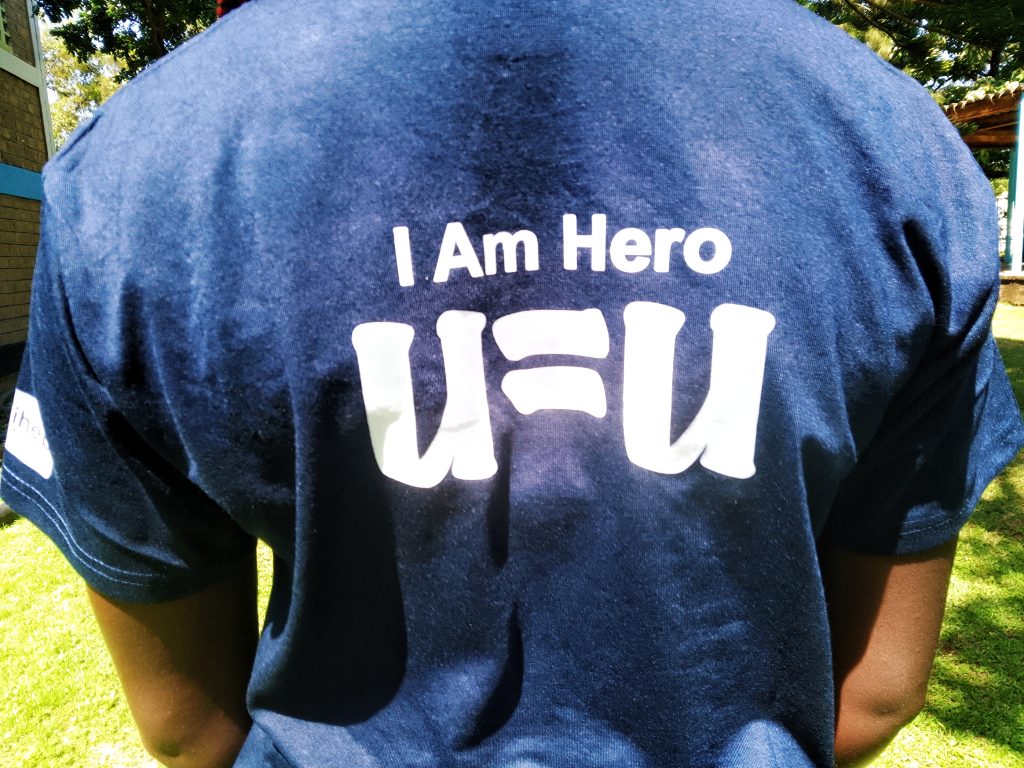
ViiV Healthcare Group explains that U=U holds significant power in the battle against HIV stigma, raising awareness about the efficacy of antiretroviral therapies (ARTs) within communities and empowering people living with HIV in their sexual relationships.
To adequately respond towards HIV, Geno is earnestly appealing to both tiers of government (National and County) to consistently supply ARVs to the health facilities.
Similarly, he is suggesting that medical health workers’ salaries should be paid on time to boost their morale.
“We normally encounter unpleasant treatment (communication) from some health workers. I have seen some of my peers getting demoralised with the laid-down HIV Treatment and Management guidelines. This could be attributed to stress and trauma related to their work,” Geno concluded.