KISUMU, March 24th -In the sprawling informal settlements of Nyalenda in Kisumu, where sanitation challenges, poor soil fertility, and youth unemployment are everyday realities, an unlikely solution is emerging—one that begins in the most unlikely of places: the toilet.
It transforms human waste into valuable organic fertiliser through an innovative process known as Biochar Production.
According to Kisumu Young Agri-preneurs (KiYa) Director Roy Odawa, sanitation has long been Kisumu’s silent crisis. Pit latrines overflow, drains clog with sewage, and the high water table means contamination is never far away.
“It was a health hazard children played near open drains, and nutrients were flowing straight into Lake Victoria, killing fish and fuelling algae blooms,” said Odawa.
The turning point came with Freshlife Limited’s container-based toilets. Unlike traditional pit latrines, these toilets separate solid and liquid waste into compartments, enabling collection and reuse. With over 2,000 Freshlife toilets now operational within Kisumu, Odawa and his team saw an opportunity to turn waste into wealth.
CBEA Head of Communication, Erick Abala, inspecting the dried human waste at the drying area. Photo by Seline Nyangere
At their site, they are conducting a trial with the collected waste to produce organic fertiliser. They have begun with waste collected from 100 households using Freshlife toilets; the waste undergoes a meticulous process to produce Biochar.
“First, human poop is dried under the sun in black barrels, then in solar driers, and finally, it enters the quantum, a machine that burns biomass with little oxygen, a process known as pyrolysis. The result is biochar, a charcoal-like substance that enriches soil,” explained Odawa.
When made from human waste, he calls it “poopcha.” Safe, pathogen-free, and nutrient-rich, poopcha is charged with urine to create a complete organic fertiliser.
“From the farmer’s perspective, biochar helps retain water and nutrients, but when charged with urine, it becomes even more powerful,” revealed Odawa. His work is part of a larger movement led by the Circular Bio Nutrient Economy Association (CBEA), a network with over 120 members across 26 countries.
KiYA Director Roy Odawa holding samples of sukuma wiki seedlings at the trial stage. One has DAP, and one has Biochar. Photo/Aeline Nyangere
Head of Communication at CBEA, Erick Abala, describes their mission as uniting international communities of nutrient recovery practitioners from East Africa and beyond to convene for strategic workshops, conferences, field visits, and working groups.
Principled in strong collegiality, transparency, democracy, and collaboration among researchers, NGOs, industry partners, and government representatives, CBEN brings together nutrient recovery sectors that do not often meet.
According to Abala, CBEA does not produce biochar itself but acts as a convener hosting workshops, field visits, and conferences where farmers exchange knowledge.
CBEN connects sectors that build a circular economy and further promotes capacity development and policy advocacy to speed up the adoption of circular nutrient solutions. These efforts help farmers in East Africa improve soil health, boost agricultural productivity, strengthen rural livelihoods, and enhance regional food security,” added Abala.
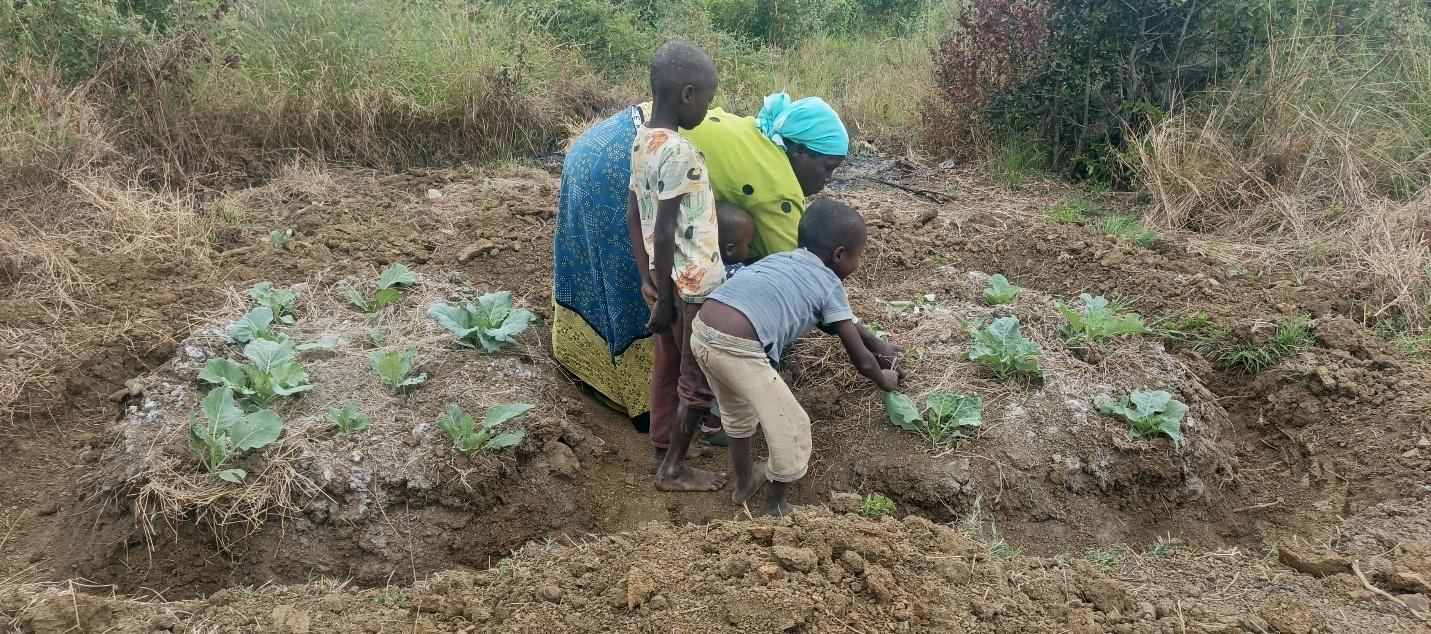
For farmers, biochar is more than just innovation; it is essential for survival. During dry seasons, it reduces the need for irrigation. In rainy periods, it prevents nutrients from washing away.
“If you were irrigating three times a week, with biochar, you might only need to do it once. Currently, we are conducting trials with Cornell University and the Public Health Information System (PHIS), which show better crop growth and heavier yields,” explains Odawa.
In Kisumu, where produce is sold by weight, this makes a difference. Bigger, healthier crops mean more kilograms and higher income. “It’s about resilience; biochar helps farmers produce more, even with less.”
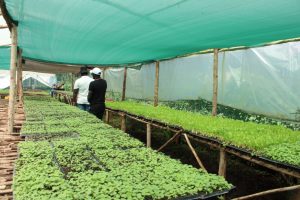
Some of the seedlings at the KiYA site in Nyalenda. Photo by Seline Nyangere
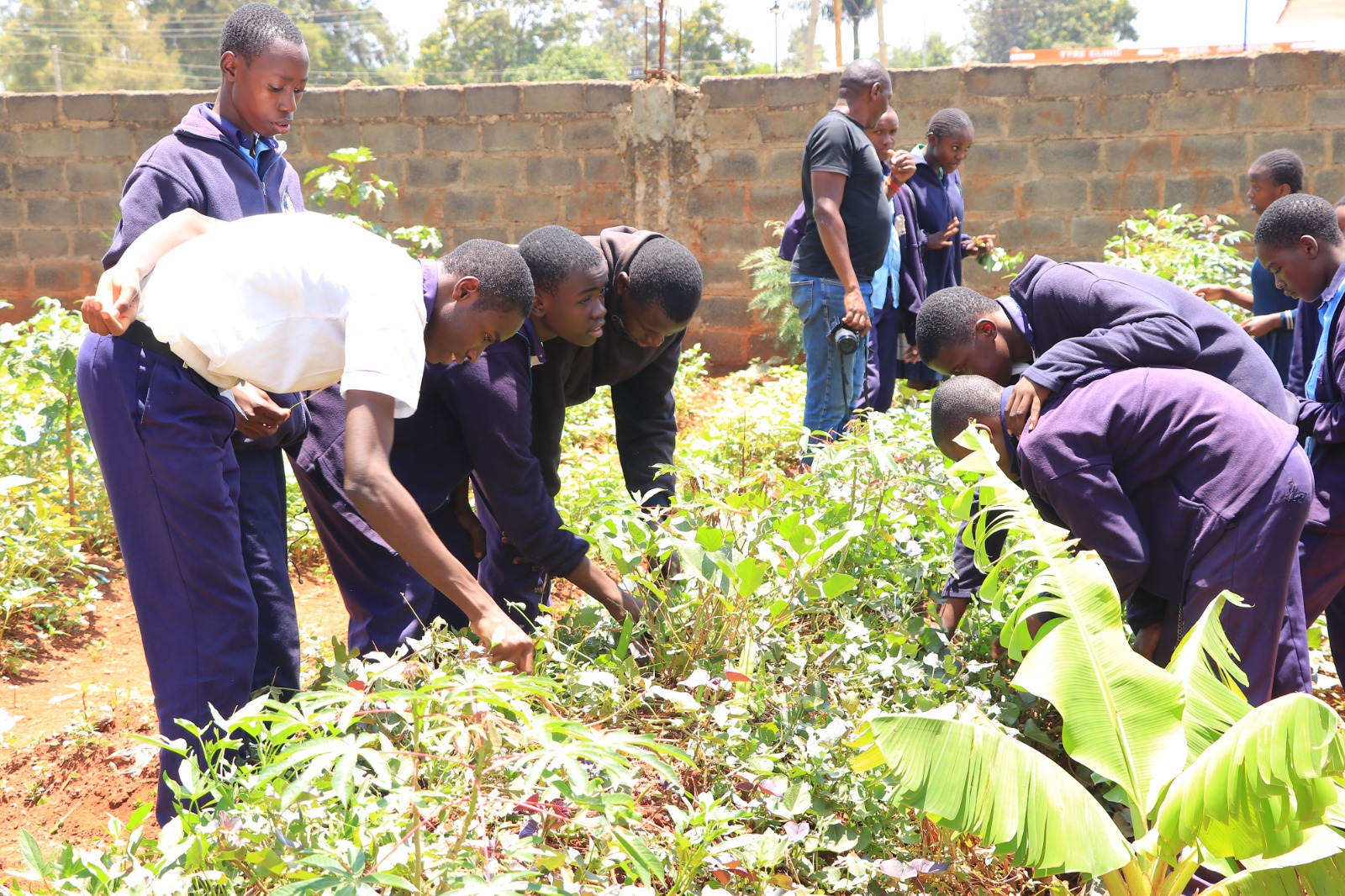
Perhaps the most remarkable aspect of Kisumu’s biochar story is its youth-led energy, which Odawa is eager to change perceptions about.
“Farming was once seen as a poor man’s job, but today, we are showing youths that farming has money. We can be producers, not just consumers,” reflected Odawa.
By involving young people in biochar production, seedling propagation, and urban farming, KiYa demonstrates that agriculture is not only feasible but also aspirational. Vehicles, buildings, and livelihoods can all be built from the soil and waste.
From overflowing pit latrines to fertile fields, Kisumu’s biochar revolution is a story of circular innovation. Waste becomes a resource, sanitation becomes an opportunity, and farming becomes empowerment.
KiYa’s efforts in selling and finding buyers for their biochar show that what started as a sanitation solution has grown into a viable business opportunity.
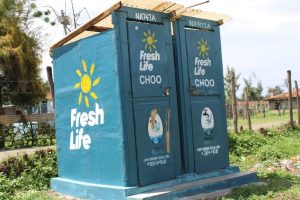
Photo of Freshlife toilet in Nyalenda, Kisumu. Photo by Seline Nyangere
As Odawa states, “Agriculture is the biggest economic opportunity for our people. Even in slums, we can do urban farming. Nothing is impossible.”
CBEN’s work continues to connect diverse stakeholders across the nutrient recovery value chain, fostering collaboration, knowledge exchange, capacity building, and policy advocacy to accelerate circular, climate-smart agriculture.
“Interested stakeholders are asked to join us to enable them to fully benefit from its programs, partnerships, and collective efforts toward building a resilient and sustainable agricultural future,” CBEN urges.